

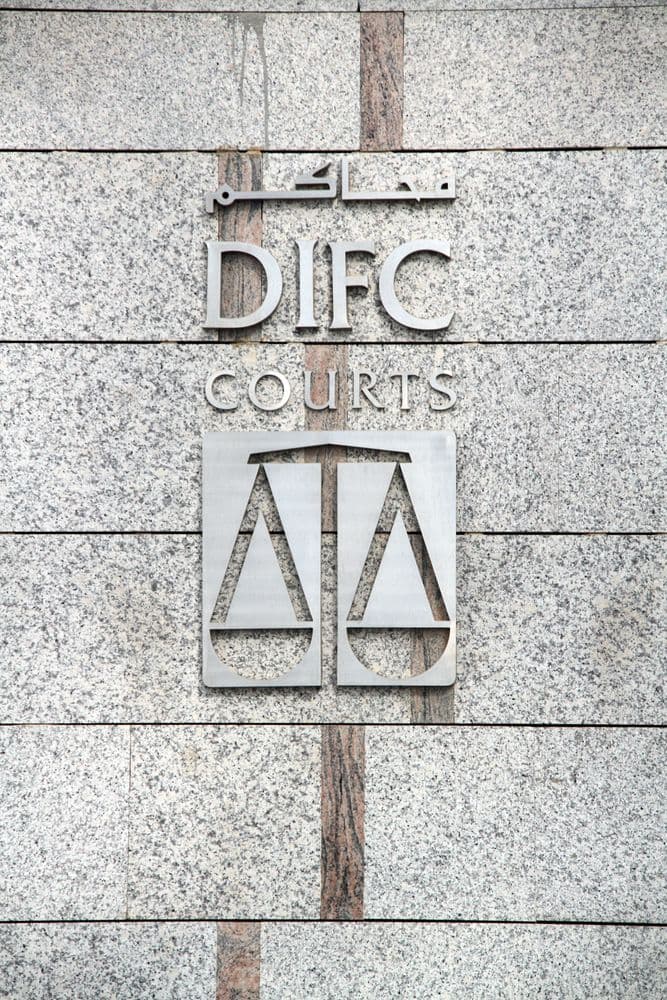
 DIFC courts roll out digital custody and blockchain intelligence services for court users. (Shutterstock)
This initiative falls under the recently launched DIFC Courts Growth Strategy 2026–2030, launched to increase the institution's capacity for hearing the rising levels of complex disputes resulting from the digital economy.
Under this new framework, the Dubai International Financial Center Courts are now going to allow the use of specialized services in litigation and related judicial proceedings involving digital assets. The services include neutral and secure custody of digital assets during judicial proceedings as well as advanced blockchain intelligence tools that help in carrying out transaction tracing, monitoring, investigation, and analysis for purposes of compliance. The main aim is to ensure that disputed assets are protected and also enhance the quality and integrity of digital evidence produced in courts.
The move is a sign of an intensifying juridical recognition of blockchain-related and cryptocurrency disputes being technical in nature and, at times, beyond jurisdictional resolution by conventional judicial channels. As blockchain assets continue rising in financial and insolvency disputes and transactions across national boundaries, there is an unprecedented judicial mandate to navigate blockchain transactions and functionality at a level of technicality that requires specialized knowledge.
The DIFC Courts have jurisdiction over civil and commercial disputes at a regional as well as international level. The courts have been making efforts in recent years to establish themselves as a prime dispute resolution forum in relation to technology in the Middle East region since then and have started a number of initiatives like electronic filing and a Digital Assets Wills service in this regard.
The latest announcement has seen two specialist providers identified to offer the service during the initial phase of implementation. Zodia Custody, a digital asset custody service that has funding support from financial institutions such as Standard Chartered and Emirates NBD, has been contracted to offer neutral custody services for digital assets that are linked to court cases. This is aimed at ensuring that the assets are not only secure, but they cannot move when decisions are being sought in court, which could otherwise lead to dissipation of assets.
Crystal Intelligence, on the other hand, is set to offer on-demand blockchain intelligence services through its blockchain analytics and crypto-risk solutions. The services include the ability to track transactions, track wallet transactions, investigative analysis, and compliance checks and are intended to enable users of the courts to better track the origins and flows of the digital assets that are involved in any particular case before them.
H.E. Justice Omar Al Mheiri, Director of DIFC Courts, said the courts have invested heavily in building the expertise and infrastructure needed to handle disputes arising from the rapidly evolving digital economy. “In recent years the DIFC Courts has dedicated resources and expertise to ensure that rapidly evolving financial and technological disputes, related to the digital economy, are provided with mechanisms to assist resolution. By reviewing and permitting the use of third-party providers for niche dispute requirements, we are further enabling the safeguarding of assets, data verification, and supporting court users with a level of assurance aligned with international best practice. This step further strengthens the Court’s ability to resolve complex digital-asset cases efficiently, securely, and with the confidence expected of a world- class judicial institution.”
In the legal community, a new development within court proceedings may mean a major turning point in managing disputes over digital assets, as digital custody solutions, also known as blockchain intelligence solutions, will now be available to legal practitioners. A secure custody system in lawsuits will ensure that the assets in dispute will not be damaged before a verdict is made, while blockchain intelligence will ensure a clearer search for facts in cases of suspected misappropriation of assets.
The initiative also supports the larger set of plans and ambitions set out in the ‘DIFC Courts Growth Strategy 2026-2030’, which emphasizes innovation and excellence in operations and enhancing the role of the courts as a preeminent dispute resolution forum for the “future industries” of tomorrow. These ambitions themselves represent the plans of the Dubai government to become a finance and innovation hub of the world.
The DIFC strategy is based upon previous initiatives whereby the courts had explored blockchain technology projects to enhance efficiency, transparency, and cross-border enforcement of judgments, hence upholding their position as an early adopter of innovative legal technology solutions within the region.
In recent developments, the enactment of the DIFC Digital Assets Law No. 2 of 2024 created a comprehensive legal framework governing digital assets in the DIFC and defined their legal status and treatment under the law of the DIFC. This legal framework will enhance the recent developments of the courts to offer clarity on the status and treatment of digital assets in court proceedings.
Such trends indicate a future-proofing measure of the judicial infrastructure of the DIFC Courts by the increasing advent of digital assets and blockchain-based technologies in conducting global commercial activities. With the formal recognition of the utilisation of specialist custodial and blockchain intelligence services, such courts are geared towards adjudicating a growing sphere of complex digital disputes in a more technical and transparent manner.

AI reshapes institutional learning across MENA

Traditional assets gain a bigger blockchain footprint
Firebird scales up Armenia’s AI infrastructure

Fitting targets a more digital supply chain

Stay ahead with the latest updates, insights, and trends shaping the world of finance, investment, blockchain, digital business, fintech, technology, and global markets.
