
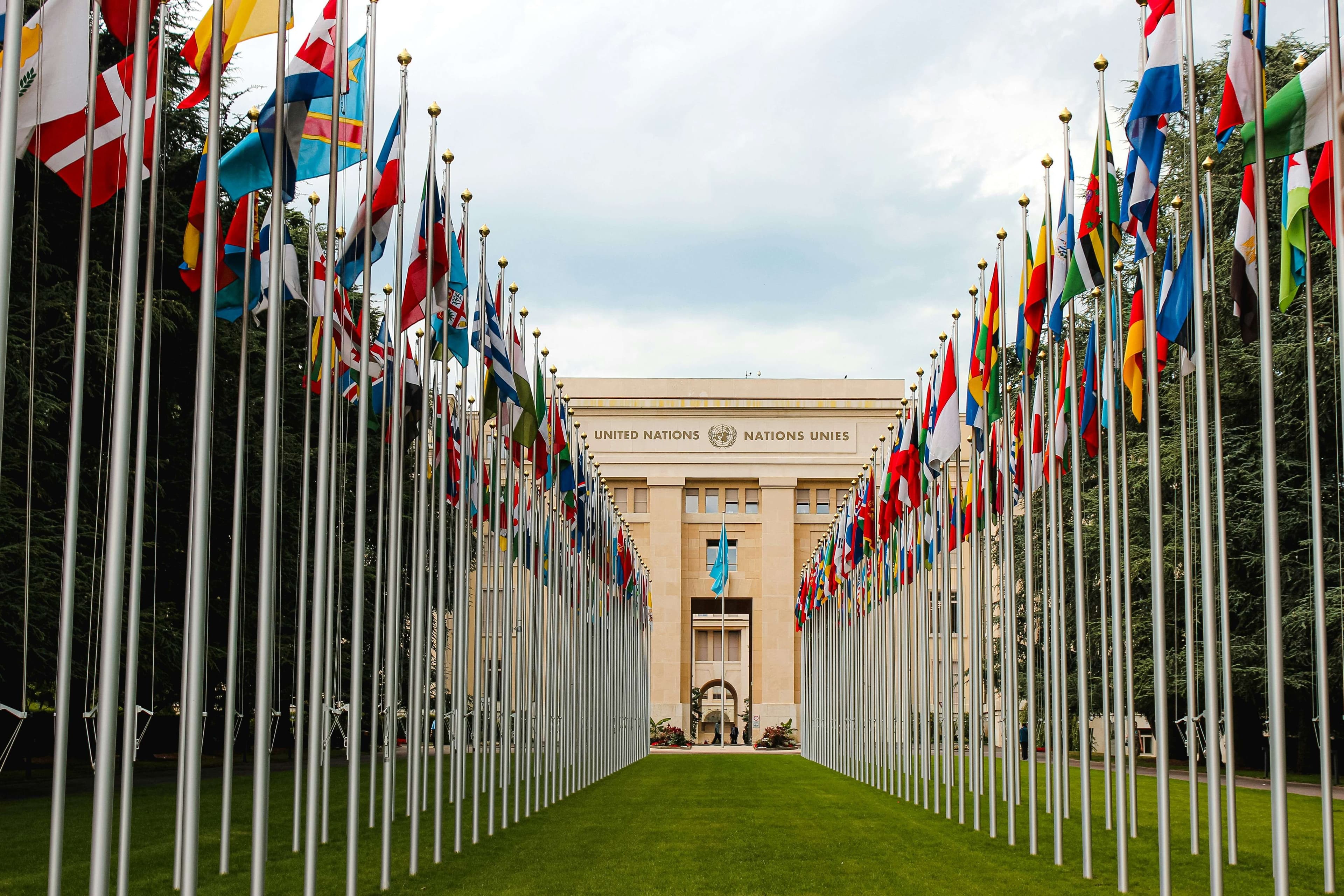
 Circle Foundation and the UN work to make humanitarian aid faster and clearer. (Unsplash)
The collaboration was unveiled at the World Economic Forum Annual Meeting in Davos and focuses on upgrading the financial systems that underpin humanitarian operations worldwide.
At its core, the initiative brings Circle Foundation together with the UN’s Digital Hub of Treasury Solutions (DHoTS), a shared platform designed to improve how money flows across the UN system. Through its inaugural grant, Circle Foundation will support efforts to integrate digital financial infrastructure, including regulated stablecoins, into UN treasury operations, with the goal of making aid delivery faster, more transparent, and easier to manage at scale.
Circle Foundation is supporting the United Nations in their efforts to modernize global aid delivery.
— Circle (@circle) January 21, 2026
The humanitarian system moves more than $38B every year, yet much of that aid still relies on slow, costly legacy financial rails.
Through its first international grant, Circle… pic.twitter.com/JwWXdmh55F
For decades, humanitarian organizations have relied on traditional banking networks to move funds across borders. While reliable, those systems can be slow, costly, and operationally complex, especially during emergencies when speed matters most. Transfers often pass through multiple intermediaries, settlement can take days, and reconciliation requires significant manual work behind the scenes. DHoTS was created to address those challenges by modernizing the UN’s internal financial plumbing.
The partnership with Circle Foundation is designed to accelerate that effort. By supporting digital settlement tools within existing UN frameworks, the initiative aims to simplify how funds move between agencies and ultimately reach beneficiaries on the ground. Rather than changing the mission of humanitarian aid, the focus is on improving the mechanics that make that mission possible.
UN officials involved in the collaboration emphasized that better financial infrastructure can directly support accountability. Clearer transaction records and real-time visibility into fund movements make it easier to track how resources are allocated and spent, strengthening trust across donors, agencies, and oversight bodies. At the same time, reducing administrative friction allows operational teams to focus more on delivery and less on paperwork.
The project builds on earlier UN experience with digital payments in humanitarian contexts. In recent years, digital value transfers have been tested as a way to deliver assistance more directly and efficiently, particularly in situations where traditional banking access is disrupted or limited. Those efforts demonstrated that digital tools can operate alongside established aid systems without compromising governance or compliance standards.
The partnership reflects a broader philanthropic vision centered on applying modern financial infrastructure to real-world challenges. The foundation was created to support initiatives that expand economic opportunity, promote transparency, and improve access to financial systems. Working with the United Nations on treasury modernization represents its first large-scale international grant and signals where the organization sees practical impact.
Importantly, the use of regulated stablecoins within this initiative is framed as an infrastructure layer, not a replacement for local currencies or national financial systems. In practice, these tools are intended to help funds move efficiently between institutions before being converted into local payment methods appropriate for recipients. The approach keeps existing regulatory and compliance frameworks intact while improving operational efficiency behind the scenes.
DHoTS already supports multiple UN agencies through a shared treasury model that allows organizations to benefit from common infrastructure while maintaining operational independence. The platform is designed to evolve gradually, adopting new financial technologies where they add value while remaining aligned with UN risk management and governance standards.
That cautious approach reflects the realities of operating at global scale. Any financial system used by the UN must function reliably across diverse regulatory environments, withstand geopolitical uncertainty, and meet strict requirements around security and oversight. The partnership announced in Davos fits within that measured trajectory, modernizing systems incrementally rather than attempting wholesale disruption.
The collaboration also highlights a broader trend: growing cooperation between global institutions and private-sector innovators around financial infrastructure. Rather than focusing on speculative use cases, the initiative centers on practical improvements to systems that already move billions of dollars in humanitarian and development funding each year.
As humanitarian needs continue to rise amid conflict, climate pressures, and economic instability, expectations around efficiency and transparency have grown as well. While technology alone cannot solve these challenges, improving the way money moves through the system can remove bottlenecks that slow down aid at critical moments.
The Circle Foundation and United Nations partnership represents a concrete attempt to address those structural frictions. Its impact will ultimately depend on execution, how well the tools integrate, how smoothly they scale, and whether they deliver measurable improvements in day-to-day operations.
The initiative signals a clear intention: to bring the financial backbone of humanitarian aid closer to the speed and clarity demanded by today’s global challenges.

Dubai approval brings Revolut closer
UAE visitors gain easier banking access

Business payments get a digital overhaul

Partior powers faster cross-border settlements

Stay ahead with the latest updates, insights, and trends shaping the world of finance, investment, blockchain, digital business, fintech, technology, and global markets.

