
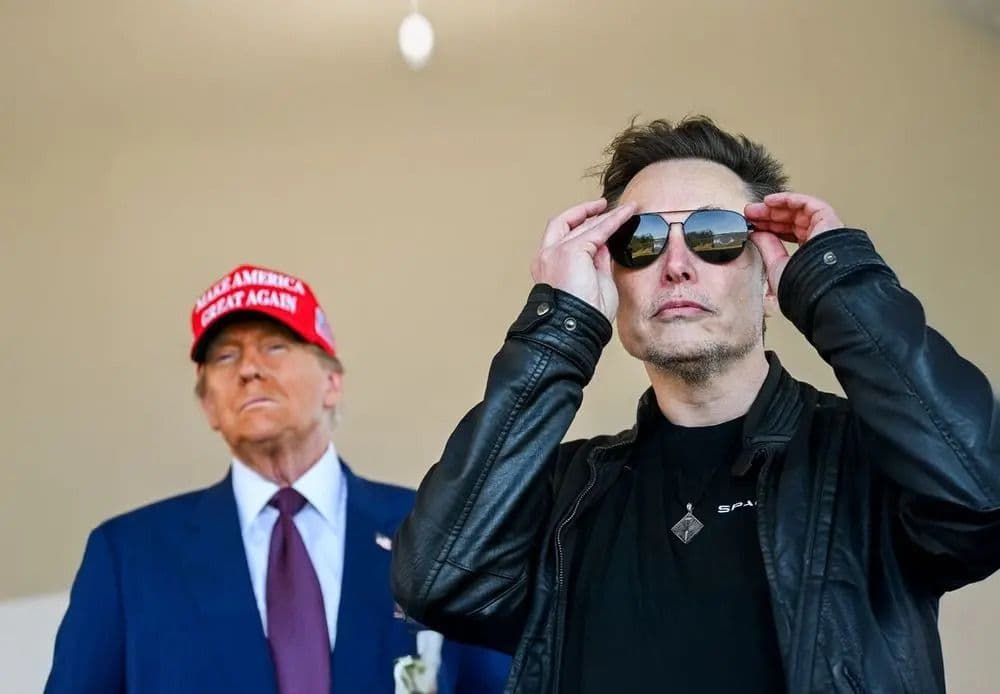
 Starship and xAI show Elon Musk’s plan to take AI beyond Earth. (Shutterstock)
The announcement describes the merger as a historic step toward scaling both intelligence and technology beyond Earth, creating what Musk calls “the most ambitious, vertically integrated innovation engine on (and off) Earth.”
The vision behind the acquisition is both immediate and far-reaching. AI today relies on terrestrial data centers that demand immense amounts of energy and cooling, resources that cannot be expanded indefinitely without significant environmental and societal costs. SpaceX frames space-based AI as the long-term solution to these limitations, arguing that orbiting satellites powered directly by the Sun could provide near-limitless compute capacity without the constraints of land, electricity, or maintenance. In Musk’s words, “By directly harnessing near-constant solar power with little operating or maintenance costs, these satellites will transform our ability to scale compute. It’s always sunny in space!”
The plan calls for launching a massive constellation of satellites capable of serving as orbital data centers. SpaceX’s Starship rocket will play a central role, delivering payloads far larger than previous Falcon launches, with each flight expected to carry more than 20 times the capacity of current Starlink satellites. The company estimates that, once operational, this fleet could deliver enough compute to support AI-driven applications for billions of people while also paving the way for humanity’s long-term presence on other worlds.
SpaceX’s strategy reflects a stepwise approach: first, deploy orbiting satellites for AI workloads and global connectivity; next, expand operations to the Moon and beyond. Starship’s ability to transport massive cargo loads into orbit and eventually to lunar surfaces is central to this vision. The announcement notes that lunar manufacturing, coupled with electromagnetic mass drivers, could allow future AI satellites to be produced and deployed at scales vastly exceeding what Earth-based launches could achieve.
The technical and logistical ambitions are staggering. SpaceX suggests that launching a million tons per year of AI satellites could generate around 100 gigawatts of compute annually, all without ongoing operational costs on Earth. Over time, the company envisions scaling to terawatt levels, creating a pathway toward a Kardashev II civilization, a society capable of harnessing the full power of the Sun. While these projections are theoretical, they signal a level of ambition rarely seen in private industry.
In practical terms, the merger of xAI into SpaceX also consolidates expertise across AI, social platforms, and space technology. While the announcement does not provide financial details, it emphasizes the combined company’s goal of integrating real-time information, free speech platforms, and AI-driven systems with SpaceX’s launch capabilities and satellite networks. The effort aims not only to support Earth-based applications but also to lay the foundation for multi-planetary human expansion.
These developments reflect a broader philosophical vision. Musk describes the merger as a step toward “scaling to make a sentient sun to understand the Universe and extend the light of consciousness to the stars.” Beyond the technical and operational objectives, the acquisition represents a long-term commitment to advancing knowledge, energy utilization, and humanity’s presence beyond Earth.
While the ambitions are extraordinary, SpaceX notes that safety and sustainability are integral to its plan. The new constellation of satellites will adopt strategies similar to those already employed for Starlink, including end-of-life disposal procedures and orbital debris management. These practices are essential to ensure that the rapid deployment of orbital infrastructure does not create long-term hazards for Earth or future space operations.
The integration of xAI into SpaceX marks a rare convergence of two of Musk’s most high-profile ventures. By combining AI research with advanced rocket engineering and satellite deployment, the company is attempting to solve one of the most pressing limitations of modern computing: scaling energy-intensive AI beyond the constraints of terrestrial infrastructure. If successful, the effort could redefine not only AI and space technology but also humanity’s ability to harness solar power, expand computational capacity, and sustain life beyond Earth.
Musk closes with an aspirational note, thanking those who contribute to expanding “the light cone of consciousness.” He signals that this acquisition is not just a corporate milestone, but a philosophical and technological step toward humanity’s long-term future in space.
With Starship launches already scheduled for the coming months and the first orbital AI satellites in planning, SpaceX and xAI’s merger is likely to be a defining moment in both aerospace and artificial intelligence. Whether the technical challenges of operating data centers in orbit can be fully realized remains to be seen, but the company’s vision, scaling compute into space, tapping solar power at unprecedented levels, and extending human presence beyond Earth, is now officially underway.
UAE visitors gain easier banking access

Dubai approval brings Revolut closer

Nasdaq Dubai welcomes Ajman Bank’s $300 million Sukuk
Everyday finance gets a Tabby upgrade

Stay ahead with the latest updates, insights, and trends shaping the world of finance, investment, blockchain, digital business, fintech, technology, and global markets.

