
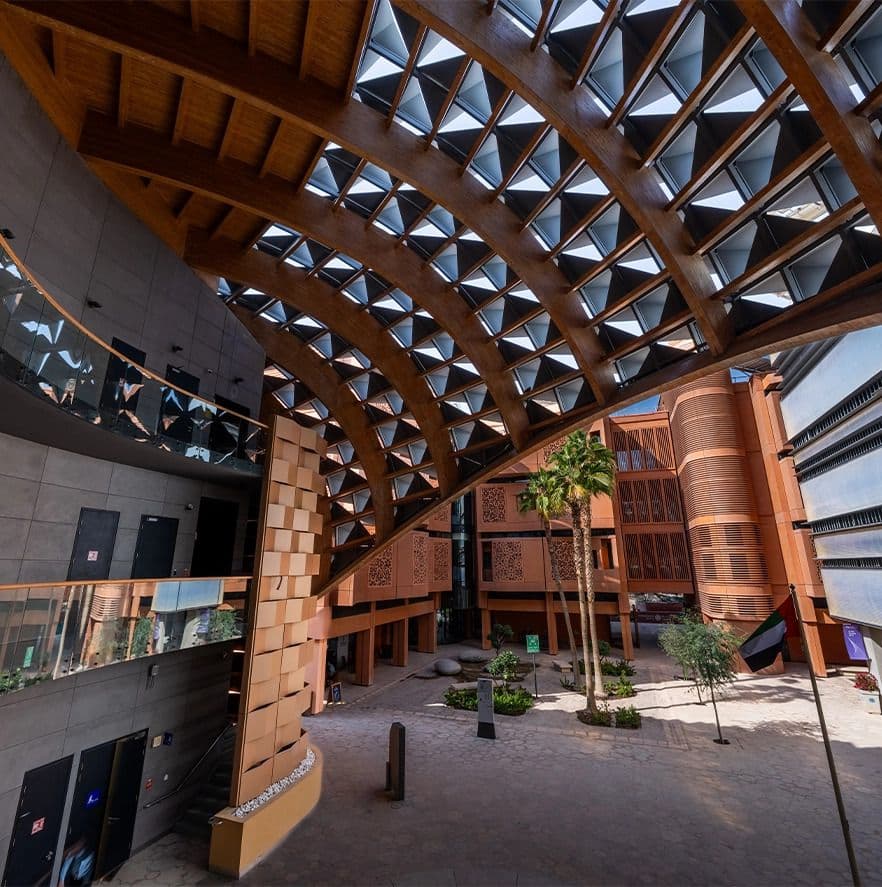
 UAE MBZUAI reveals K2 Think V2, its homegrown AI to compete globally. (Image Source: MBZUAI)
The system is positioned as a major upgrade over earlier open reasoning models, designed to handle complex, multi-step tasks across mathematics, science, logic, and software development.
K2 Think V2 is built on the K2-V2 foundation model, a 70-billion-parameter system developed entirely in-house. Unlike many large language models currently dominating the AI landscape, K2 Think V2 is described as fully open across its entire lifecycle, including training methodology, evaluation processes, and model checkpoints. The university says this approach allows researchers and developers to inspect, reproduce, and build upon the system without reliance on proprietary or opaque components.
The launch reflects the UAE’s broader push toward AI sovereignty, a concept that emphasizes national control over foundational technologies, data pipelines, and compute infrastructure. By developing K2 Think V2 independently, MBZUAI aims to reduce dependence on foreign proprietary AI systems while contributing openly to the global research community. The university has framed this effort as both a strategic and academic initiative, aligning national priorities with open scientific collaboration.
K2 Think V2 is designed to go beyond standard text generation by embedding reasoning directly into the core architecture of the model. MBZUAI states that this enables the system to perform sustained logical reasoning rather than relying solely on probabilistic pattern matching. This distinction is particularly important for tasks that require structured thinking, such as solving advanced mathematical problems, reasoning through scientific hypotheses, or analyzing complex codebases.
The university reports that K2 Think V2 performs strongly across established reasoning benchmarks, including AIME2025, GPQA-Diamond, HMMT, and IFBench. These results place the system ahead of many other open-source reasoning models currently available.
Another feature highlighted by MBZUAI is the system’s ability to handle longer contexts and maintain coherence across extended inputs. This allows K2 Think V2 to reason over large volumes of text or data without losing continuity, a known limitation in earlier generations of large language models. In practical terms, this capability supports more advanced use cases in research, education, and technical analysis where long-form reasoning is required.
The foundation of K2 Think V2’s sovereignty claim lies in its data pipeline. MBZUAI’s Institute of Foundation Models (IFM) oversaw the development of the training datasets, which the university says were carefully decontaminated to prevent overlap with evaluation benchmarks. This practice is intended to ensure that performance results reflect genuine reasoning ability rather than memorization of test data, a concern that has increasingly drawn scrutiny across the AI research community.
MBZUAI has also emphasized transparency in post-training and evaluation stages. All evaluation scripts and methodologies used to assess K2 Think V2 have been made publicly accessible, allowing external researchers to replicate results or test the model under alternative conditions. This level of openness remains relatively uncommon among frontier AI systems, where training details are often treated as proprietary intellectual property.
The project brings together academic research and industrial expertise through its collaboration with G42 and Cerebras Systems. Cerebras contributed its wafer-scale computing architecture, which is optimized for training and running large neural networks efficiently. MBZUAI says this hardware-aware approach was critical to scaling the model while managing compute efficiency, an increasingly important consideration as AI systems grow in size and complexity.
Beyond its technical significance, the release of K2 Think V2 highlights the UAE’s growing role in shaping global conversations around advanced AI development. As countries worldwide explore ways to balance innovation, transparency, and strategic autonomy, sovereign AI systems like K2 Think V2 are attracting attention as alternative models to closed, corporate-controlled platforms.
MBZUAI plans to make K2 Think V2 available through a dedicated web application and other access points linked to its official platforms. The university expects researchers, developers, and institutions to experiment with the system and explore applications ranging from education and scientific research to complex analytical workflows.
While questions around long-term adoption, independent validation, and governance remain open, K2 Think V2 represents a notable milestone in the UAE’s AI ambitions. By combining open research principles with national technological strategy, MBZUAI is positioning the project as both a domestic capability and a contribution to the broader global AI ecosystem.

From science Olympiad to Silicon Valley
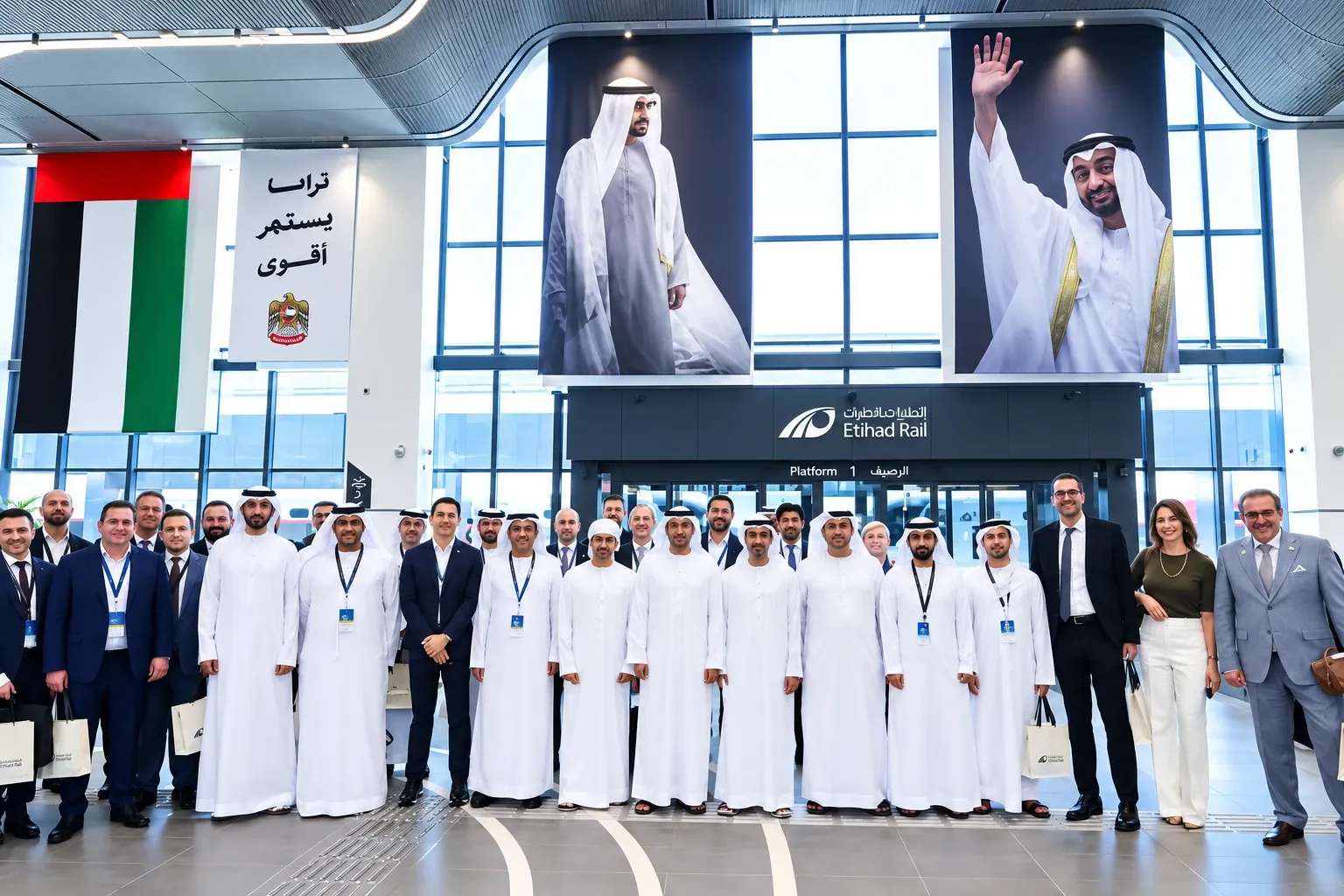
Market ceremony moves onto the rails

Saudi startup scales its AI ambitions
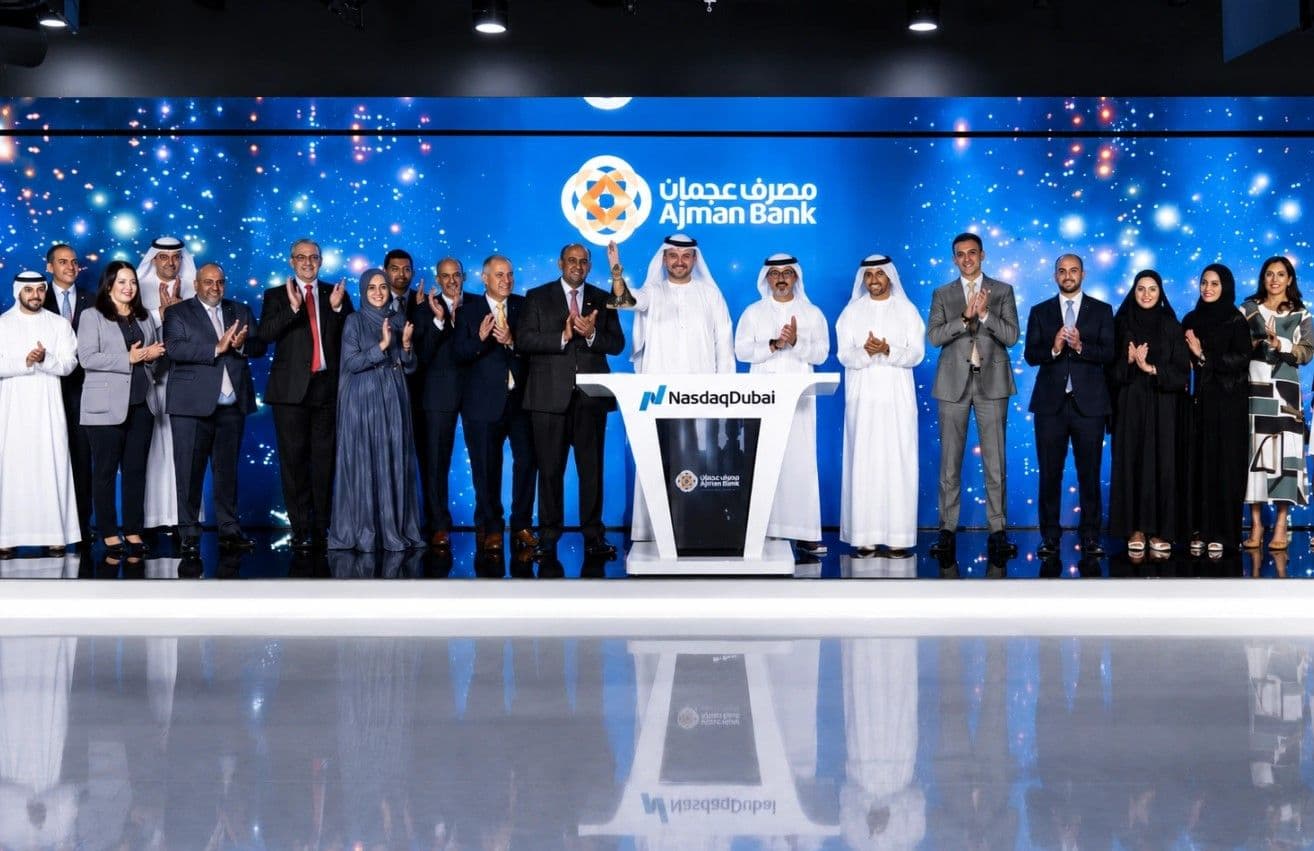
Nasdaq Dubai welcomes Ajman Bank’s $300 million Sukuk

Stay ahead with the latest updates, insights, and trends shaping the world of finance, investment, blockchain, digital business, fintech, technology, and global markets.

