
 UAE takes open finance live as Ziina and Lean execute first payment. (Unsplash)
The milestone was delivered through a collaboration between Ziina, a Dubai-based payments fintech, and Lean Technologies, a financial infrastructure provider specializing in regulated API connectivity. Together, the two companies have enabled real bank-to-account payments that are initiated by users themselves, rather than through cards, manual transfers, or intermediary payment layers.
While Open Banking and Open Finance have been discussed for years across global financial markets, most implementations have remained confined to pilot programs, sandbox trials, or limited data-sharing use cases. What makes this development notable is that it is fully live, customer-driven, and operating with real funds, a shift that signals growing maturity in the UAE’s digital financial infrastructure.
For users, the experience is designed to be simple. Instead of leaving an app to log into internet banking or manually initiate a transfer, Ziina customers can now make a payment directly from their bank account within the app itself. After granting consent and authenticating with their bank, the transaction is completed through secure, regulated APIs provided by Lean. The result is a faster, more seamless payment flow that removes friction from everyday transfers.
This capability is made possible by the Central Bank of the UAE’s Open Finance framework, which expands beyond traditional Open Banking to include payment initiation and broader financial data portability. At the center of this framework is Nebras, the national Open Finance platform, alongside Al Tareq, the API standard that governs how licensed institutions connect and exchange information securely.
Ziina operates under a Stored Value Facility license issued by the Central Bank, while Lean provides the regulated connectivity layer between fintech applications and banks. The successful execution of a live payment demonstrates that the regulatory, technical, and operational pieces required for Open Finance are now functioning together in practice, not just in theory.
Faisal Toukan, Co-founder and CEO of Ziina, said, “Delivering the UAE’s first customer-initiated Open Finance payment marks an important step for the country’s financial ecosystem. Regulated, API-driven payments, now operating at production scale, are beginning to influence expectations around speed, transparency and trust. Enabling customers to complete a bank payment directly inside the Ziina app through Open Finance reflects how forward-thinking policy can shape everyday financial behavior. We are proud to partner with Lean Technologies to bring the vision to life.”
Hisham Al-Falih, CEO of Lean Technologies, noted, “Seeing Open Finance payments live in the UAE is a meaningful moment for the market. This milestone reflects the Central Bank’s vision for modern, secure financial infrastructure and shows what becomes possible when strong connectivity meets thoughtful product execution. Ziina has been an exceptional partner, and we are proud to enable the country’s first live Open Finance payment experience.”
Beyond the immediate transaction itself, the development has broader implications for how payments could evolve in the UAE. Customer-initiated Open Finance payments introduce an alternative to card rails and manual bank transfers, with the potential to lower costs, speed up settlement times, and improve transparency for both consumers and merchants. For small businesses in particular, faster access to funds and reduced reliance on intermediaries could offer meaningful operational benefits.
That said, it remains early days. Public data on transaction volumes, user adoption, or merchant uptake has not yet been released, making it difficult to assess how quickly Open Finance payments will scale beyond initial users. Future reporting and disclosures will be needed to understand whether consumers view this model as a genuine replacement for existing payment methods or simply an additional option.
There is also a broader education challenge. While Open Finance has clear benefits at an infrastructure level, its value is not always immediately obvious to everyday users. Unlike contactless cards or digital wallets, Open Finance operates largely behind the scenes. Its success may ultimately depend on whether fintechs and banks can translate backend efficiency into visible improvements in speed, cost, and user experience.
The launch reinforces the UAE’s ambition to position itself as a regional leader in financial innovation. While other markets have introduced Open Banking frameworks, few have progressed as quickly to live, customer-initiated payment use cases under a centralized regulatory structure. The UAE’s approach suggests a preference for controlled, production-ready deployments rather than extended experimentation.
Industry observers will be watching to see how Open Finance evolves beyond payments. The same infrastructure could support new services across lending, wealth management, and financial planning, where real-time access to customer-approved data enables more personalized and responsive products. Whether these opportunities materialize will depend on how widely banks and fintechs choose to participate.
The successful execution of the UAE’s first live customer-initiated Open Finance payment marks a clear transition point. It shows that Open Finance is no longer just a regulatory ambition or industry buzzword, but a working part of the country’s financial ecosystem.

From science Olympiad to Silicon Valley

Saudi startup scales its AI ambitions
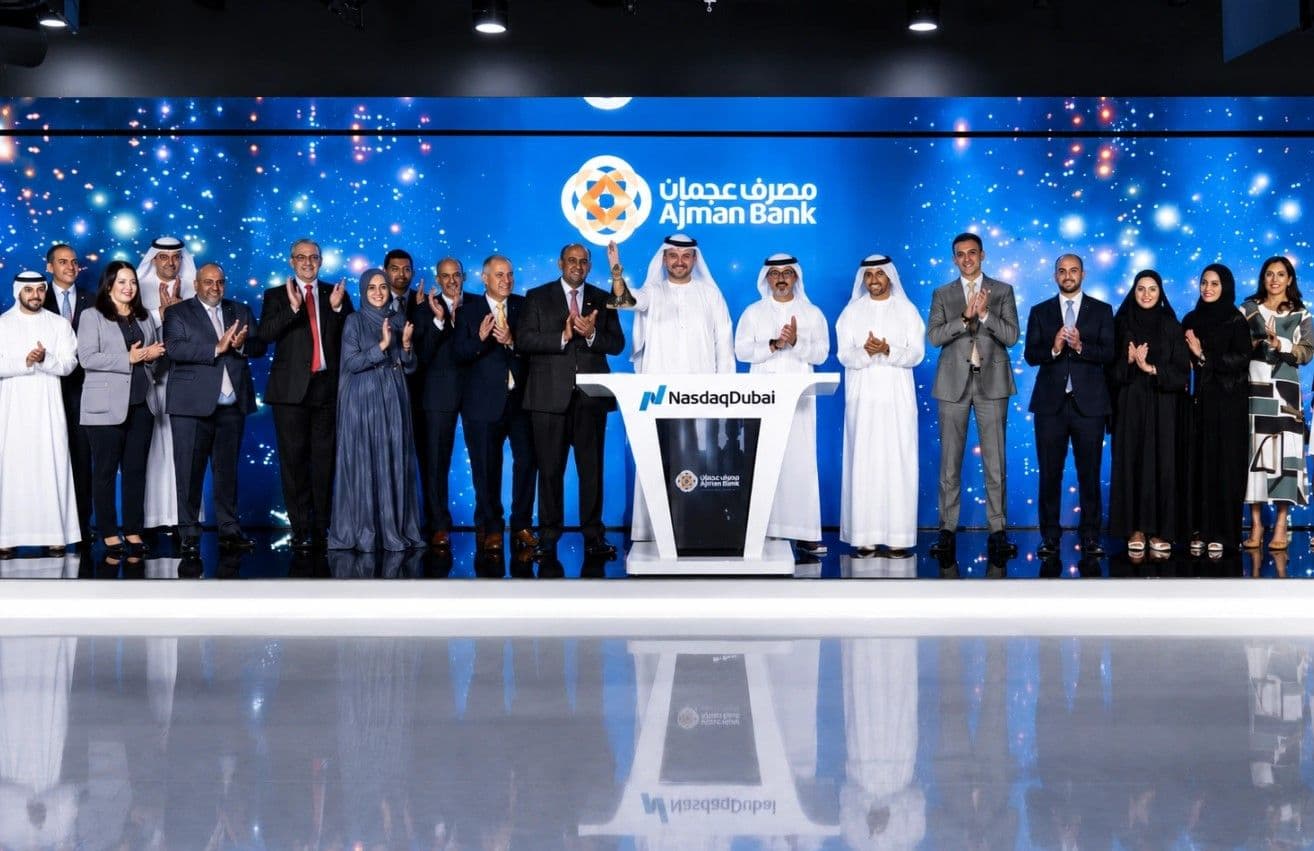
Nasdaq Dubai welcomes Ajman Bank’s $300 million Sukuk

Business payments get a digital overhaul

Stay ahead with the latest updates, insights, and trends shaping the world of finance, investment, blockchain, digital business, fintech, technology, and global markets.

