

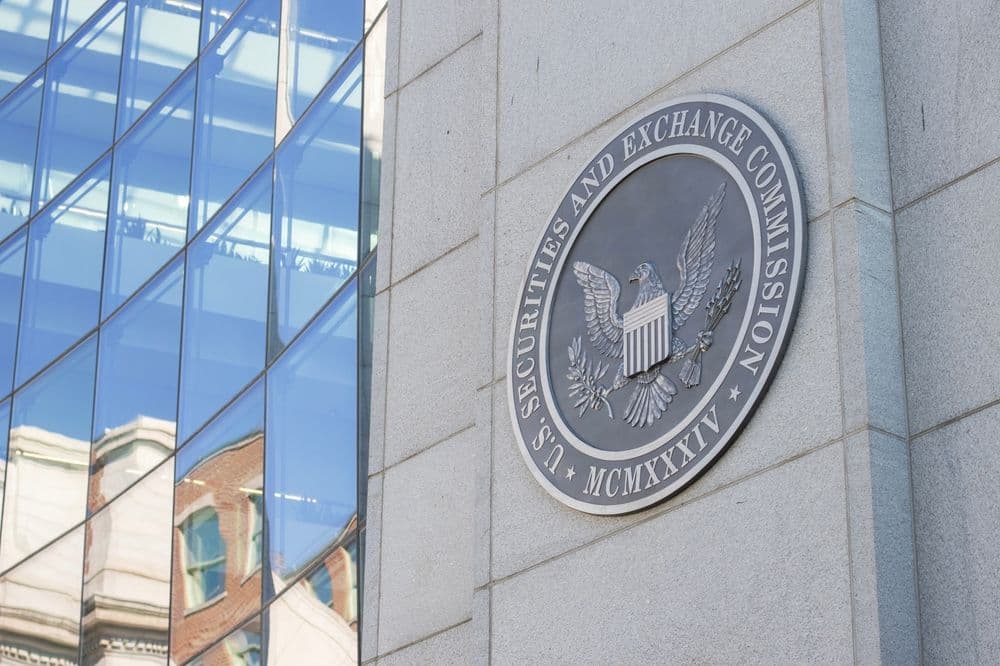
 SEC unveils ‘Project Crypto’ in pivot toward clear token rules. (Shutterstock)
Atkins characterized the initiative as an effort to harmonize innovation with investor protection, emphasizing principles of fairness and clarity over enforcement-only tactics.
Atkins began by acknowledging the confusion that has for so long dogged the crypto-asset sector: the question "Are crypto assets securities?" continues to vex market participants because the term itself lacks legal definition under federal law. He asserted his view that "most crypto tokens trading today are not themselves securities." SEC This is a marked departure from the previous administration at the SEC, which often treated many tokens as unregistered securities.
Central to Project Crypto is the development of a “coherent token taxonomy”. Atkins laid out a four-tier framework: “digital commodities/network tokens,” intrinsically functional and not securities; “digital collectibles,” used for art, gaming, memes and not securities; “digital tools,” membership, tickets, identity instruments, not securities; and “tokenized securities” which are securities.
This categorization is important because it attempts to shift the regulatory focus from labels to economic substance: how a token is used, what rights it conveys, and the expectations placed on its issuer. Atkins underlined that the long-standing test in the investment-contract case of SEC v. Howey Co. is still relevant but with new interpretation-the token will not be a security if "essential efforts" of an issuer have ended.
It also shifted the speech from one based on regulation through enforcement to an approach that focuses more on rulemaking, exemptions, and tailored frameworks relating to crypto assets. Atkins instructed the SEC staff to prepare recommendations for public comment, including possible exemptions for certain offerings, updated custody and trading rules, and clearer disclosure requirements. He specifically flagged the growing tokenization of stocks, bonds, partnership interests and third-party securities as priorities.
From a policy-market perspective, the shift signals that the SEC is aligning with the broader agenda of the President's Working Group on Digital Asset Markets and with legislative efforts in Congress to build a crypto-specific market structure. Atkins made plain his support for statutes to codify the emerging framework, rather than relying solely on agency rule making.
For industry participants, this speech carries a mix of relief and caution. On one hand, the ambition to bring "crypto asset distributions back to America" and to enable “super-apps,” platforms that combine securities, non-security tokens, staking and lending under one license, signals a more open and growth-oriented regulatory posture. On the other hand, Atkins was adamant that enforcement remains very much in play: “Fraud is fraud. While the SEC protects investors from securities fraud, the federal government has a host of other regulatory bodies well equipped to police and protect against illicit conduct. That said, if you raise money by promising to build a network, and then take the proceeds and disappear, you will be hearing from us, and we will pursue you to the full extent of the law.”
Project Crypto puts the U.S. in direct competition from a global comparative perspective with jurisdictions such as the European Union, which is advancing its regulatory regime under Markets in Crypto‑Assets Regulation (MiCA). The ambition of the U.S. is unmistakable: it wants to be a hub for crypto innovation, not a bystander to a capital flight offshore that regulators used to fear. Atkins warned of a “destructive race to move offshore” if the U.S. keeps treating every token like a stock.
Yet open questions remain. Notably, the draft taxonomy represents what Atkins calls his "current thinking" but is explicitly labeled non-exhaustive and non-binding. Market participants will be watching for the formal rule proposals, timelines, and whether exemptions will deliver meaningful relief in practice, or merely add a new layer of complexity. Likewise, the notion that tokens may "mature" beyond their investment contract origins and shed securities status raises practical challenges around how and when that transition is recognized. Atkins's example of the Howey citrus grove evolving into resort land serves as a metaphor, but in practice tokens and networks may not migrate so cleanly.
If the SEC moves with confidence, the token issuers, trading venues, and custody providers who may have shied away from the U.S. might just change their minds. On the other hand, how quickly and coherently those rules are written will determine whether this is a real pivot, or just one more rhetorical signaling exercise.
Chairman Atkins' speech represents a watershed moment for U.S. crypto regulation. Project Crypto is more than a name; it ushers in a strategic shift from the heavy hand of enforcement toward regulatory clarity and open-ended innovation. This will prove to be more of a durable paradigm shift depending on the robustness of forthcoming rulemaking, how exemptions are practically implemented, and actual market uptake.

AI-generated viruses raise new biosafety questions

Saudi real estate gets a tokenization focus

AI and satellites drive Space42 expansion

Crypto payments reach Dubai airport retail

Stay ahead with the latest updates, insights, and trends shaping the world of finance, investment, blockchain, digital business, fintech, technology, and global markets.
