
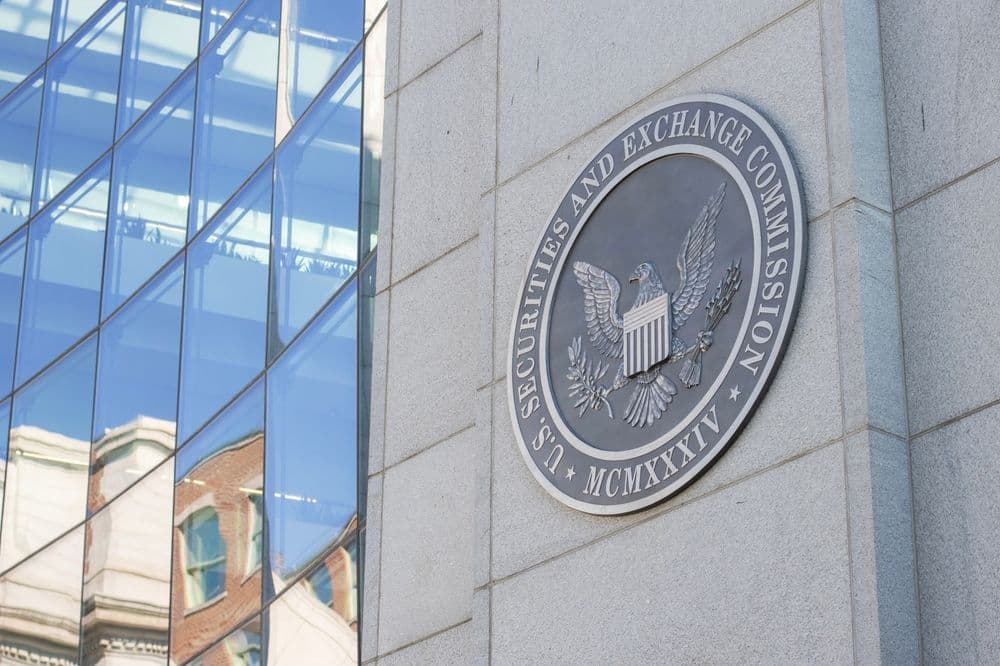
 U.S. SEC lays out key crypto custody risks for retail investors. (Shutterstock)
The guidance is aimed at helping everyday investors understand better how cryptocurrencies and other blockchain-based digital assets are stored, accessed, and protected, as the participation in crypto markets is expanding beyond early adopters and institutional players. The Bulletin probably represents one of the clearest efforts by U.S. regulators to address retail investor risks through education, not just enforcement.
The SEC explains that crypto "custody" refers to the methods for holding and controlling digital assets-a concept quite different from financial custody arrangements under federal securities laws. This is a very different model than traditional stocks or bonds, which are held by banks or broker-dealers on behalf of clients. It is the cryptographic private keys, not the crypto assets themselves, that are used to control cryptocurrencies. Private keys allow a user to authorize transactions on a blockchain network and prove ownership of the digital assets associated with the blockchain address. If a private key is lost, destroyed, or stolen, access to the crypto assets it controls may be permanently lost, as there is no central authority able to restore access.
According to the bulletin, private keys act in concert with public keys, serving as addresses that the latter use to send digital assets to a wallet. Whereas public keys can be shared without risk, private keys must always be kept confidential. The SEC points out that many of the security incidents that have happened within the crypto market are rooted not in defects of blockchain technology per se, but rather in poor key management, phishing, or investors misunderstanding how custody works in practice.
The bulletin also puts forward the differences that exist between hot wallets and cold wallets, two main methods of storing crypto assets. Hot wallets are internet-connected and generally are designed as mobile applications, desktop, or web-based programs. The very aspect of their connectivity allows for quicker transactions and easier access, but at the same time, it makes them more vulnerable to such cyber threats as hacking, malware, and phishing. In its turn, cold wallets store private keys offline by means of hardware devices, paper backups, or other non-internet-connected ways. While cold wallets substantially reduce exposure to online threats, they introduce physical risks, including loss, theft, or damage of the device or recovery information.
A critical tenet of cold wallet security involves the recovery phrases, or sets of words randomly thrown together, that can restore access to a wallet should an original device or private key be lost. The SEC warns that anyone with access to a seed phrase has full control over the related crypto assets, and secure storage of recovery phrases is as important as safeguarding private keys themselves. Poor handling of these recovery tools has led to the irreversible loss of retail investor money around the world.
In addition to the storage methods, the bulletin makes a clear distinction between self-custody and third-party custody, two different approaches with very different risk profiles. In self-custody, investors retain full control of their private keys and manage their own wallets. While this approach offers independence from intermediaries, it also places full responsibility for security, backups, and access management on the individual investor. The SEC points out that, in self-custody, there is no recovery mechanism in case the keys are lost or compromised.
Third-party custody means different exchanges or special custodial service providers keep crypto assets on behalf of customers by maintaining private keys. Some custodians rely on both hot and cold storage, together with institutional security approaches like access controls, internal audits, and operational redundancy. Nevertheless, according to the SEC, third-party custody presents counterparty risks, which are defined as when investors rely on the custodian's financial health, good governance practices, and security standards.
The guide asks that investors get answers on a number of things when seeking to apply any form of custodial service: how customer assets are separated from the firm's own money; if there is insurance against theft or loss of assets; how wallets are managed; and if deposited assets are loaned out or otherwise reused. In this respect, the SEC stressed that practices like commingling or rehypothecation can amazingly heighten risk in periods of market stress or operational failure.
 The guidance arrives after years of major crypto platform failures and security breaches that have resulted in substantial losses for investors. (TheDigitalAritst/Pixabay)
The bulletin comes against a fair backdrop of several high-profile crypto exchange collapses, hacks, and insolvencies that have taken billions of dollars in investor losses over the last ten years. Without referencing particular cases, the guidance by the SEC stresses the importance of custody arrangements to be understood upfront before participating in crypto markets. The move is seen by many as part of a broad shift toward investor education and the mitigation of risk rather than pure, reactive enforcement.
Besides defining custody arrangements, the SEC goes on to offer practical safety advice to retail investors. Among the advice given by the bulletin is that investors should undertake independent research in the selection of a wallet or custodian without sharing private keys or recovery phrases and should be wary of unsolicited messages or offers where crypto investments are involved. It also flags good password discipline, multi-factor authentication of users, and caution if discussing holdings in digital assets in public.

From science Olympiad to Silicon Valley

Market ceremony moves onto the rails

UAE visitors gain easier banking access

Saudi startup scales its AI ambitions

Stay ahead with the latest updates, insights, and trends shaping the world of finance, investment, blockchain, digital business, fintech, technology, and global markets.

