
 Trust Wallet’s new Cash Deposits feature connects the cash people carry every day with the digital assets they can now hold in a self-custody wallet. (Shutterstock)
The initiative represents one of the most direct bridges yet between cash-based communities and blockchain-based assets.
Under the new system, Trust Wallet users can generate a barcode within the app, select their desired digital asset, and visit one of more than 15,000 participating retail locations to complete a cash deposit. Once the transaction is processed at the counter, the corresponding crypto is transferred directly into the user’s self-custody wallet, typically within minutes. The company says the feature eliminates the need for a traditional bank account, debit card, or custodial intermediary.
The launch is powered through an integration with Coinme, a U.S.-based licensed digital currency exchange known for operating crypto kiosks and retail partnerships nationwide. Coinme provides the infrastructure and compliance framework behind the cash conversion process, allowing Trust Wallet to offer the service while maintaining its non-custodial structure.
Felix Fan, CEO of Trust Wallet, said the new feature is designed to address a longstanding accessibility gap in digital finance. “Millions of people in the U.S. earn and live on cash, yet most digital financial tools still assume all have a bank account or card. Cash Deposits is about meeting these users where they are. If you have cash, you now have a fast, direct way to turn it into digital assets that you fully control – no intermediaries holding your funds, and no reliance on traditional banks.”
Neil Bergquist, CEO and co-founder of Coinme, said the partnership reflects the company’s long-term effort to connect traditional payment rails with blockchain infrastructure. “At Coinme, our focus has always been building compliant, nationwide infrastructure that bridges physical cash with digital assets. By powering Trust Wallet’s Cash Deposits feature, we’re enabling that infrastructure to operate seamlessly within a leading self-custody experience, making it simple for users to move from cash to crypto at scale.”
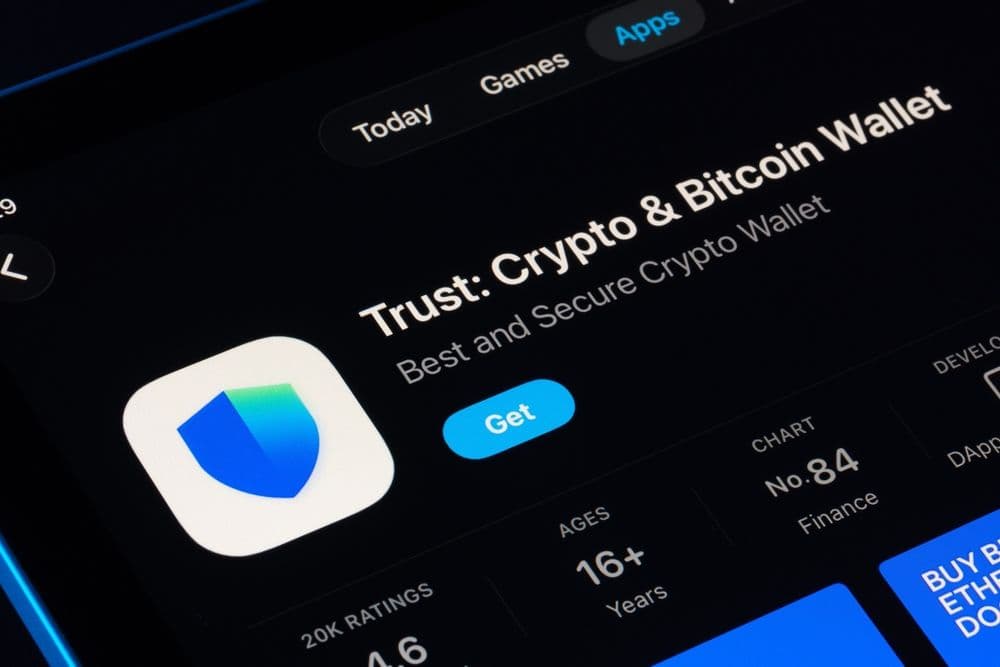 Trust Wallet’s new cash deposit feature connects the cash people use every day with the growing ecosystem of decentralized finance. (Shutterstock)
The service is available in 48 U.S. states and Puerto Rico, with certain regulatory exclusions including New York and Vermont. Some states may also have restrictions around stablecoin purchases depending on local compliance requirements. Users are required to complete identity verification steps, including providing personal information such as an email address and phone number, in line with U.S. regulatory standards for digital asset transactions.
From a market perspective, the introduction of physical cash on-ramps into a self-custody wallet is notable. While crypto exchanges and fintech platforms have long offered bank transfers and card payments, direct retail cash conversion has typically been limited to Bitcoin ATMs or standalone kiosk providers. Trust Wallet’s move embeds that functionality inside a widely used decentralized wallet interface, potentially simplifying the onboarding experience for new users.
However, the feature comes with costs. Deposits incur a 4% service fee plus a $3.95 transaction charge per deposit. For users converting smaller amounts of cash, these fees may represent a meaningful percentage of the total transaction. Whether the convenience outweighs the cost will likely depend on user behavior and deposit frequency.
The broader implications extend beyond immediate adoption metrics. Cash-based communities remain a significant segment of the U.S. economy. Federal Reserve data in recent years has shown that millions of Americans are unbanked or underbanked, relying on cash, prepaid cards, and alternative financial services. For those populations, a compliant cash-to-crypto pathway could serve as an alternative entry point into digital asset ownership and participation in blockchain networks.
At the same time, regulatory considerations remain central. By partnering with a licensed provider such as Coinme, Trust Wallet appears to be balancing self-custody principles with established compliance standards. This hybrid structure, decentralized asset control combined with regulated fiat on-ramps, reflects an increasingly common approach among crypto platforms operating in the United States.
Although the initial rollout is U.S.-focused, Trust Wallet’s global user base suggests potential for expansion if regulatory conditions permit. The wallet supports assets across more than 100 blockchains and is widely used internationally. If similar cash deposit partnerships were structured abroad, the model could have implications for remittance corridors and emerging markets where cash usage remains dominant.
Trust Wallet’s Cash Deposits feature represents a practical experiment in merging physical currency with decentralized digital infrastructure. The product does not attempt to replace banking systems outright, nor does it remove regulatory oversight from fiat conversion. Instead, it inserts crypto access into everyday retail environments, placing digital asset acquisition closer to routine consumer behavior.

From science Olympiad to Silicon Valley
Gulf firms target digital finance infrastructure

Everyday finance gets a Tabby upgrade

Abu Dhabi backs round-the-clock clean power

Stay ahead with the latest updates, insights, and trends shaping the world of finance, investment, blockchain, digital business, fintech, technology, and global markets.

