

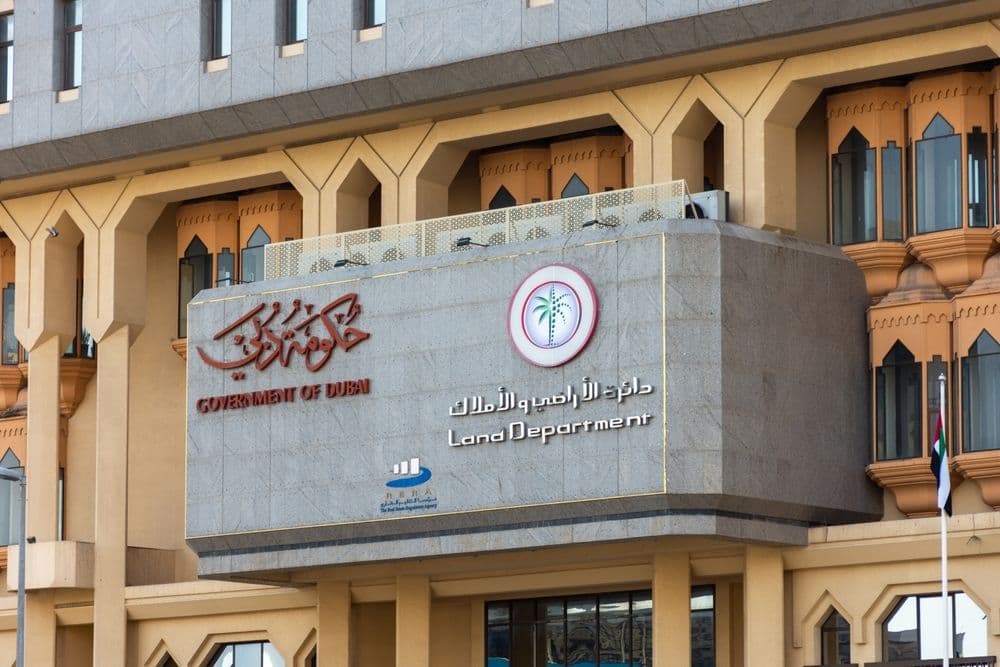
 The Dubai Land Department oversees the rollout of Phase II, bringing tokenized real estate into regulated secondary market trading. (Shutterstock)
The initiative is being closely watched by property investors, technology firms, and policymakers across the region. It marks one of the most advanced attempts by a government authority to move real estate tokenization beyond pilot testing and into live market functionality, where digital ownership units can actually be bought and sold under regulatory supervision.
Tokenization is the process of converting ownership rights in a physical asset, such as property, into digital units recorded on a distributed ledger. Rather than purchasing an entire apartment or commercial building, investors can acquire fractional interests that are digitally tracked and verified. The aim is to lower entry costs and broaden access to real estate participation while maintaining clear legal recognition of ownership.
Phase I of the project, introduced under the Real Estate Innovation Initiative, focused on testing the legal, operational, and technical frameworks required to support tokenized ownership. That stage ensured that digital tokens could be securely linked to official title deeds and that investor protections aligned with Dubai’s property registration system. According to the DLD announcement, Phase II transitions the initiative into a functional market environment, enabling holders of approximately 7.8 million real estate tokens to resell their holdings through a regulated secondary platform starting February 20.
This shift is significant because liquidity has long been one of real estate’s structural limitations. Traditional property sales often require lengthy transfer processes, negotiation periods, and substantial transaction costs. By introducing regulated secondary trading, Dubai is effectively testing whether digital infrastructure can compress those timelines and introduce more dynamic price discovery into a historically illiquid asset class.
 As Phase II begins, the Dubai Land Department steps deeper into blockchain-based property ownership with secondary resale set to be enabled from February 20. (Shutterstock)
The framework does not operate in isolation. The tokenization project is structured within Dubai’s legal property ecosystem, meaning token ownership corresponds directly to rights recorded in official land registries. Oversight mechanisms have been coordinated with relevant authorities to ensure compliance and investor safeguards. DLD has emphasized that the rollout will remain gradual and closely monitored, allowing regulators to evaluate market behavior, transparency standards, and settlement efficiency before expanding participation further.
Dubai’s move also aligns with broader economic planning strategies. Officials have positioned the tokenization initiative within the context of the Dubai Real Estate Sector Strategy 2033 and the UAE’s long-term innovation agenda, which prioritizes digital infrastructure and financial modernization. Real estate remains one of Dubai’s core economic pillars, consistently attracting international capital and recording strong transaction volumes in recent years. Integrating distributed ledger technology into that sector represents both a modernization effort and a competitive positioning strategy on the global stage.
Investors are drawn to the accessibility. Fractional token ownership may allow individuals, including expatriates and overseas buyers, to gain exposure to Dubai’s real estate market without committing to full property acquisition. At the same time, participation in any emerging digital asset structure requires careful due diligence. Liquidity conditions, valuation stability, regulatory adjustments, and platform governance will influence how sustainable the secondary market becomes once trading begins.
The immediate focus following February 20 will center on trading volume and liquidity, specifically how frequently tokens change hands and how efficiently buyers and sellers can transact. Market observers will also watch price discovery patterns to determine whether early trades reflect balanced valuations or short-term volatility. Regulatory responses, if any, will signal how adaptive the framework is to real-world conditions, and participation levels will indicate whether interest is driven primarily by retail investors, institutional actors, or a mix of both.
Dubai’s tokenization initiative represents a calculated experiment in blending traditional asset classes with digital infrastructure. Unlike speculative token launches seen in other jurisdictions, this project is anchored in an established property registration system and supported by formal oversight. That distinction may prove critical in determining whether the model becomes a reference point for other real estate markets exploring similar paths.
With secondary trading underway, the coming months will provide the clearest test yet of whether blockchain-enabled real estate can meaningfully improve liquidity, transparency, and access without undermining regulatory certainty. At this stage, Dubai is positioning itself not merely as a participant in digital asset innovation, but as a jurisdiction willing to embed those technologies directly into one of its most important economic sectors.

From science Olympiad to Silicon Valley
UAE visitors gain easier banking access

Business payments get a digital overhaul
Everyday finance gets a Tabby upgrade

Stay ahead with the latest updates, insights, and trends shaping the world of finance, investment, blockchain, digital business, fintech, technology, and global markets.
