
 UAE may get its own version of ChatGPT as OpenAI holds talks with G42. (Image: Block News International archives / Shutterstock)
The companies are exploring the creation of a UAE-specific version of ChatGPT that would be adapted to local language use, cultural norms, and regulatory requirements, according to a report by Semafor.
The proposed initiative would mark a notable evolution from OpenAI’s global deployment strategy, which has so far focused on broadly accessible, standardized models. Instead, the UAE-tailored version of ChatGPT would be designed to operate within the country’s legal and social frameworks, incorporating enhanced Arabic language support and content moderation aligned with domestic regulations.
Such an approach reflects a broader shift in how governments and technology firms are thinking about generative AI adoption. As these systems increasingly influence education, administration, and information access, national authorities are seeking tools that deliver technological benefits without clashing with local legal standards.
G42 has emerged as a central player in the UAE’s artificial intelligence strategy over the past several years. Chaired by Sheikh Tahnoon bin Zayed Al Nahyan, the company operates across healthcare, finance, government services, and advanced computing, and has become one of the most influential technology groups in the Middle East. G42’s close alignment with state priorities has positioned it as a preferred partner for major international technology firms seeking access to the UAE market.
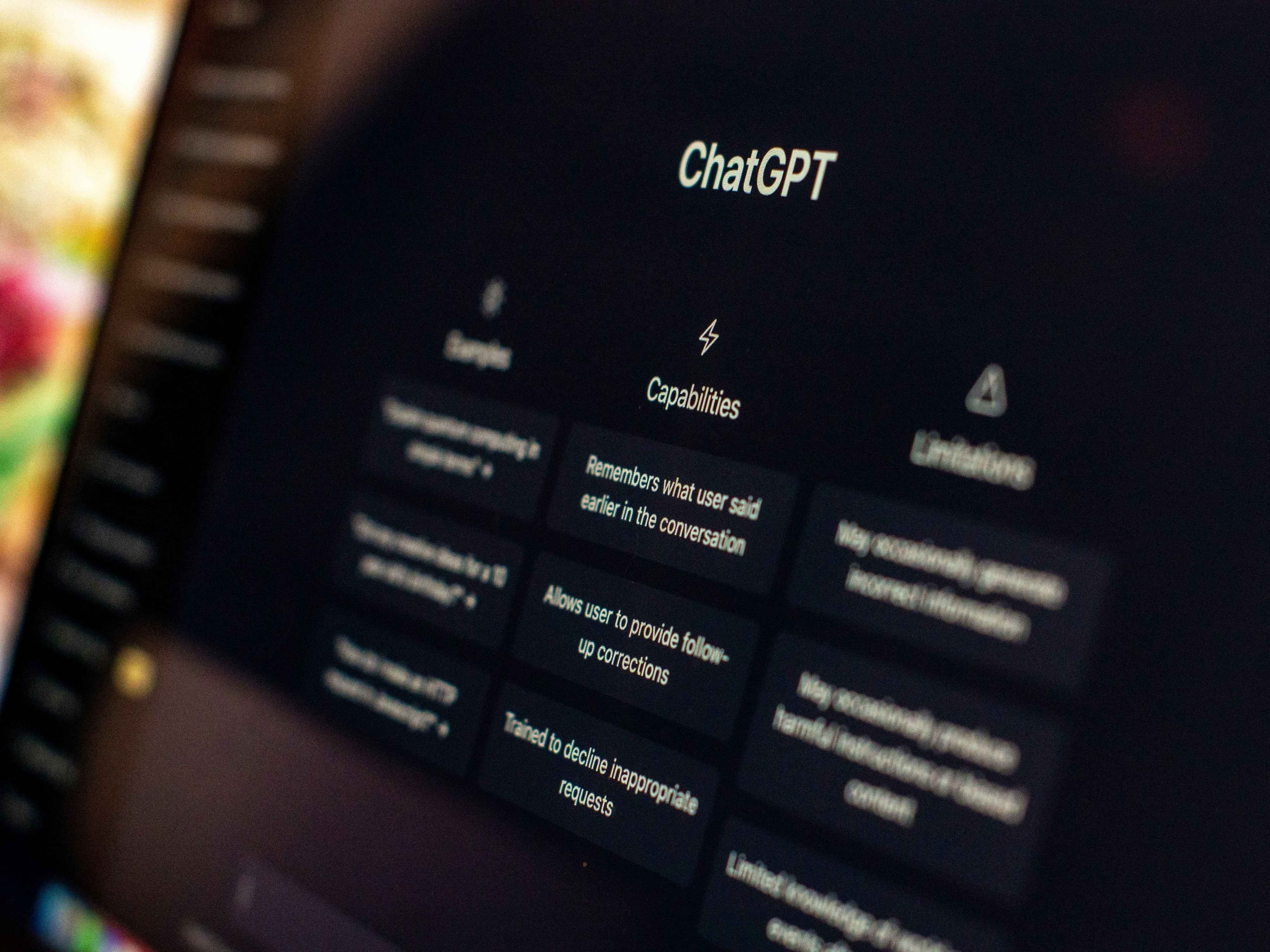 ChatGPT, the generative AI chatbot developed by OpenAI, is being considered as part of broader discussions about localized AI tools in the UAE. (Unsplash)
The talks with OpenAI also come against the backdrop of the UAE’s growing investment in home-grown AI capabilities. The country has already supported the development of Arabic-focused large language models such as Jais, an open-source system launched in collaboration with the Mohamed bin Zayed University of Artificial Intelligence. Jais was created to address long-standing gaps in Arabic language representation within global AI systems, underscoring the region’s push for technological sovereignty alongside international partnerships.
Unlike purely domestic models, however, a UAE-specific ChatGPT would leverage OpenAI’s frontier models while applying localized controls. This hybrid approach offers practical advantages, allowing rapid deployment of state-of-the-art capabilities without the enormous costs associated with training large models from scratch. At the same time, it raises complex questions about how much influence governments should exert over the behavior and outputs of AI systems used by the public.
Tailoring AI models to regional contexts is increasingly seen as a way to improve usability and safety, particularly in non-English-speaking markets. At the same time, such customization raises questions about whether localized controls could shape how information is presented in systems that many users treat as neutral tools. As generative AI expands globally, models are being influenced not only by technical design choices but also by political, cultural, and regulatory environments.
The UAE government has consistently positioned artificial intelligence as a cornerstone of its long-term economic and administrative strategy. Authorities have promoted AI adoption across sectors ranging from education and healthcare to urban planning and public services. A locally adapted generative AI system could help accelerate those goals while reducing the risk of outputs that conflict with national laws or social norms.
The discussions highlight a broader strategic challenge facing global AI developers: how to scale advanced systems across jurisdictions with increasingly divergent regulatory environments. From Europe’s AI Act to China’s tightly controlled rules governing generative AI, technology companies are being pushed to reconsider the assumption that a single model can serve all markets equally. The talks involving the UAE suggest OpenAI may be exploring more flexible deployment approaches to navigate this reality.
Abu Dhabi has also become an increasingly important hub for global AI investment, with sovereign wealth funds and regional capital markets emerging as major sources of financing for frontier technology. In recent weeks, OpenAI Chief Executive Officer Sam Altman has been meeting with investors in the United Arab Emirates as the company explores what could become a $50 billion funding round.
Altman’s outreach to state-linked funds in Abu Dhabi reflects the growing influence of Gulf capital in backing the next wave of AI innovation, even as the talks remain in early stages and no agreements have been finalized.
Any potential agreement would place the UAE among a small but growing group of jurisdictions exploring closer involvement in how advanced AI systems are deployed domestically. While the contours of the discussions have not been made public, the talks themselves point to a broader shift in how governments and technology companies are engaging with generative AI, not simply as end-users, but as stakeholders in how these systems are configured, governed, and integrated into national digital frameworks.
The collaboration could establish a precedent for how advanced AI systems are customized at the national level, balancing technological innovation with sovereign control.
Norma joins Foodics’ AI push
UAE looks beyond borders on AI
HELM gives Arabic AI a sharper scorecard
UAE networks prepare for a faster future

Stay ahead with the latest updates, insights, and trends shaping the world of finance, investment, blockchain, digital business, fintech, technology, and global markets.

