
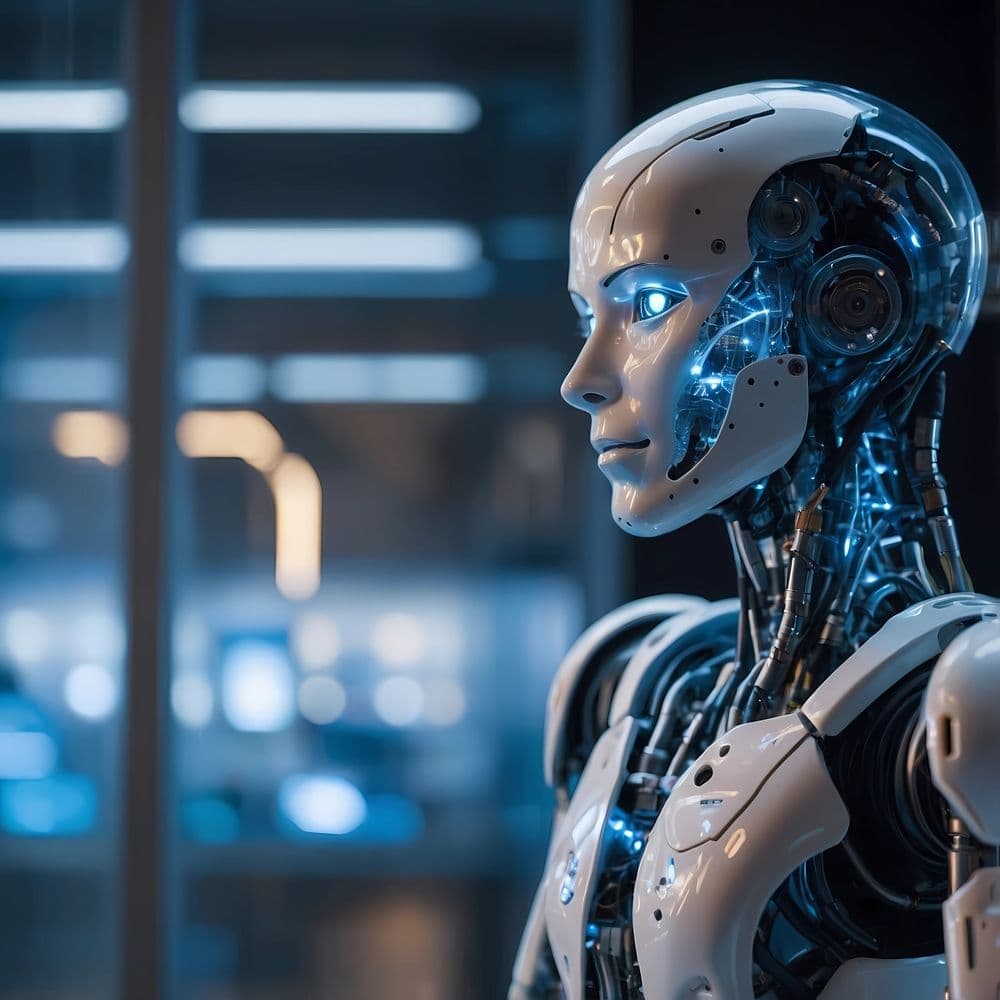
 ether gives Generative Bionics a €70M lift as humanoid AI advances. (Shutterstock)
The funding round positions Tether as a key investor in Europe's emerging robotics ecosystem and marks one of the key milestones in the company's further strategy to support innovative technologies beyond its core stablecoin business. The company announced that this investment is part of its long-term ambition to improve the world's digital and physical infrastructure and to foster technologies that extend human capabilities. The company further added that this decision was what would be expected from it if it is seriously committed to contributing toward the creation of next-gen robotics that can act independently in the real world.
Generative Bionics inherits twenty years of research from IIT's multidisciplinary robotics program and carries exclusive licenses to a range of proprietary humanoid robotics technologies developed within the institute. Tether noted that the startup brings together roughly 70 specialized engineers and scientists, representing over 600 cumulative years of experience in human-centric robotics and Physical AI. The base of expertise includes major IIT projects such as the iCub platform, one of the most advanced humanoid research robots ever developed. Tether underlined that the new company has already started to shape its industrial roadmap, and the investment will accelerate efforts to commercialize Physical AI systems, integrate advanced edge-AI capabilities, and push its humanoid robot platform toward industrial validation.
The company intends to establish its first production facility in Italy and is already preparing its humanoid systems for deployment into operational environments that require flexible and adaptive automation. Generative Bionics said it aims to bring into the market robots that can take over repetitive, hazardous, or high-intensity tasks without fully replacing human teams. Backed by Tether, the startup forecasts that early 2026 will see its first industrial deployment programs announced, which will mark the important step in bringing humanoid robotics into real-world applications. At CES 2026 in Las Vegas, the company also plans to show for the first time its first complete humanoid robot concept-what would mark a milestone moment for Italy's robotics sector.
Tether framed the investment as part of a broader evolution of the company, underscoring its growing interest in frontier technologies that bridge the digital and physical worlds. The company said robotics and Physical AI are on path to become key parts of global infrastructure, and supporting Generative Bionics is a way to help define that future. Tether underscored that humanoid robotics has the potential to extend human capability, unlock new industrial efficiencies, and bring new opportunities in industries like logistics, manufacturing, healthcare, and retail. The company said the startup's deep scientific foundation and applied expertise position it well to lead in a market expected to grow significantly as robotics and AI continue to converge.
While Tether did not provide explicit global market forecasts of its own, it did say the next decade will be defined by the rapid adoption of intelligent machines that are capable of interacting with the physical world. The company added that the technologies developed by Generative Bionics could form a critical part of that shift, as operational environments increasingly demand more adaptable and human-collaborative systems.
Tether also underlined that this investment is aligned with its strategy to support innovative initiatives all over the world that strengthen technological independence, productivity, and economic resilience.
To Generative Bionics, the funding is a key milestone on its path to scaling its robotics platform beyond the lab. It added that it will now prepare to build a new kind of robotics infrastructure with deep roots in decades of Italian research excellence, advanced engineering, and industrial-grade AI integration. With a clear roadmap, a growing team, and a high-profile backer in Tether, the company plans to be at the forefront of this new era of intelligent humanoid systems.
The next eighteen months-from its early industrial programs in 2026 through to its CES debut-will dictate how quickly it can take foundational research and create a commercially viable robotics ecosystem. Tether's investment reflects a pivot in the way crypto-native companies are diversifying. Instead of investing purely in software or digital innovation, Tether is putting capital into technologies that interact with the physical world and may have the potential to reshape industries well outside of finance.
The move underlines confidence in the long-term upside of Physical AI and presumes robotics as a frontier-defining area of technology. For Tether, it's a high-stakes, high-conviction bet: years of Italian robotics research-which just consolidated under Generative Bionics-can ultimately produce the next generation of smart machines capable of performing tasks in the physical environment.

From science Olympiad to Silicon Valley
UAE visitors gain easier banking access

Saudi startup scales its AI ambitions
Partior powers faster cross-border settlements

Stay ahead with the latest updates, insights, and trends shaping the world of finance, investment, blockchain, digital business, fintech, technology, and global markets.

