

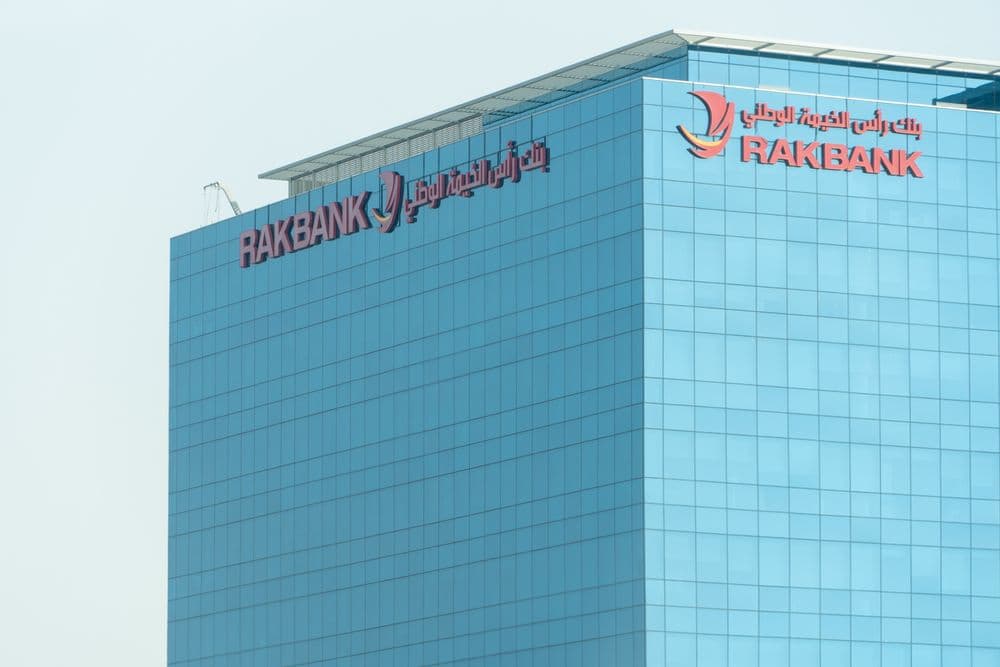
 RAKBANK edges closer to rolling out a dirham-backed stablecoin. (Shutterstock)
The approval allows the bank to continue building the technical and operational foundations of the token, with a full launch still subject to final regulatory sign-off and readiness checks.
Rather than positioning the token as a crypto product in the speculative sense, RAKBANK has framed the stablecoin as a digital version of the dirham designed for payments and settlement. The aim is to bring some of the efficiencies associated with blockchain technology, such as faster settlement and programmability, into a structure that remains firmly anchored to the traditional banking system and overseen by national regulators.
The approval also reflects the regulatory direction the UAE has been taking over the past two years. In 2024, the Central Bank introduced a framework governing payment tokens allowing only licensed dirham-backed stablecoins to be used for payments within the country’s mainland economy. The move was widely seen as a way to encourage innovation while preventing unregulated or foreign-currency stablecoins from gaining widespread circulation in everyday transactions.
RAKBANK has stated that its stablecoin will be fully backed by AED reserves held in segregated, regulated accounts, ensuring that each token can be redeemed at face value. The bank also pointed to audited smart contracts and transparent reserve reporting as part of its design, addressing concerns that have emerged globally around the reliability and backing of some stablecoin models. These safeguards are intended to make the token suitable for institutional and retail use alike, rather than experimental or high-risk applications.
Raheel Ahmed, Group CEO of RAKBANK, noted, “Receiving in-principle approval from the Central Bank of the UAE is an important milestone in our digital assets journey. It reflects our focus on innovation that is responsible, regulated and built on trust. As we mark our 50th anniversary, we remain committed to developing solutions that are designed around our customers’ needs and aligned with the UAE’s vision for a future-ready financial system. It is another step in delivering banking that is digital with a human touch.”
The stablecoin effort builds on RAKBANK’s recent steps into digital assets. In 2025, the bank enabled its retail customers to access cryptocurrency trading through a regulated partner, offering exposure to digital assets within a controlled environment. Moving from facilitation to issuance represents a deeper commitment to integrating blockchain-based tools into core banking services rather than treating them as a peripheral offering.
RAKBANK’s announcement comes at a time when several UAE institutions are testing how stablecoins can be used in real-world payment scenarios. Zand Bank launched a regulated multi-chain AED-backed stablecoin in 2024, while Al Maryah Community Bank introduced AE Coin, the country’s first fully regulated dirham-backed stablecoin, which has since been used for consumer payments such as telecom services through partnerships with local companies.
At the same time, international players are positioning themselves within the UAE’s regulatory ecosystem. In late 2025, US-based stablecoin issuer Circle Internet Group received financial services permission from Abu Dhabi Global Market, allowing it to operate as a regulated money services provider. The move underscored the UAE’s willingness to host global stablecoin infrastructure, provided it operates within clearly defined supervisory frameworks.
Taken together, these developments point to a deliberate strategy by UAE authorities to shape how digital money evolves within the country. By anchoring stablecoins directly to the dirham and placing issuance under central bank oversight, policymakers appear intent on capturing the benefits of faster, more flexible payments while avoiding the instability that has accompanied some overseas experiments.
RAKBANK must still meet the remaining regulatory conditions attached to its in-principle approval before it can issue the token publicly. Once final authorization is granted, further details are expected on rollout timelines and practical use cases. With more traditional banks now moving into regulated digital assets, RAKBANK’s approach offers a glimpse of how blockchain-based payments may increasingly develop from within the banking system rather than outside it.

Norma joins Foodics’ AI push
HELM gives Arabic AI a sharper scorecard
UAE networks prepare for a faster future

UAE firm CNTXT AI plans broader AI expansion

Stay ahead with the latest updates, insights, and trends shaping the world of finance, investment, blockchain, digital business, fintech, technology, and global markets.
