
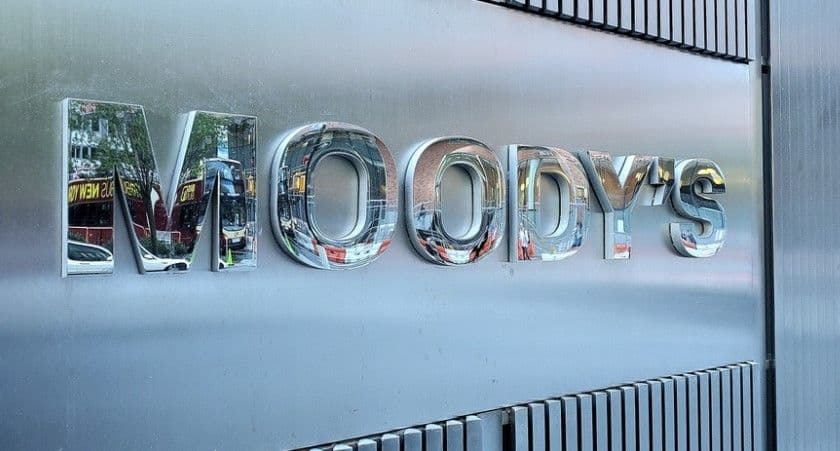
 Moody’s expands its footprint in Saudi Arabia with a new regional headquarters in Riyadh. (Shutterstock)
The decision builds on Moody’s earlier expansion in the Kingdom. The firm first opened an office in Saudi Arabia in 2018, and the new RHQ designation marks a structural upgrade of that presence, aligning with Riyadh’s broader push to attract multinational companies to anchor their regional operations in the country. Moody’s said the headquarters will enhance its ability to serve customers locally while expanding its footprint across the Middle East.
Rob Fauber, President and Chief Executive Officer of Moody’s, said the move underscores the company’s confidence in the Kingdom’s trajectory and its intention to support both local and global investors operating in the region. “Our decision to establish a regional headquarters in Riyadh reflects our confidence in Saudi Arabia’s strong economic momentum, as well as our commitment to helping domestic and international investors unlock opportunities with our expertise and insights. We are well positioned to provide the analytical capabilities and market intelligence that investors and institutions need to navigate evolving markets across the Middle East.”
The Riyadh headquarters will be led by Mahmoud Totonji, who has been appointed General Manager. According to Moody’s, the regional office will support closer collaboration with local institutions, regulators, and market participants, offering what the company describes as “decision-grade data, analytics, and insights” tailored to regional market dynamics.
The development also aligns with Saudi Arabia’s Regional Headquarters Program, an initiative designed to encourage multinational corporations to base their Middle East operations in the Kingdom. Under the program, companies are offered incentives including tax benefits and regulatory facilitation. Arab News has previously reported that hundreds of global firms have joined the program as Riyadh seeks to strengthen its status as a regional business hub.
For Saudi Arabia, the presence of global financial infrastructure providers like Moody’s is not symbolic. The Kingdom’s capital markets have expanded significantly over the past decade, driven by reforms tied to Vision 2030. These include regulatory modernization, increased transparency requirements, and expanded access for foreign investors. Saudi Arabia’s inclusion in major global equity and bond indices has also brought increased international capital flows, making the availability of sophisticated credit analysis and risk assessment tools more critical.
Moody’s operates globally through its ratings and analytics divisions, assessing sovereign and corporate creditworthiness and providing risk intelligence to financial institutions. Establishing a regional headquarters places its analysts and commercial teams closer to issuers and investors operating in Gulf markets, potentially streamlining engagement around bond issuances, sukuk offerings, and structured finance products.
Moody’s expansion follows similar moves by other global ratings and financial information firms that have strengthened their presence in Riyadh in recent years. The clustering of such institutions supports the Kingdom’s ambition to build a comprehensive financial ecosystem that matches its growing economic footprint.
While Moody’s statement emphasized opportunity and growth, the practical impact will depend on how effectively the new headquarters integrates with local financial institutions and regulatory bodies. Market participants often value proximity, not only for faster engagement, but for deeper understanding of regional economic conditions, regulatory frameworks, and issuer profiles.
International investors monitoring Middle Eastern markets may view the establishment of a regional hub by a major ratings agency as an added signal of institutional maturity. Credit ratings shape investment mandates and risk-weighting decisions across global portfolios. A more embedded Moody’s presence could strengthen the exchange of data and dialogue between Gulf issuers and international capital providers.
At the same time, Moody’s presence does not alter the fundamental credit realities facing any issuer. Ratings remain subject to global economic conditions, fiscal performance, and macroeconomic trends. The expansion instead reflects confidence that the region’s capital markets warrant sustained analytical coverage and commercial investment.
Moody’s decision marks another milestone in Saudi Arabia’s effort to reposition itself as a financial nerve center for the Middle East. Whether measured in capital flows, debt issuance or institutional presence, the trajectory points toward deeper integration with global markets and Moody’s has signaled that it intends to be firmly embedded in that story.

Dubai Department of Economy and Tourism backs SME growth

AI joins Dubai’s park planning

SpaceX gains meet market reality
UAE looks beyond borders on AI

Stay ahead with the latest updates, insights, and trends shaping the world of finance, investment, blockchain, digital business, fintech, technology, and global markets.

