The Dubai Multi Commodities Centre (DMCC) reported another year of strong expansion in 2025, adding more than 2,300 new companies and pushing its total membership beyond 26,000. The figures underline the continued momentum behind Dubai’s role as a global hub for trade, finance, and emerging technologies.
The growth reflects more than just company registrations. It points to a broader shift in how global businesses are positioning themselves, increasingly clustering within integrated ecosystems that combine infrastructure, capital access, and regulatory efficiency.
Originally established as a commodities-focused free zone, DMCC has evolved into a multi-sector business district spanning trade, financial services, and technology. Founded in 2002, the center has steadily expanded its scope while maintaining its core role in facilitating global trade flows.
In 2025, that transformation became more visible. Technology emerged as DMCC’s largest sector, with more than 4,000 companies operating within its ecosystem, reflecting a steady shift toward digital industries and innovation-led growth.
Rather than replacing its commodities base, DMCC appears to be layering new sectors on top of existing ones. Energy firms, precious metals traders, and agricultural commodity businesses continue to operate alongside fintech platforms, AI startups, and digital asset firms, creating a hybrid environment that mirrors the changing structure of global trade.
Growth Driven by Global Demand
The addition of more than 2,300 companies in a single year highlights sustained international demand for Dubai as a business destination. DMCC saw strong inflows from markets including India, the United Kingdom, and Türkiye, while growth accelerated across the United States, China, Germany, and Switzerland.
This pattern reflects a broader diversification in global capital flows. Instead of relying on a single region, DMCC’s expansion is being supported by a mix of established and emerging markets, suggesting resilience in its growth model.
The free zone’s ability to attract companies from multiple jurisdictions is closely tied to its offering: streamlined licensing, tax advantages, and access to international trade networks. These factors have positioned Dubai as a gateway between East and West, particularly at a time when businesses are reassessing supply chains and market access.
Convergence of Trade, Finance and Technology
A central theme in DMCC’s latest growth cycle is the convergence of sectors that were once more clearly separated. Initiatives such as fintech platforms, wealth management hubs, and innovation centers are increasingly integrated into the broader trade ecosystem.
This convergence is not accidental. It reflects a structural change in how trade operates, where financial services, digital infrastructure, and physical commodities are becoming interdependent.
For example, DMCC’s continued activity in commodities markets remains significant. The center facilitated more than 100 diamond tenders and auctions in 2025 and supported large-scale financial transactions, including over $354 billion (AED 1.3 trillion) in Islamic finance activity.
At the same time, platforms focused on digital finance and innovation are expanding, signaling that future growth will likely come from the intersection of these sectors rather than from any single industry.
Dubai’s Growth Momentum and DMCC Leadership Perspective
DMCC’s expansion is closely linked to the wider trajectory of Dubai’s economy, which has increasingly diversified away from oil toward trade, logistics, finance, and services.
The emirate’s positioning as a global financial center has also strengthened in recent years, supported by international rankings and rising trade volumes.
Ahmed Bin Sulayem, Executive Chairman and Chief Executive Officer, DMCC, stated: “2025 reinforced Dubai’s position as one of the world’s most dynamic and connected centres for global trade. With the UAE’s total trade reaching a new record of over USD 1.63 trillion, and Dubai achieving its highest-ever ranking in the Global Financial Centres Index at 7th place globally, the scale and momentum are clear.”
Feryal Ahmadi, Deputy CEO and Chief Operating Officer, DMCC, said: “Our 2025 performance reflects the strength of DMCC’s operating model – one that is designed to deliver commercial impact across every layer of our district. As our technology sector footprint becomes the largest within DMCC, and as we expand into new sectors such as emerging technologies, luxury goods, advanced finance and private wealth, our focus remains on integration and ensuring that commodities, capital and innovation stay actively connected. This is what enables our members to grow faster, operate more efficiently, and access opportunity at scale.”
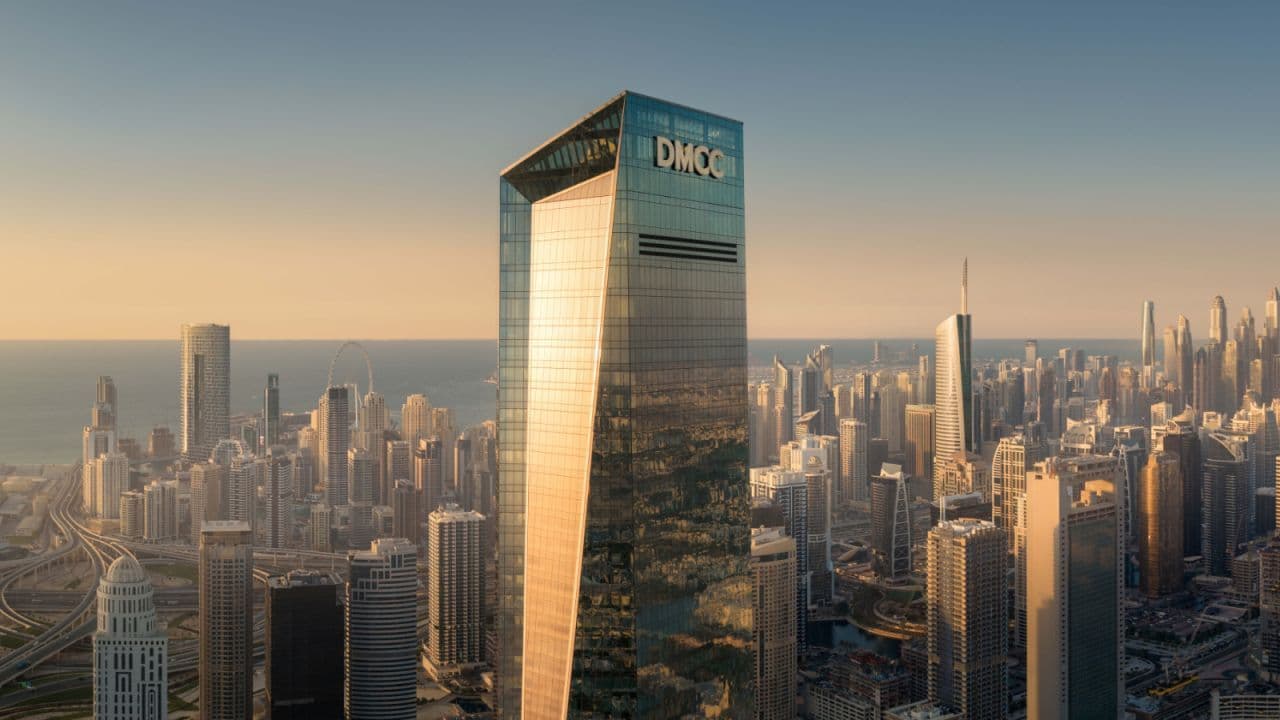
Beyond company numbers, DMCC’s growth is also visible in its physical footprint. Developments across Uptown Dubai and Jumeirah Lakes Towers continue to expand, with new commercial, residential, and mixed-use projects underway.
The sell-out of branded residences and the launch of additional office and retail space indicate sustained demand not just for business registration, but for long-term operational presence within the district.
This blend of real estate development and business infrastructure reinforces DMCC’s model as more than a licensing hub. It is positioning itself as a fully integrated business environment where companies can operate, invest, and scale.
While annual growth figures often highlight short-term performance, DMCC’s 2025 results point to a longer-term shift. The steady rise in membership, combined with sector diversification and international demand, suggests that Dubai’s role in global trade is becoming more embedded rather than opportunistic.
The increase to over 26,000 companies is not just a milestone. It reflects the accumulation of years of policy direction, infrastructure investment, and market positioning.