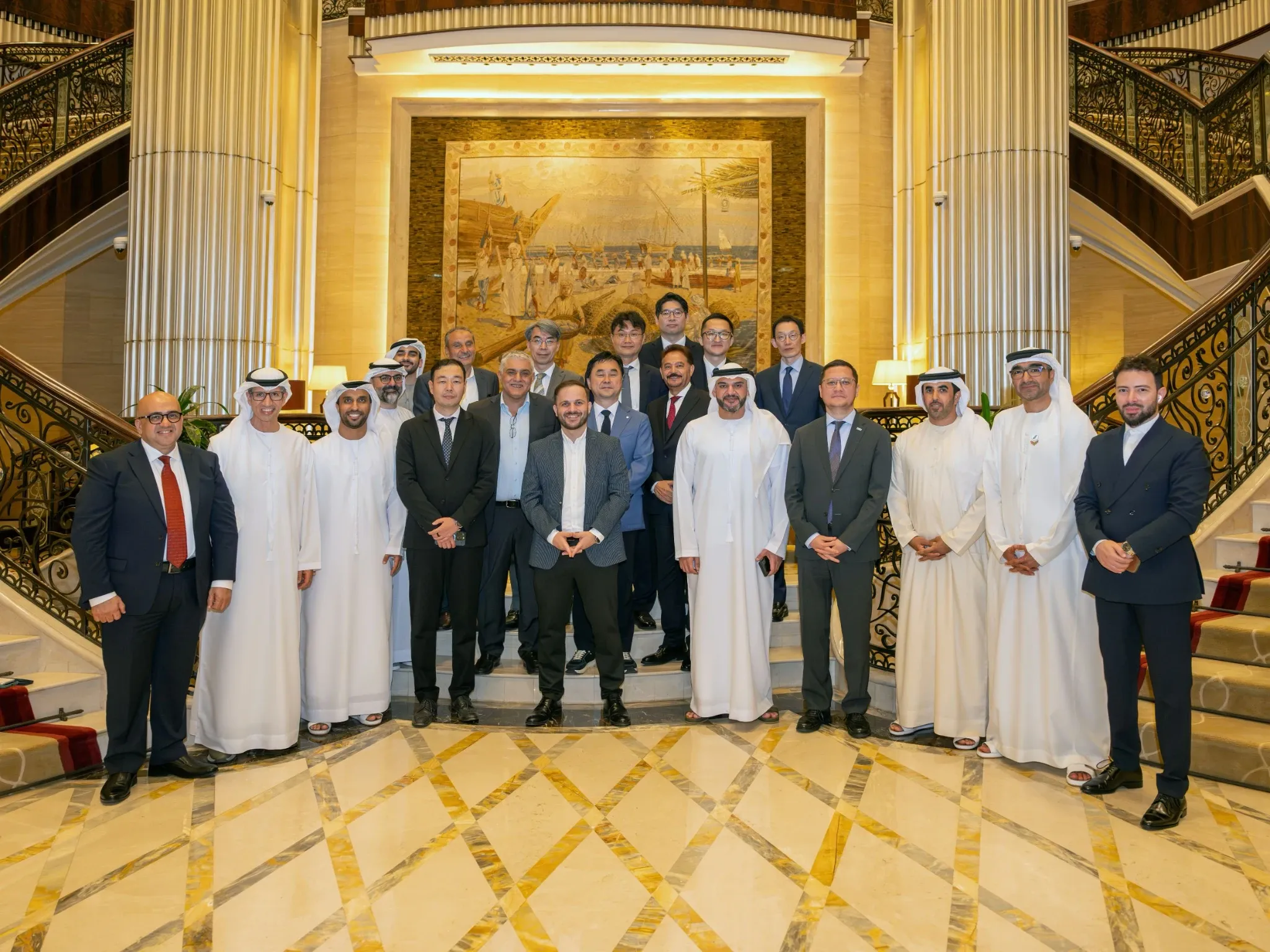
Abu Dhabi-based International Holding Company said it has completed a $30 million (AED 110 million) transaction using the DDSC stablecoin on ADI Chain, marking one of the region’s largest disclosed institutional stablecoin transfers and signaling a broader shift toward regulated digital financial infrastructure in the UAE.
The transfer was executed on ADI Chain, an institutional Layer-2 blockchain developed by ADI Foundation. The statement described the move as a major step toward accelerating institutional adoption of blockchain-based financial infrastructure in the UAE.
DDSC is described as a UAE dirham-backed stablecoin developed through a collaboration involving IHC, First Abu Dhabi Bank, and Sirius International Holding. The ecosystem recently received approval from the Central Bank of the UAE. The transaction itself was positioned as evidence that regulated blockchain systems in the country are beginning to move beyond limited testing environments and into live institutional use cases tied to large-value financial activity.
Institutional Blockchain Adoption Accelerates
While stablecoins have often been associated with retail cryptocurrency markets, the significance of this transaction appears to center more on infrastructure deployment and enterprise-scale settlement than speculative trading activity.
The $30 million (AED 110 million) transfer demonstrates the scalability and operational readiness of the DDSC ecosystem for institutional financial activity, including treasury operations, trade settlement, and cross-border transactions. The company stated that the execution validates the infrastructure’s ability to support high-value financial flows on regulated blockchain rails.
The scale of the transaction also reflects a growing effort among financial institutions and sovereign-linked entities in the Gulf region to explore blockchain systems that prioritize compliance, settlement efficiency, and regulated digital payments.
Syed Basar Shueb, CEO of IHC, said: “This transaction demonstrates that the UAE’s digital infrastructure is live, resilient, and ready to support real institutional financial activity. As one of the founding participants in the DDSC ecosystem, IHC is committed to advancing solutions that improve how capital moves across markets. Executing 110 million DDSC on ADI Chain is a clear signal that we are entering the next phase, where institutional-grade digital assets are not only viable, but operational at scale.”
UAE Positions Itself as a Digital Finance Hub
The announcement arrives as the UAE continues to position itself as a regional hub for digital finance, blockchain infrastructure, and regulated virtual asset activity.
In recent years, the country has increasingly focused on creating frameworks designed to attract financial technology firms and digital asset projects while maintaining regulatory oversight. Unlike earlier crypto market cycles that largely revolved around speculative retail trading, many recent initiatives in the UAE have focused on institutional payment infrastructure, tokenized finance, and enterprise-grade settlement systems.
Within the DDSC ecosystem, the stablecoin is pegged to the UAE dirham and designed to facilitate compliant digital transactions across institutional and commercial environments. The infrastructure is intended to support businesses, institutions, and individuals while enabling more efficient movement of value across markets.
The use of a dirham-backed stablecoin also aligns with broader international efforts to explore digital payment systems that can reduce settlement delays and operational friction associated with traditional financial rails, particularly in cross-border environments.
The latest transaction validates the underlying infrastructure’s ability to support “high-value, high-frequency financial flows,” a capability that could become increasingly important as regulated digital assets gain wider institutional adoption.
ADI Chain Moves Further into Enterprise Finance
The transaction also places greater attention on ADI Chain, which is being positioned as an institutional blockchain infrastructure layer rather than a retail-facing cryptocurrency network.
ADI Chain was developed specifically for regulated financial activity and enterprise-scale deployment. The infrastructure is intended to support institutional payment systems, trade corridors, and financial settlement activity tied to compliant digital asset environments.
The emphasis on enterprise blockchain networks reflects a wider industry shift in which governments, financial institutions, and major corporations are increasingly exploring blockchain technology for settlement efficiency, transparency, and programmable financial infrastructure rather than purely speculative applications.
In this case, the importance of the transaction comes not only from the value transferred, but also from the participants involved. IHC is one of the UAE’s largest investment companies and has continued expanding into technology, infrastructure, and digital economy initiatives across the region.
By executing the transaction on a regulated blockchain infrastructure tied to a dirham-backed stablecoin, the company appears to be signaling confidence in the long-term viability of sovereign-aligned digital financial systems within the UAE.
Focus Shifts Toward Wider Institutional Use
The next phase of the DDSC ecosystem will focus on expanding institutional participation and developing broader applications tied to international payments and trade activity.
The statement referenced future use cases connected to cross-border settlement, institutional treasury operations, trade finance, and regional payment corridors linking the Middle East with global markets.
The move comes at a time when governments and financial institutions worldwide are evaluating how blockchain infrastructure could modernize payment systems while preserving regulatory oversight and financial compliance standards.
Rather than competing directly with consumer-focused cryptocurrencies, projects such as DDSC appear aimed at integrating blockchain infrastructure into regulated financial systems already used by institutions, enterprises, and government-linked organizations.