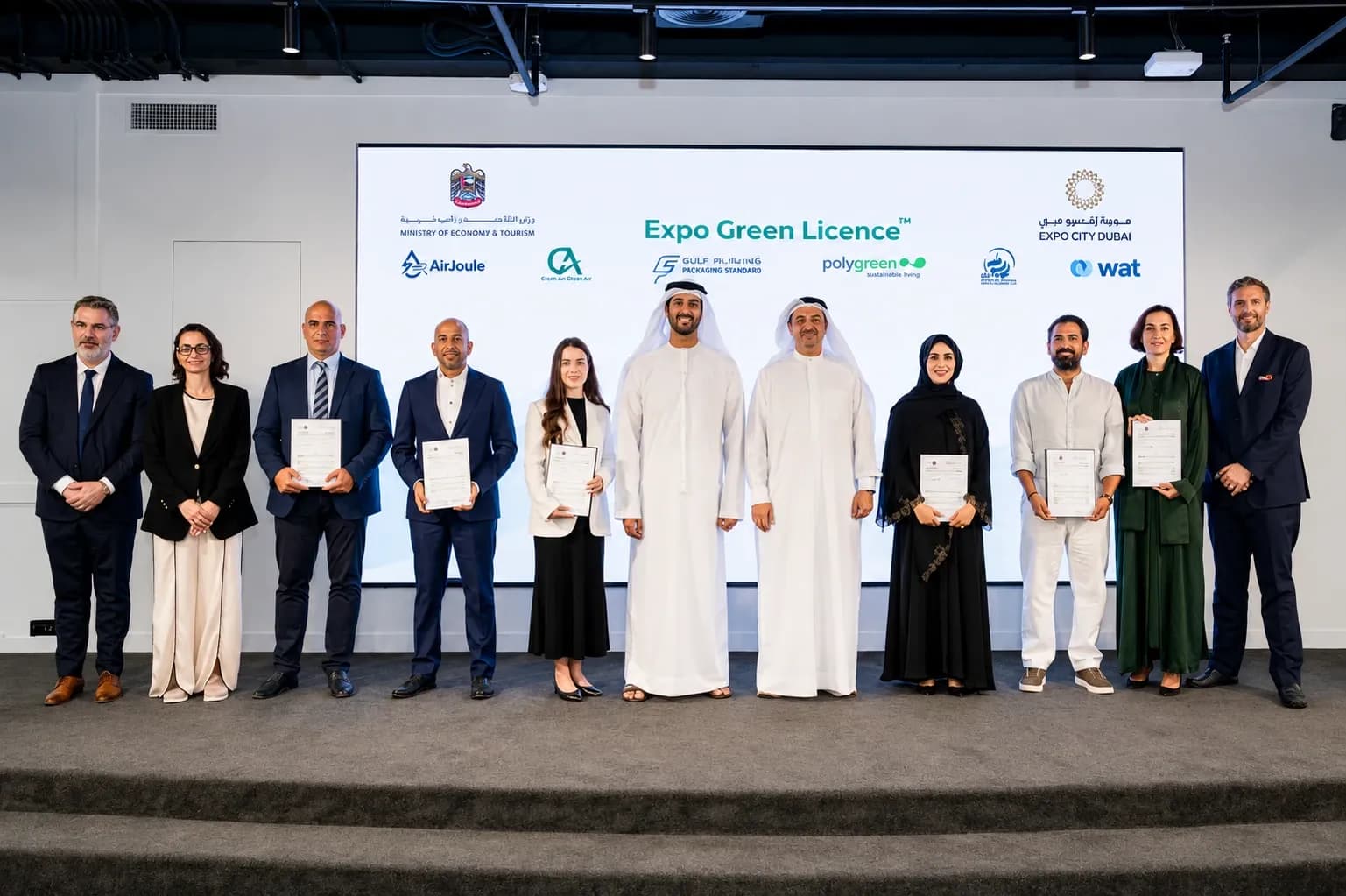
Expo City Dubai has awarded the UAE’s first Expo Green Licences to six businesses working across climate technology, electronic waste, emissions measurement and circular-economy services. The initial group ranges from smaller social enterprises to international organizations, giving the emerging Green Innovation District a mix of technologies, operating models and stages of development.
The recipients are atmospheric water technology company AirJoule; Dubai-based electronics recycling specialist WAT, or We Are Tech; environmental services company Polygreen; greenhouse gas verification body Carbon Assurance; emissions strategy and reporting specialist Carbon Standard; and RBT Collective, which works on food rescue and circular food systems.
Rather than functioning only as a conventional trade licence, the program is designed to identify businesses with demonstrated environmental, social and governance credentials. Established companies may qualify through recognized ESG ratings or comparable evidence from accredited organizations. Smaller companies can undergo an evidence-based review by Expo City’s sustainability team, provided their products or services are scalable and directly connected to climate action, resource efficiency or the circular economy.
Incentives Extend Beyond Business Registration
Each licence provides access to a support package valued at more than US$108,000 (AED 400,000). Expo City said the package includes discounted setup costs, sustainability services, promotional support and opportunities to collaborate with other participants across the district.
Licence holders may also be invited to local and international business missions organized through the Ministry of Economy and Tourism. Additional opportunities are expected through Majra, the UAE’s national platform for sustainability-focused businesses and initiatives, as well as the Green Majlis, a forum intended to bring business leaders and specialists together to discuss practical environmental solutions.
Intellectual property support forms another part of the program. Expo City said eligible businesses will receive fast-track access to services through a planned Green IP office operated with the Ministry of Economy and Tourism. Once established, the office is expected to assist companies with patent registration, technology localization and the protection of sustainability-related inventions, potentially shortening a process that can be difficult for young technology companies to navigate alone.
Building a Commercial Base for Green Technology
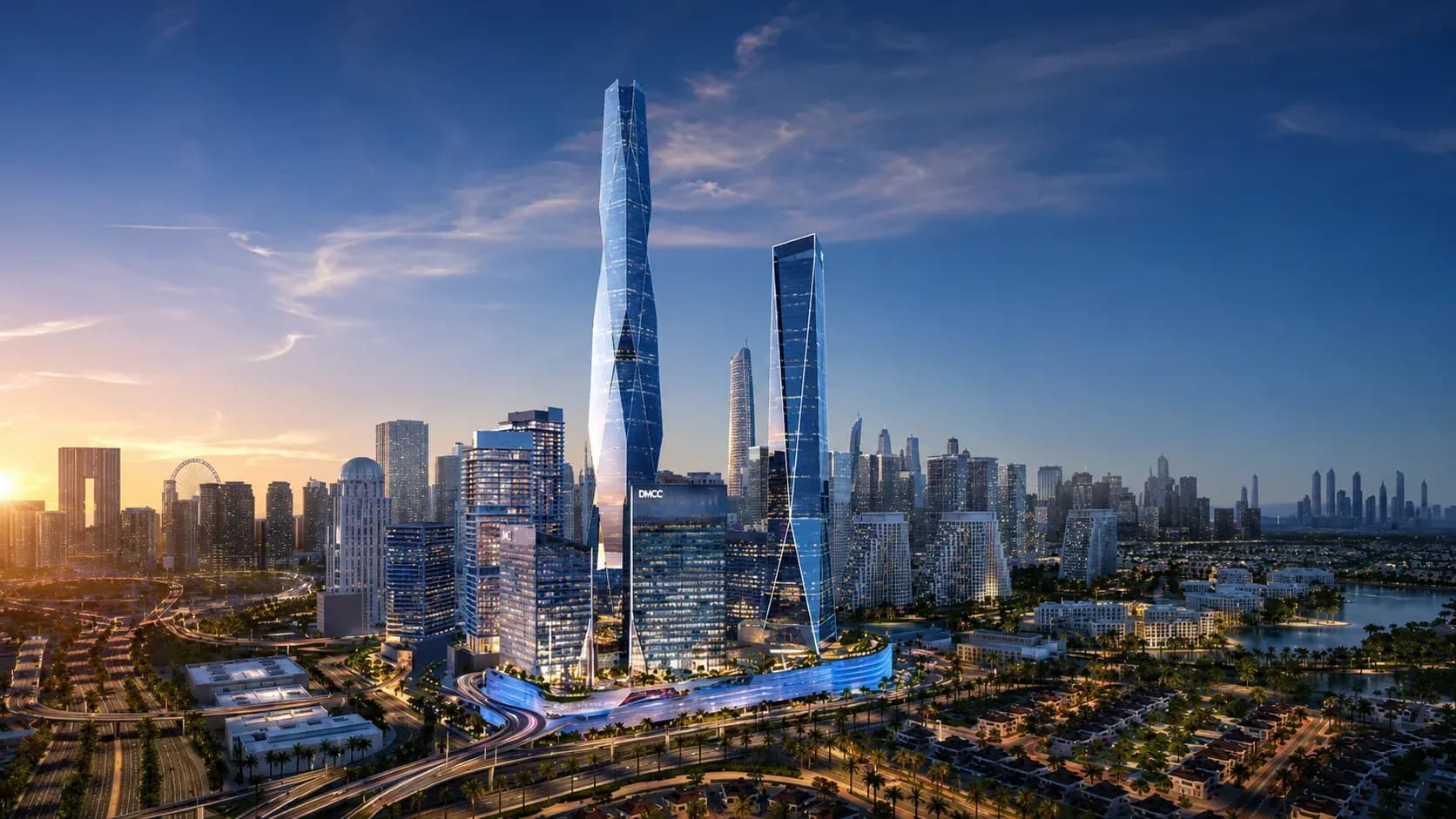
The licences represent an operational step in the development of the UAE’s first Green Innovation District, which the Ministry of Economy and Tourism and Expo City Dubai launched in October 2025. The district is intended to bring together companies involved in clean energy, climate technology, circular production, urban farming, waste reduction and other sustainability-linked industries.
Its model combines Expo City’s free-zone framework with existing infrastructure, research and development facilities, light manufacturing space and areas where companies can test new products. The location also connects businesses with a broader group of commercial and institutional partners, creating a route from early-stage development to deployment rather than limiting the district to office space or company registration.
The project reflects a wider effort to link environmental policy with economic diversification. The UAE’s official Net Zero 2050 Strategy frames decarbonization as both a climate commitment and a source of economic and social development. Meanwhile, the We the UAE 2031 vision places economic competitiveness, innovation and non-oil growth among the country’s central national priorities.
Early Test for The Licensing Model
The first six recipients offer an early indication of how broadly Expo City intends to define the green economy. Their activities cover water generation, electronics recycling, food rescue, waste management and emissions verification rather than concentrating on a single field such as renewable power. That breadth may allow companies from different industries to share expertise, but the district’s impact will ultimately depend on how many businesses it attracts and whether projects move beyond pilot stages.
Qualification requirements could also give the licence more credibility than a program based only on companies describing themselves as sustainable. Expo City says applicants must provide recognized ESG credentials, documented environmental performance or evidence that their products and services contribute directly to measurable sustainability objectives. Consistent evaluation will be important as the applicant pipeline expands.
The first awards therefore mark the beginning of the Green Innovation District’s commercial rollout, not its completion. More applicants from the UAE and overseas are expected to follow. The program’s longer-term significance will become clearer as licence holders secure funding, protect intellectual property, test products and convert collaboration opportunities into businesses capable of operating at scale.