
 The Global Islamic Fintech Report 2025/26 highlights the GCC’s growing role in the development of Islamic fintech. (Shutterstock)
The Gulf Cooperation Council is quietly cementing its position at the center of Islamic fintech’s next growth cycle.
According to the newly released Global Islamic Fintech Report 2025/26, global Islamic fintech transaction volumes are projected to expand from an estimated $198 billion in 2024/25 to $341 billion by 2029, reflecting an 11.5% compound annual growth rate. While the headline number captures global momentum, much of the structural strength sits inside the GCC, where regulatory clarity, sovereign capital, and deeply rooted Islamic banking systems are converging around digital finance.
The report is produced by DinarStandard and Elipses in partnership with Salaam Gateway and supported by institutions including the Qatar Financial Centre. It is the fifth consecutive edition of the study and benchmarks ecosystem readiness through its Global Islamic Fintech (GIFT) Index, which evaluates countries on regulation, capital access, talent depth, infrastructure, and market adoption.
Within the GCC, Saudi Arabia stands out for scale. The Kingdom combines one of the world’s largest Islamic banking markets with increasingly structured fintech licensing regimes under the Saudi Central Bank (SAMA) and the Capital Market Authority. The report highlights continued expansion in Shariah-compliant digital wallets, SME financing platforms, crowdfunding models, and open banking integrations.
The United Arab Emirates is positioned as a leading regional hub, supported by regulatory frameworks developed by Abu Dhabi Global Market and the Dubai International Financial Centre. These platforms provide structured licensing environments that support Islamic fintech growth and innovation. The report highlights rising activity in areas such as Islamic digital banking, wealth technology, and tokenization.
Qatar’s ecosystem, supported by the Qatar Financial Centre Authority, is described as strategically selective. Rather than focusing on startup volume, Qatar has emphasized ecosystem-building programs and specialized fintech enablement. That approach appears to be strengthening institutional depth, particularly in areas aligned with Islamic finance modernization.
Across the GCC, Islamic fintech development is being shaped by three consistent drivers: digital transformation within Islamic banks, demographic demand for ethical financial services, and regulatory formalization.
Islamic banking penetration across the GCC remains among the highest globally. That base provides a ready-made customer foundation for fintech overlays. Instead of displacing incumbents, many Islamic fintech firms are integrating through APIs, enabling digital onboarding, Shariah-compliant buy-now-pay-later services, and peer-to-peer funding models layered on top of traditional banking infrastructure.
The report’s findings suggest that institutional capital participation is also rising. Islamic fintech founders in the GCC are increasingly attracting structured investment from financial institutions and sovereign-linked funds, marking a shift away from early-stage, angel-dominated capital structures.
The report emphasizes that Islamic fintech still represents only a fraction of the broader Islamic finance industry, which exceeds $3 trillion in global assets. Within the GCC, digitization is increasingly viewed as a necessary modernization path rather than a niche experiment. Governments across the region are embedding fintech development into broader economic diversification strategies.
Notably, the evolution of Islamic fintech in the GCC is shifting toward more sophisticated verticals. Early-stage models were largely concentrated in payments and crowdfunding. The current phase shows rising activity in Islamic wealth platforms, embedded finance, SME credit infrastructure, and tokenized real-world assets structured within Shariah parameters.
That transition signals something more structural: Islamic fintech in the GCC is beginning to industrialize.

From science Olympiad to Silicon Valley

Saudi startup scales its AI ambitions
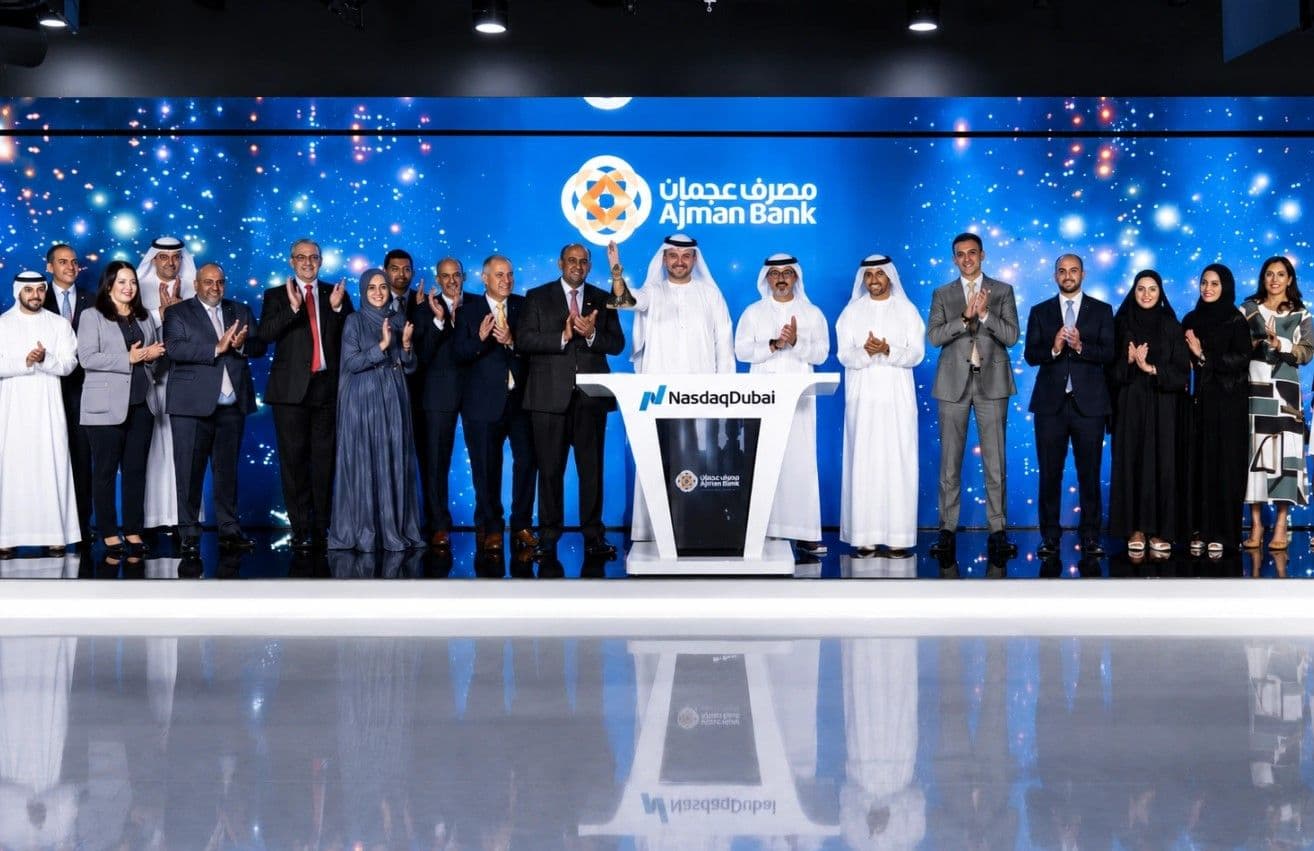
Nasdaq Dubai welcomes Ajman Bank’s $300 million Sukuk

Partior powers faster cross-border settlements

Stay ahead with the latest updates, insights, and trends shaping the world of finance, investment, blockchain, digital business, fintech, technology, and global markets.

