

The last couple of years have already seen the stage set for a bright future thanks to the region’s visionary aptitude. Dubai’s Virtual Assets Regulatory Authority (VARA) has been granting landmark licences, such as the Virtual Asset Service Provider (VASP) license in 2025 obtained by MANTRA Finance, a decentralized finance (DeFi) platform that can now operate as a Virtual Asset Exchange.
The region’s commitment to advancement also extends to the development and deployment of central bank digital currencies, such as the UAE and Saudi Arabia’s collaboration on the mBridge platform, which leverages blockchain technology to revolutionize cross-border payments in real-time. By partnering with China, Thailand and Hong Kong, mBridge will be at the forefront of creating interoperable central bank digital currencies (CBDCs) systems that deliver faster, cheaper and transparent international transactions. The UAE’s new Digital Dirham central bank digital currency is also anticipated to launch in late 2025, which will then be treated as legal tender. Thanks to its regulatory foresight and innovation-friendly environment, the Middle East is becoming the golden global example of how clear regulatory guidance and progressive jurisdiction leads digital asset innovation.
Central bank digital currencies (CBDCs) are increasingly seen as a potential replacement for physical cash…. CBDCs would likely mean dramatically new technocratic systems of banking and finance. And for many libertarians, this is precisely the problem. Nonetheless, change is coming. Technology is reshaping the global economy and this includes remaking the world’s banking system. – Dr. Daniel Araya, Senior Fellow at the Centre for International Governance Innovation and senior partner with the World Legal Summit.– Dr. Daniel Araya, Senior Fellow at the Centre for International Governance Innovation and senior partner with the World Legal Summit.

Widely recognized as the biggest driver of tokenization in the real-world asset (RWA) market, real estate is a highlight both in terms of current adoption and future growth potential. In fact, the Deloitte Center for Financial Services predicts that US$4 trillion of real estate will be tokenized by 2035. To put that into perspective, imagine every US$1 billion in real estate as a single skyscraper. In 2024, the tokenized real estate market was a modest city with about 300 skyscrapers. By 2035, it is a vast metropolis with 4,000 skyscrapers – enough to rival the skylines of New York, Shanghai, and Dubai combined.
The Dubai Land Department has already launched the pilot phase of a real estate tokenization project with Marwan Ahmed Bin Ghalita, Director General of Dubai Land Department calling tokenisation a“revolutionary tool driving fundamental change in the real estate sector.” Dubai developer DAMAC Group has already signed a deal with the MANTRA blockchain platform to tokenise assets in the Middle East worth at least $1 billion.
The World Economic Forum expects 10% of global GDP could be tokenized and stored on the blockchain by 2027. Having founded and run internet technology businesses for nearly 30 years, I believe that the continued migration of finance to the blockchain will be the next wave of the decades-long trend of digitized creative destruction unleashed by the original internet in the 1990s. This time, the social and economic impact could be even larger. Trillions of dollars of real economic activity could take place on the internet financial system in the next few years. – Jeremy Allaire, Co-Founder, Chairman and Chief Executive Officer of global financial technology firm Circle Internet Financial

With more traditional banks and big financial firms starting to use blockchain technology, the shift in how money moves is gaining speed. BlackRock, one of the world’s biggest asset managers, now has around $2 billion in cash and U.S. treasuries turned into blockchain tokens as part of the BUIDL fund. Meanwhile platforms such as Hashnote mix crypto-focused features such as fast, automated trading with tools that banks trust more such as secure storage, which opens up novel financial products – think real estate tokens that pay rent automatically, Islamic bonds that follow Sharia law and environmental compliance or quick swaps of commodities like gold or oil across blockchains.
Even beyond the UAE and Saudi Arabia, the ripple effect is going strong across the region. Bahrain’s ATME, the digital assets exchange licensed by the Central Bank of Bahrain, completed its first issuance of tokenized real-world assets (RWAs) with gold-backed tokens. The company’s tokenized gold offering allows ownership of the physical metal without the complexities of storage or transportation. Then there’s the tokenization of the biggest shrimp farm on the planet that’s taking shape in the Qatari desert – thanks to a collaboration between tokenisation service provider Stobox and the conglomerate ICM Capital, the project aims to utilise fractional ownership to make investment in aquaculture more accessible to a broader pool of investors.
Within this decentralized, next generation internet, almost every asset in the world will eventually be tokenized and represented on distributed ledgers, allowing these assets to be fractionalized, shared, and transferred across the globe instantly and without intermediary involvement. The world will be tokenized. It is clear that this will happen, and it is already starting to happen now. Just as the invention of computers led to data migrating from paper to databases, these web 3.0 technologies will cause assets to be tokenized, tracked and traded. – Dr. Leemon Baird, Inventor of the hashgraph distributed consensus algorithm, Co-Founder of Hedera, and Co-Founder and Chief Scientist of Swirlds Labs.

One of the most talked about impacts of real-world asset tokenization has always been its ability to democratize access to investment opportunities, breaking down barriers that have traditionally kept high-value assets out of reach for many. Smaller amounts of capital are not justifiably viable with the chance to change and influence countless lives.
Young people (aged under 30) constitute more than half (55%) of the population across MENA, according to the Organisation for Economic Co-operation and Development (OECD) and this demographic is especially interesting from an emerging technology perspective, as younger generations tend to be more open to experimenting with new financial technologies. As more opportunities come on chain, tokenization will empower millions of new investors, shaping entirely new economic futures –on an individual, regional and global level.
One day, I expect tokenized funds will become as familiar to investors as ETFs – provided we crack one critical problem: identity verification. Financial transactions demand rigorous identity checks. Apple Pay and credit cards handle identity verification effortlessly, billions of times a day. Trade venues like NYSE and MarketAxess manage to do the same for buying and selling securities. But tokenized assets won’t run through those traditional channels, meaning we need a new digital identity verification system. It sounds complex, but India, the world’s most populous country, has already done it. Today, over 90% of Indians can securely verify transactions directly from their smartphones. The takeaway is clear. If we're serious about building an efficient and accessible financial system, championing tokenization alone won't suffice. We must solve digital verification, too. – Laurence Fink, Chairman and Chief Executive Officer of an American multinational investment company BlackRock.
By 2030, the Middle East has emerged not just as a participant in the global token economy—but as one of its primary architects. Dubai, Riyadh, and Manama have become synonymous with tokenized finance, where real-world assets—once locked in slow-moving, illiquid systems—now flow freely across smart contract-powered networks.
In the UAE, the digital twin of a $10 billion infrastructure fund sits on a regulated blockchain, attracting investors from Tokyo to Lagos. The fund's tokenized structure allows for fractional ownership, automated yield distribution, and integrated environmental performance tracking—key for meeting the region’s ambitious sustainability targets. Sophisticated investors no longer wait for quarterly reports. They receive real-time, auditable metrics on asset performance and carbon intensity—delivered via oracles linked directly to IoT sensors embedded in physical infrastructure. Meanwhile in Saudi Arabia, Sharia-compliant sukuk bonds have undergone a complete transformation. Issued as tokenized instruments on sovereign-grade blockchain rails, these sukuk are embedded with programmable ESG screens, ensuring funds are allocated only to ethically certified projects. Secondary market liquidity has flourished, creating a new class of investors—digitally native, values-driven, and global.
Across the region, central bank digital currencies (CBDCs) have become the backbone of wholesale settlement. Bahrain and the UAE, early leaders in the CBDC pilot phase, now facilitate instant cross-border settlements via interoperable digital currencies. This has not only increased efficiency but also elevated the Gulf’s role in global trade finance. Retail investors in 2030 no longer need to navigate complex brokerage platforms or minimum investment thresholds. A young entrepreneur in Muscat can now buy a $50 slice of a solar farm in Jordan, an equity token in a startup incubator in Abu Dhabi, or a royalty stream from a Kuwaiti artist—all from the same app. Finance has become modular, global, and on-demand.
But the shift is not just technological—it’s cultural. Regional regulators, once cautiously optimistic, are now proactive architects of digital finance ecosystems. VARA (Dubai’s Virtual Asset Regulatory Authority) and the Saudi Capital Market Authority have established interoperable sandboxes, where compliance is coded into smart contracts, and investor protection is continuously enforced by AI-powered monitors. “RegTech” is no longer a buzzword—it’s the invisible nervous system of the token economy.
Institutions that once dismissed tokenization as a crypto-adjacent curiosity now view it as the default structure for asset issuance. Real estate, carbon credits, trade receivables, and even livestock have been tokenized and integrated into multi-asset wallets, accessible to individuals and sovereign wealth funds alike.
The Middle East’s tokenization journey has not only redefined capital markets—it has redefined access, ownership, and trust. In 2030, the region is no longer adapting to global financial trends. It is setting them.

How blockchain and tokenization are reshaping ownership and creating new digital markets.

Paolo Ardoino on Tether, stablecoins, and the future of borderless digital finance.

How tokenization could help Saudi Arabia unlock investment, innovation, and Vision 2030 growth.
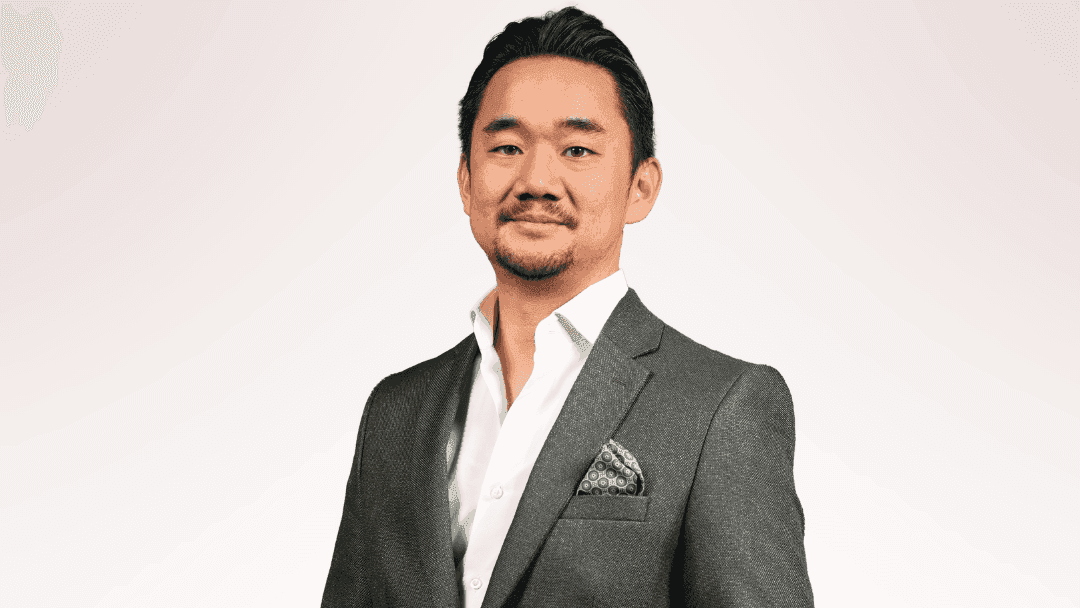
Koh Onozawa Martínez on building trust, access, and the future of tokenized finance.

Stay ahead with the latest updates, insights, and trends shaping the world of finance, investment, blockchain, digital business, fintech, technology, and global markets.

