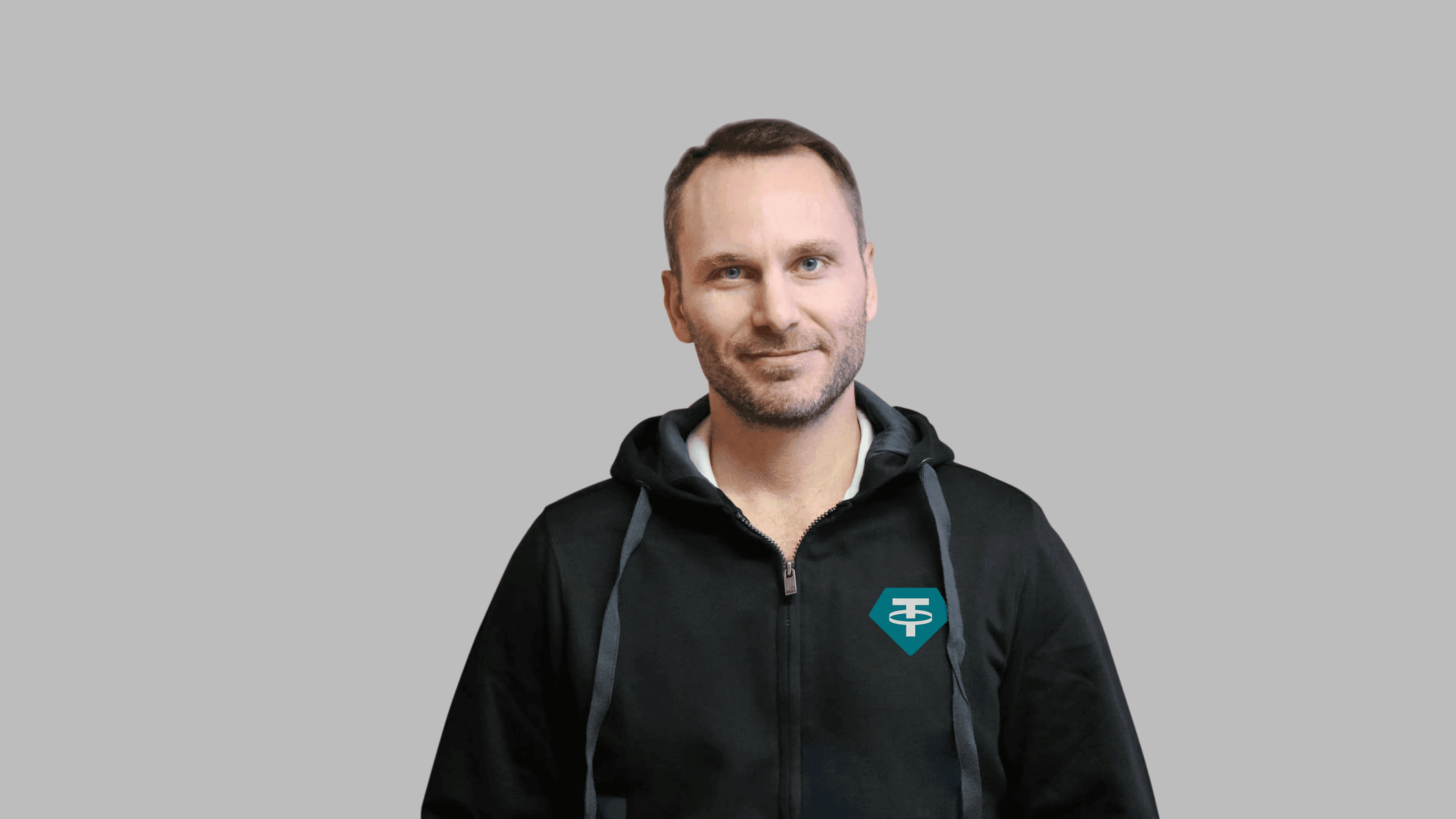
Before co-founding droppRWA, Koh played a pivotal role in scaling Bit2Me across Spain, Brazil, and the UAE. His experience in these vastly different markets gave him rare insight into how culture, regulation, and economic context shape crypto adoption – and, more importantly, how they shape the future of asset tokenization.
In Spain, there’s high crypto literacy thanks to early retail adoption and the clarity of EU regulations like MiCA,”. “But you have to navigate strict AML and KYC requirements. In Brazil, crypto acts as a hedge against inflation and a way to move money in and out of the country. And in the UAE, it’s more institutional – focused on large-scale tokenization with strong regulatory alignment. - Koh Onozawa Martínez.
This global view fuels Koh’s strategic thinking at droppRWA, where flexibility, localization, and regulatory alignment are non-negotiable pillars.
Despite being immersed in the digital assets space for nearly a decade, even Koh admits he was surprised by the speed at which institutional attitudes toward blockchain have evolved. “Ten years ago, we were radioactive. Banks didn’t want to touch us. VCs thought we were insane,” he says with a laugh. “Today, those same institutions are not only adopting blockchain – they’re building on it, investing in it, and putting it at the center of their innovation strategies.”
This transition from fringe to foundational happened faster than most expected, largely due to regulatory clarity and proof-of-concept wins. But Koh warns that the road ahead, especially in tokenization, is anything but easy. “The hardest part isn’t building the tech – it’s navigating regulatory chaos, liquidity challenges, and the fragility of data oracles. People underestimate just how complex it is to bring real-world assets on-chain.”
One major issue? Trust. Not just in blockchain, but in the systems that feed data into it. “You can build the most beautiful smart contract, but if the data oracle pulling property values is faulty or can be manipulated, the whole system collapses,” he says. This is why droppRWA takes a rigorous, full-stack approach to infrastructure, focusing not just on blockchain mechanics but on the reliability, security, and governance of every layer surrounding it.
While his global experience informs his strategic thinking, Abu Dhabi is where Koh is now building the future. Based in the UAE’s capital, droppRWA benefits from a uniquely conducive environment: progressive regulation via ADGM, access to government-backed capital channels, and an ecosystem of innovation hubs like Hub71. “Abu Dhabi is the trifecta,” he says. “Supportive rules, smart money, and top talent. It lets us build fast but within a trusted, stable framework.”
This environment is especially important because droppRWA isn’t just building for crypto-native users. It’s targeting institutional players, governments, and high-value asset holders who require more than flashy UX. They demand auditability, regulatory compliance, and real-world outcomes.
Koh’s multidisciplinary past – part designer, part archaeologist, part entrepreneur – helps him navigate these waters with nuance. “User-friendly design, pattern recognition from incomplete data, and problem-solving under constraint…these things guide how we build.” He wants blockchain products that are not only secure and scalable but also intuitive and human. “The best tech disappears,” he says. “It becomes part of your flow.”
To that end, one of the lessons he’s brought from Bit2Me to droppRWA is the power of lean, high-performance teams. But this time, he’s added a new dimension: AI. “We now treat AI as a force multiplier. It lets us focus human capital on what machines can’t do – creativity, empathy, leadership.” For Koh, building droppRWA isn’t just about building software – it’s about building culture, agility, and organizational depth.
That holistic view extends to how he thinks about the role of tokenization in global finance. He doesn’t see it as a threat to traditional securities infrastructure, but as its inevitable evolution. “In the short term, tokenization will coexist with legacy systems – adding transparency, reducing friction, enabling fractional access,” he explains. “But over time, inefficiency dies. The world moves toward what works better. And natively digital assets just work better.”
For Koh, the endgame isn’t just technical efficiency – it’s economic inclusion, transparency, and access. “Imagine a young investor in São Paulo owning a piece of real estate in Riyadh, or an artist in Barcelona tokenizing her studio to fund her next project. That’s what we’re building toward.”
There’s an almost philosophical quality to how he describes this vision, shaped as much by his unconventional background as his current executive role. “I think about the future like an archaeologist thinks about the past. You look at fragments, you spot patterns, and then you build a story that holds up. That’s what we’re doing at droppRWA – writing the story of a new economy from the fragments of today’s innovation.”
For many in the space, tokenization is the next speculative frontier. For Koh Onozawa Martínez, it’s something deeper – a shift in how trust, ownership, and value flow across the planet. From handcrafting speakers to building global financial infrastructure, his journey reminds us that the best innovation often comes not from technologists alone, but from explorers who ask: “What else could this be?”