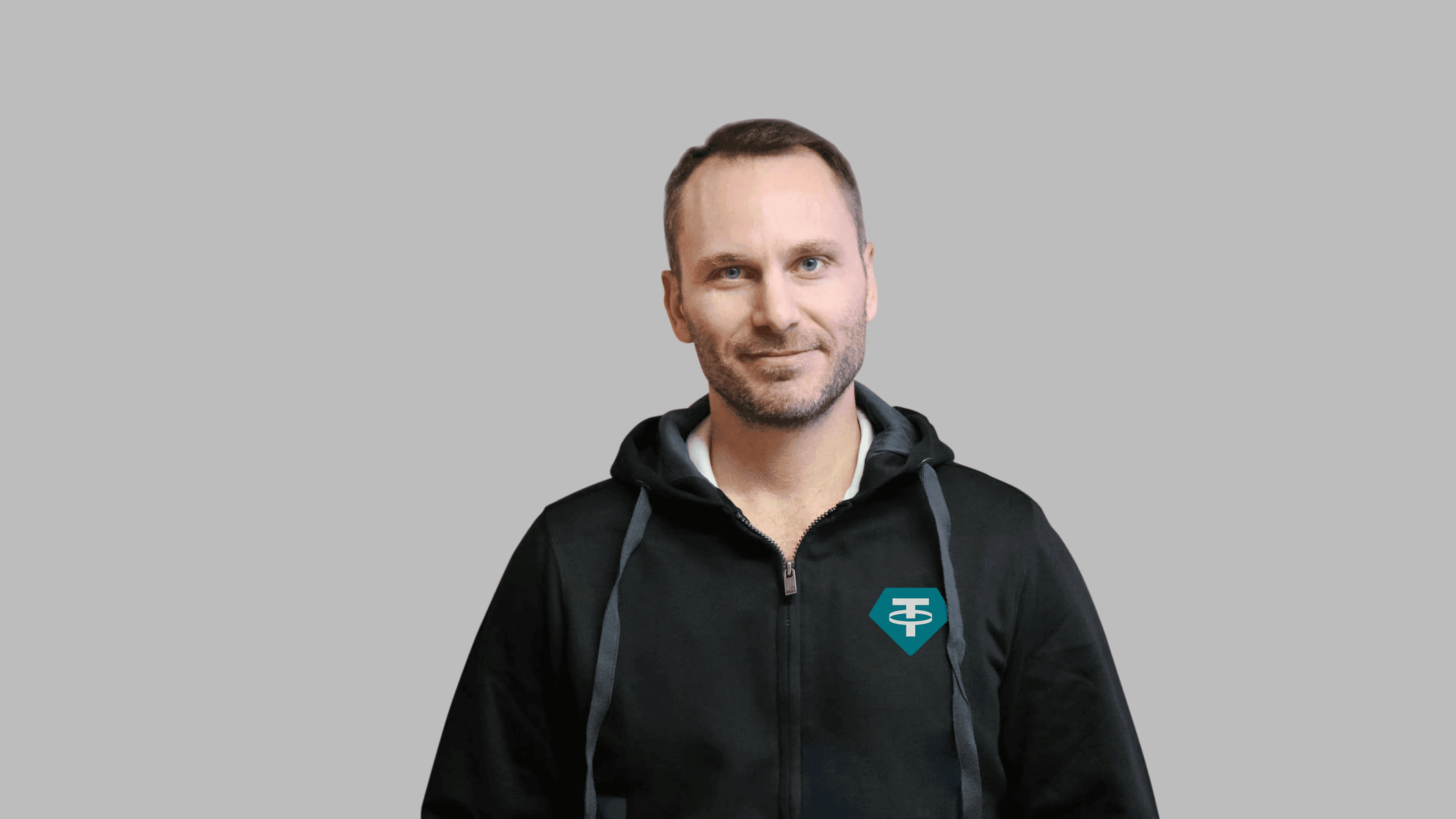
USDT is no longer just a trading pair on crypto exchanges. It is a settlement layer for global markets, a dollar proxy in emerging economies, a tool for cross-border commerce, and increasingly, a pillar in the broader conversation around the future of money.
In this interview, Block News International explores Ardoino’s thinking on trust, transparency, regulation, reserves, financial inclusion, and why stablecoins are becoming foundational to the next era of global finance.
Paolo, stablecoins have moved from the fringes of crypto to the center of global finance. How do you define Tether’s role today?
Paolo Ardoino:
Stablecoins are no longer an experiment—they are infrastructure. When we started, the goal was simple: enable people to move value efficiently using a digital representation of the dollar. Today, that same mission supports millions of users across exchanges, businesses, remittance corridors, and economies where access to reliable banking is limited.
Tether’s role is to provide stability, liquidity, and reliability at global scale. We don’t see ourselves as a bank. We see ourselves as builders of financial rails—rails that operate 24/7, across borders, with transparency and resilience built into the system.
Tether’s reserves and transparency have been under intense scrutiny for years. How do you respond to critics who remain skeptical?
Ardoino:
Scrutiny is natural when you operate at our scale. USDT is used globally, and responsibility comes with that. What matters is not criticism itself, but how you respond to it.
We publish regular reserve attestations, we maintain significant exposure to highly liquid assets such as U.S. Treasury bills, and we hold excess reserves as a buffer. Our approach has been to continuously improve—not only meeting expectations, but exceeding them where possible.
Trust isn’t built overnight. It’s built through consistency, resilience during market stress, and honoring redemptions at scale. We’ve done that repeatedly.
Tether has become one of the most profitable companies in the digital asset sector. How do you think about profitability in relation to responsibility?
Ardoino:
Profitability is not the goal—it’s a consequence of operating efficiently and at scale. What matters is how profits are used.
We reinvest heavily into strengthening the ecosystem: improving security, expanding compliance capabilities, building new infrastructure, and exploring technologies that enhance decentralization and resilience. Importantly, profits are separate from reserves. Customer backing is never compromised.
This distinction is critical. Our reserves exist to back USDT one-to-one. Everything else is funded from surplus and operational revenue.
Governments are now actively regulating stablecoins. How does Tether approach regulation today?
Ardoino:
The regulatory conversation has matured. Five years ago, regulation was reactive and often based on misunderstandings. Today, policymakers recognize that stablecoins are here to stay.
We engage with regulators constructively while preserving the global, permissionless nature of blockchain technology. Our philosophy is pragmatic compliance—not ideological resistance, but not blind conformity either.
Different jurisdictions move at different speeds. Our job is to ensure that wherever USDT is used, it operates responsibly and within applicable legal frameworks.
Tether often speaks about financial inclusion. Is that a narrative, or a real-world impact?
Ardoino:
It’s very real. In many countries, USDT is not a speculative asset—it’s a lifeline. People use it to protect savings from inflation, to receive payments, to run businesses, and to send money to family members abroad.
Traditional banking systems exclude billions of people. Stablecoins don’t require permission. If you have a phone and internet access, you can participate in the global economy.
That’s powerful—and it’s something we take seriously.
Critics argue that stablecoins can be misused for illicit activities. How does Tether address this concern?
Ardoino:
No financial system is immune to misuse—not cash, not banks, not crypto. The difference with blockchain is transparency.
Every transaction is recorded on a public ledger. We work closely with law enforcement agencies worldwide and have frozen addresses linked to criminal activity when requested through proper legal channels.
Blockchain analytics make tracing funds easier, not harder. The idea that stablecoins enable crime more than traditional systems is simply incorrect.
Tether is expanding into areas like energy, mining, and AI. Why diversify?
Ardoino
Because financial infrastructure doesn’t exist in isolation. It depends on energy, computation, and data.
By investing in energy and mining, we support network security and decentralization. By exploring AI and data technologies, we’re preparing for a future where intelligent systems interact with financial rails autonomously.
This isn’t about distraction—it’s about resilience and long-term thinking.
Tether’s involvement in professional football has surprised many. What does this say about the company?
Ardoino:
It signals maturity. Crypto companies are no longer outsiders—we’re participants in the global economy.
Sports are cultural infrastructure. They connect millions of people. For us, it’s about brand presence, innovation, and exploring how digital assets can enhance fan engagement, payments, and global communities.
It’s also a reminder that crypto wealth is real, productive, and increasingly visible.
Some argue that stablecoins like USDT are extending U.S. dollar dominance. Do you agree?
Ardoino:
The dollar already dominates global trade. Stablecoins simply modernize how it moves.
USDT doesn’t replace national currencies—it complements them. It allows the dollar to function in a digital, borderless economy without requiring users to interact with U.S. banks directly.
In many ways, stablecoins are the internet-native version of global finance.
Finally, what does success look like for Tether over the next five years?
Ardoino:
Success means reliability. It means people continue to trust USDT during calm markets and crises alike. It means regulators recognize the role stablecoins play. It means innovation continues without compromising stability.
We want Tether to be boring in the best possible way—always there, always working, always dependable.
Because when financial infrastructure works properly, you don’t notice it. You just use it.
Paolo Ardoino is not trying to sell a revolution. Instead, he is building something arguably more disruptive: normalcy in a fragmented global financial system.
As stablecoins move from crypto-native tools to foundational financial infrastructure, Tether’s trajectory offers a glimpse into how digital dollars may shape commerce,
inclusion, and capital flows for decades to come.
Whether praised or criticized, one reality is undeniable:
stablecoins are here—and Tether is shaping their future.