
1. Enhanced Trust across Decentralized Finance
RWAs are transforming core Decentralized Finance (DeFi) functions such as lending, borrowing, and trading. By integrating RWAs into DeFi ecosystems, users can borrow against tokenized assets or earn regular yield. Traditionally, accessing U.S. Treasury products or private credit required navigating banks, brokers, paperwork, and high investment minimums—with limited liquidity. Today, platforms like Ondo Finance are tokenizing such assets. Its USDY token offers globally accessible, yield-generating exposure to U.S. Treasuries – all through a crypto wallet.
A key driver is the evolution of smart contracts. Essentially self-executing code deployed on blockchains to automate financial processes, they are being used to automate key processes. For example, Chainlink’s Proof of Reserve (PoR) system connects smart contracts to real-world data feeds (oracles), enabling on-chain verification that tokenized assets – such as stablecoins or tokenized Treasuries – are fully backed 1:1 by underlying reserves like cash, bonds, or gold.
By ensuring that digital tokens accurately represent real-world, off-chain assets, smart contracts are becoming a cornerstone of trust in decentralized finance. Reflecting this shift, JP Morgan recently completed its first transaction on a public blockchain using tokenized U.S. Treasuries via Ondo Finance, leveraging Chainlink’s Cross-Chain Interoperability Protocol (CCIP) to connect private and public networks.
While much of the focus is on innovation, legacy planning is emerging as a parallel priority. A recent report by the DIFC Innovation Hub highlights that families in the Middle East are expected to transfer over USD 1 trillion in generational wealth by 2030. Digital technologies including smart contracts and tokenization are being seen as promising tools to reduce friction, improve transparency, and ensure secure, efficient asset transfers.
2. The Exponential Growth of Tokenized Luxury
New innovations in DeFi protocols – such as the use of zero-knowledge proofs (ZKPs) to verify RWA ownership without revealing sensitive data – represent a critical advancement. ZKPs are increasingly explored to enhance transaction privacy, a feature especially valued by ultra-high-net-worth individuals managing collections of prized art.
One of the most well-known fine art tokenization case studies involves Pablo Picasso’s Fillette au béret, a 1964 masterpiece valued at CHF 4 million. The work was transformed into a tradeable, bank-grade security and recorded on a public blockchain. Orchestrated by Sygnum Bank, investors could purchase and trade fractional ownership for as little as CHF 5,000—fully recognized under Swiss law. The Picasso Art Security Tokens (ASTs) were listed on SygnEx, Sygnum’s regulated secondary market, enabling direct peer-to-peer trading without intermediaries. The full investment cycle concluded when 60 token-holders exited with a 20% return, showcasing the viability and liquidity of tokenized art.
Since then, New York’s Museum of Modern Art (MoMA) made headlines by announcing that Refik Anadol’s Unsupervised — Machine Hallucinations and an edition from Ian Cheng’s 3FACE project would be its first-ever acquisitions featuring artificial intelligence (AI) and non-fungible tokens (NFTs). MoMA also partnered with Feral File—one of the earliest digital art platforms in the blockchain space—for the 2024 SOUND MACHINES exhibition focused on sound and technology.
Luxury brands are also taking action. Breitling now issues digital passports for its timepieces, using blockchain to store detailed information such as product characteristics, warranties, and lifecycle data. Tokenized ownership of watches from nearly every prestigious brand – including Patek Philippe, Omega, Audemars Piguet, and Rolex – is now traded regularly across NFT-focused marketplaces.
Top Blockchain Art Platforms
Art Blocks Launched in 2020 by Erick Calderon, Art Blocks aims to preserve generative art on-chain. Artists develop algorithms that define the parameters of each piece, incorporating elements of randomness to ensure uniqueness. When a collector purchases a piece, this triggers the algorithm to generate a one-of-a-kind artwork, minted as an NFT on the Ethereum blockchain. Highlights include Chromie Squiggle by Snowfro, Fidenza by Tyler Hobbs, and Ringers by Dmitri Cherniak.
Feral File Founded in 2020 by artist and programmer Casey Reas in collaboration with blockchain startup Bitmark, Feral File redefines how audiences experience and collect digital art. Known for community-led exhibitions, notable works include Crystalline Work (Arctic) by John Gerrard, Boom Town by Peter Burr, and There Once Was A Jellyfish... by Entangled Others (Sofia Crespo and Feileacan McCormick).
Verse Established in 2022 by Jamie Gourlay and Augustinas Malinauskas, Verse bridges traditional art curation with the NFT space. All works are recorded on the Ethereum blockchain. Highlights include Extension by William Mapan and Generative Art Beyond Autonomy by Botto, a decentralized autonomous artist guided by AI and community input.
Art Dubai Digital A curated section of the annual Art Dubai fair, Art Dubai Digital showcases around 30 global and regional digital art presentations. It stands as one of the Middle East’s leading institutional platforms integrating blockchain art into the traditional art world.
3. Real Estate Reinvented Through Tokenization
While the market is still early, many experts believe that real estate tokenization will be the next major wave in the RWA movement.
In a world-first, fast-growing RWA platform Lympid has acquired a coastal property near Nuuk, Greenland, which will be tokenized and made available to global investors. The initiative marks the first tokenized real estate project in Greenland and, as Lympid’s co-founder Joao Lages says: “This isn't just about real estate; it's about democratizing access to one of the world's most unique and promising investment frontiers”.
From the icy frontiers of Greenland to the high-rise skylines of the Middle East, tokenization is redefining real estate investing. MultiBank Group, one of the world's largest regulated financial institutions, is working with UAE-based MAG Lifestyle Development to tokenize $3 billion worth of luxury properties. These assets will be available through the group’s digital platform MultiBank.io, allowing token holders to earn daily yield from high-end real estate holdings.
The infrastructure behind the initiative is being developed in partnership with the Mavryk DeFi ecosystem, which will handle the blockchain architecture and smart contract deployment. MultiBank Group will ensure regulatory compliance, secondary market liquidity, and governance, backed by its $MBG utility token that supports a multi-layered ecosystem for investors.
As on-chain real estate becomes more common, the next step will likely be the widespread integration of tokenized property portfolios across wealth management, global asset platforms, and even retail investor channels.
4. Transparent Commodities and Smarter Supply Chains
From tokenized carbon credits to gold registered on blockchain, the meeting of blockchain technology and commodities and supply chains is adding greater transparency, efficiency, and availability to global trade. With an increasing number of companies and investors looking for verifiable ESG (Environmental, Social, and Governance) credentials, blockchain-based systems are emerging as powerful instruments for building trust at each phase—right from origin to ownership.
In the Middle East, the vast oil, gas, and gold reserves in the region, combined with a growing interest in blockchain technology and digital assets, are opening immense possibilities. Abu Dhabi National Oil Company (ADNOC) has been at the forefront of adapting blockchain to its business. With IBM, ADNOC piloted a blockchain-based automated system to bring oil and gas production together along its entire value chain. The solution provides a secure platform for tracking, verifying, and enforcing transactions at each location, from the production well to the end customer. Following up on its sustainability push, ADNOC also partnered with Siemens Energy in piloting blockchain technology to issue the carbon intensity of its products. Using the smart sensor data gathered throughout ADNOC's value chain, the pilot records CO₂ emissions on a distributed blockchain ledger, allowing independent regulators to verify the carbon intensity of products.
A gold standard example is aXedras, a Swiss blockchain company – the official technology provider for the Gold Bar Integrity (GBI) initiative launched by the London Bullion Market Association and the World Gold Council. Its Bullion Integrity Ledger™ uses distributed ledger technology to record gold bars with unique digital credentials, capturing details such as origin, custody history, and sourcing standards. Major refiners like Swiss precious metals refiner Metalor are participating in the GBI initiative, adopting the system to ensure verifiable sourcing and traceability.
Even agricultural supply chains are jumping into the trend. OriginTrail is a platform that combines blockchain and knowledge graphs to establish a Decentralized Knowledge Graph (DKG). Such a structure supports structuring, discovery, and authentication of information in complex supply chains. Originally focused on food traceability, OriginTrail has been used across numerous sectors, including pharmaceuticals, raw materials, and more. The Supplier Compliance Audit Network (SCAN), consisting of anchor retailers like Costco, Walmart, and Target, utilizes OriginTrail's DKG to enable audits and flexible data sharing.
As climate reporting becomes mandatory across more markets, experts anticipate tokenized commodities and supply chains will play a central role in both ESG investing and global trade infrastructure.
5. Tokenization of Intellectual Property and Royalties
Tokenization is transforming how intellectual property (IP) and royalties are managed. It enables fractional ownership, allowing creators to raise capital directly from fans or investors while buyers gain tradeable stakes in revenue streams. A prominent global example is Royal.io, a platform allowing artists to sell shares of their royalty streams straight to fans. Powered by smart contracts, streaming and licensing income are divided fairly and automatically, creating new investment and monetization opportunities.
Saudi Arabia's MDLBEAST, the largest music and entertainment complex in the region, is leading the use of innovation and technology to support regional artists. The MDLBEAST Foundation is driving a bold agenda to transform the music industry across the Middle East, which will likely see a forward push for digitalization and paving the way for blockchain-supported royalty systems.
We are soon likely to see tokenized intellectual property (IP) and decentralized autonomous organizations (DAOs) come together. This could give artists, fans, and investors a real voice on how creative work is licensed and profits are shared.
6. Infrastructure and Tokenization-as-a-Service (TaaS) Platforms
Tokenizing real-world assets involves sophisticated infrastructure to manage issuance, custody, regulation, and trading. Tokenization-as-a-Service (TaaS) platforms provide companies turnkey blockchain solutions, simplifying complex processes and meeting regulatory standards.
Globally, Polymath is leading the pack with its platform allowing businesses to issue security tokens according to jurisdictional regulations. Their platform streamlines asset tokenization in industries including real estate and private equity by integrating smart contracts with compliance automation.
In the Middle East, Matrix Technologies of Dubai is a great example of regional innovation in TaaS. They offer bespoke blockchain infrastructure and token issuance platforms to financial institutions and real estate developers, enabling greater take-up of digital asset ecosystems within the region.
We can imagine TaaS platforms becoming more modular and interoperable with seamless integration of services such as compliance automation, identity verification, and secondary market connectivity.
How real-world assets are being tokenized across industries and reshaping global finance.
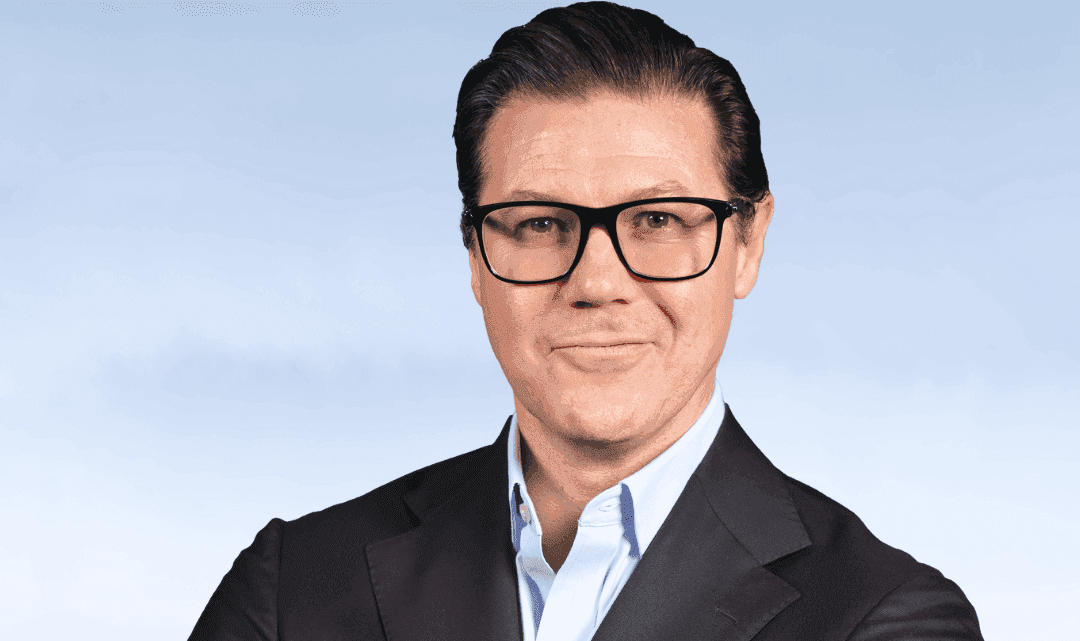
Christopher Kelly on bringing institutional discipline to the tokenized economy.

How blockchain and tokenization are reshaping ownership and creating new digital markets.
Paolo Ardoino on Tether, stablecoins, and the future of borderless digital finance.

Stay ahead with the latest updates, insights, and trends shaping the world of finance, investment, blockchain, digital business, fintech, technology, and global markets.

