The European Union has opened a competitive tender to establish up to seven large-scale artificial intelligence gigafactories across Europe, combining public funding with private capital as policymakers seek to expand the region’s access to the computing infrastructure required for advanced AI development.
Under the plan, up to $11.53 billion (€10 billion) in EU and national public funding is expected to support the projects, while European authorities aim to unlock at least $23.07 billion (€20 billion) in additional private investment. That would put the combined investment associated with the initiative above $34.60 billion (€30 billion).
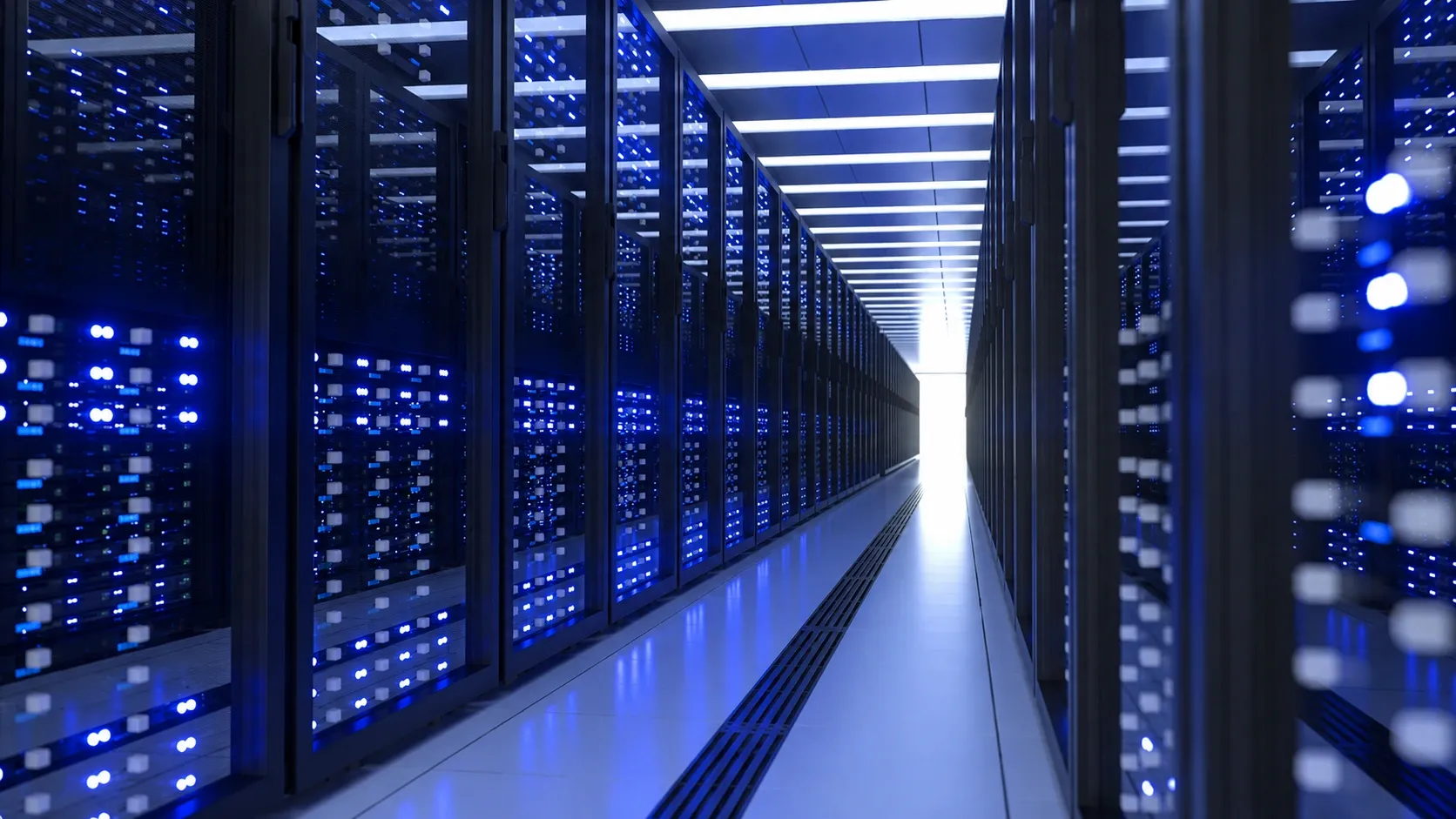
The European Commission announced the tender describing the facilities as part of a broader effort to increase Europe's AI computing capacity. Rather than functioning as conventional data centers alone, the planned sites are intended to combine high-performance AI processors with software, cloud infrastructure, high-speed connectivity and energy-efficient data center capacity.
Public Capital to Support AI Investment
The public component of the program is designed to operate as an anchor for substantially larger private-sector investment. According to the European High Performance Computing Joint Undertaking (EuroHPC JU), the EU and participating member states will jointly procure computing access from selected gigafactories, giving projects an initial source of demand while reducing some of the financial risk associated with building large computing facilities.
Applications are open to consortia or special-purpose vehicles bringing together companies, public entities, investors and other partners. Projects can be developed within one EU member state or structured across multiple countries, including distributed facilities operating as cross-border projects. The initiative is industry-led rather than based on facilities being wholly built or operated by European institutions.
Part of the public financing is expected to come under the EU's current Multiannual Financial Framework, while EuroHPC said the bulk would be provided through the bloc's next long-term budget covering 2028 to 2035. Private capital therefore remains an important part of the financing structure: the public commitment of up to $11.53 billion (€10 billion) is intended to help generate more than twice that amount from private investors.
EU Steps Up AI Computing Infrastructure
Each gigafactory is expected to operate at a considerably larger scale than the AI factories already being deployed across Europe. The European Commission's AI Factories program says an AI gigafactory will bring together more than 100,000 advanced AI processors alongside substantial power capacity, storage, networking and supporting infrastructure.
Their intended workload extends beyond training AI systems. European authorities expect the facilities to provide computing resources for training, fine-tuning and inference of advanced models, including systems with trillions of parameters. Access is expected to extend to companies, startups, scale-ups, small and medium-sized enterprises, researchers, universities and public-sector organizations.
The gigafactories will sit alongside an existing European network of 19 AI factories, which EuroHPC is currently implementing across the region. Those smaller facilities are designed to give European companies and researchers greater access to AI-optimized supercomputing capacity, while the gigafactory program moves toward substantially larger infrastructure capable of supporting frontier AI development.
Infrastructure has become a central part of Europe's wider AI policy because increasingly complex models require large concentrations of computing hardware, electricity, storage and networking. The gigafactory program therefore focuses on physical computing capacity as much as software development, with the Commission also citing reliable supply chains and energy efficiency among the requirements for the new facilities.
Tender Sets November Deadline for Consortia
Potential operators have until November 12, 2026, to submit proposals. EuroHPC said applications will then undergo a competitive evaluation, with selected projects expected to be identified in early 2027. The successful facilities are expected to begin operations within 18 months following their selection.
Europe's current gigafactory push builds on an initiative announced in February 2025. At the time, Commission President Ursula von der Leyen launched InvestAI, which was designed to mobilize $230.68 billion (€200 billion) for AI investment and included plans for a $23.07 billion (€20 billion) fund for AI gigafactories. The scope of the infrastructure program has continued to develop since that announcement.
The July tender now provides a more concrete procurement framework. Up to seven gigafactories are planned, with EuroHPC saying they are expected to be located in at least seven EU member states, although individual projects may operate across borders. Public authorities would purchase computing capacity from successful operators rather than restricting use of the infrastructure to a single company or institution.
The program also reflects an attempt to address one of the practical constraints facing European AI developers: access to computing at sufficient scale. Europe has a significant research base and a growing network of AI-focused supercomputers, but training and operating increasingly large models requires infrastructure that can be difficult for smaller companies and research groups to finance independently.