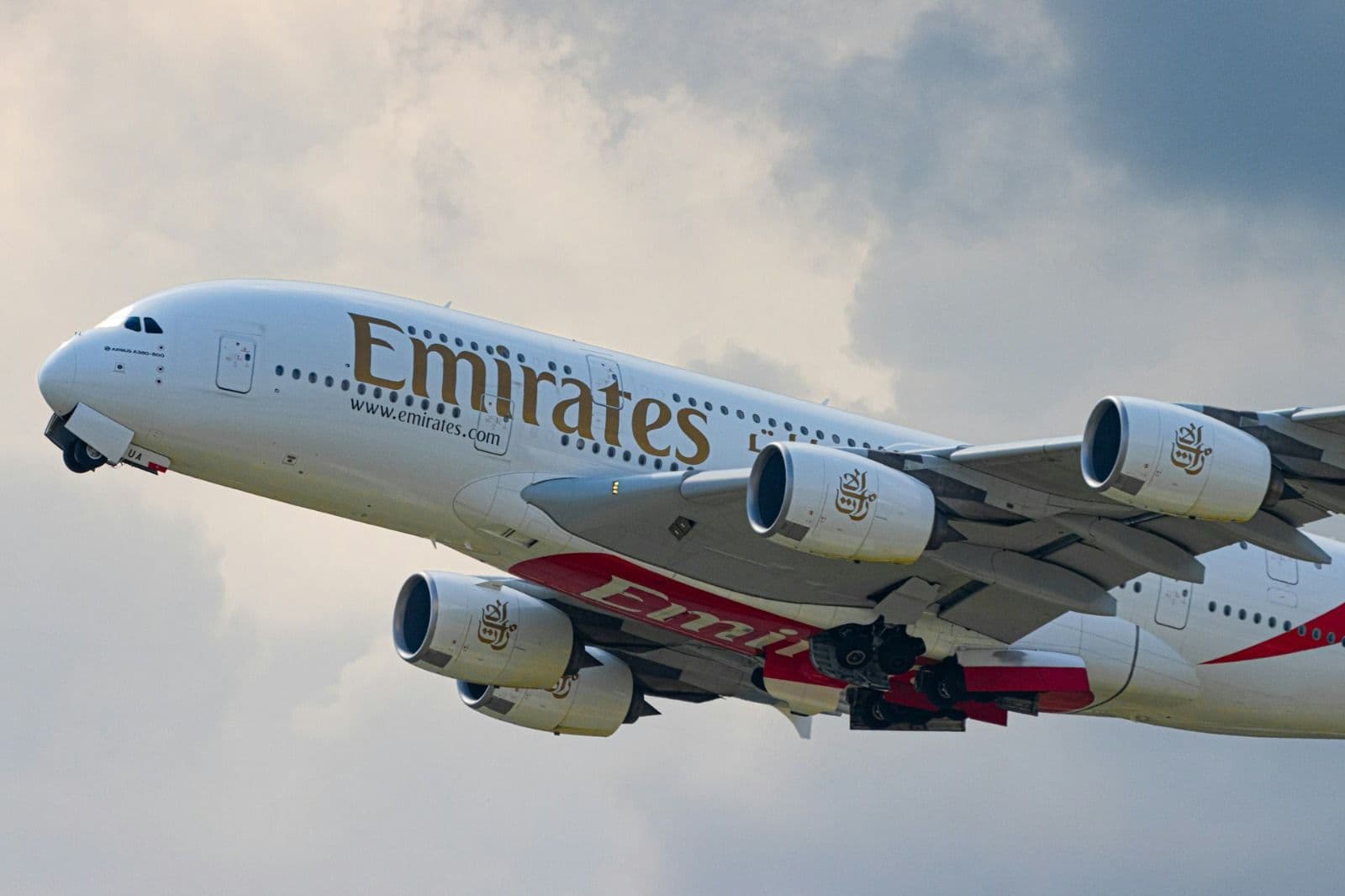
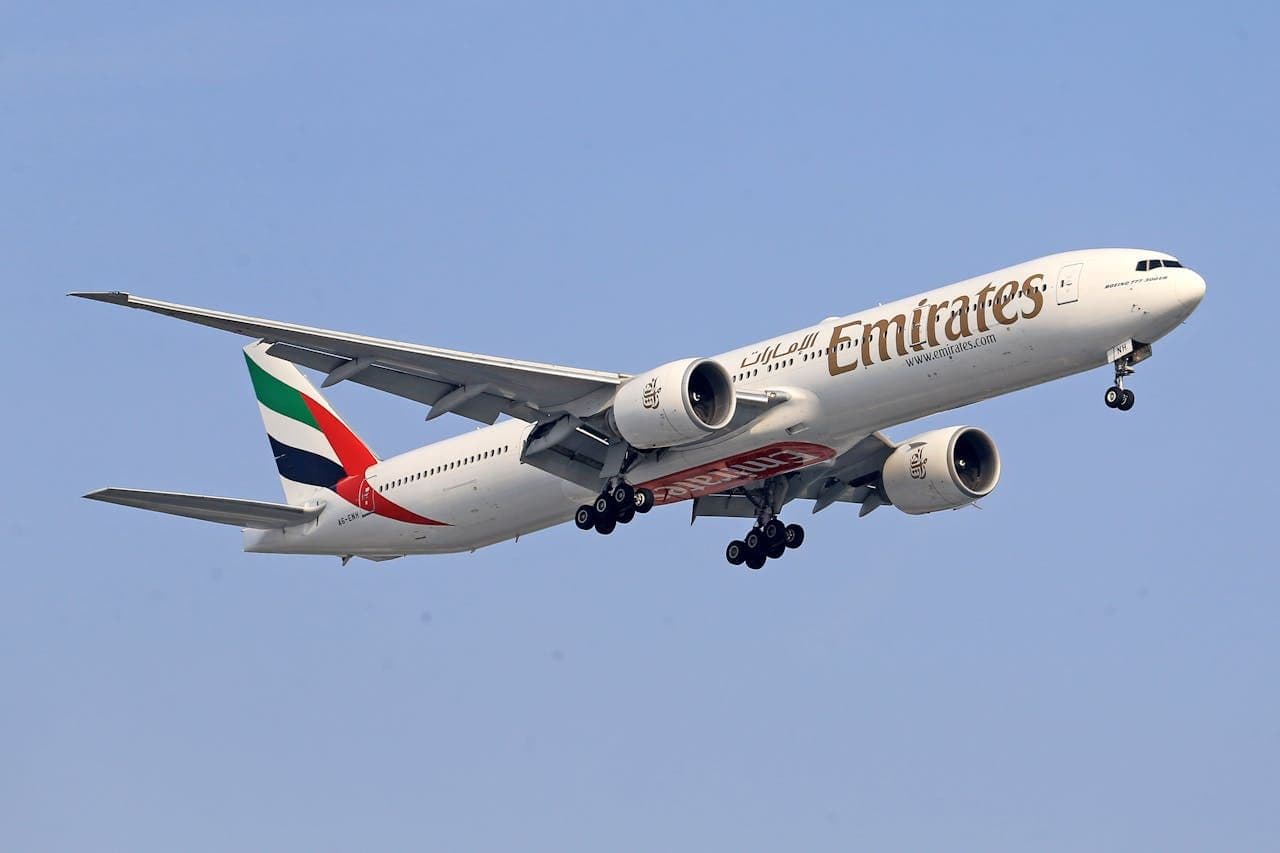
From Boeing 777s to A380s
Emirates first announced plans to install Starlink connectivity across its fleet in November 2025, when the airline said it intended to equip all in-service Boeing 777s and Airbus A380s within two years. At the time, the company confirmed the target fleet size would total 232 aircraft.
By late April 2026, Emirates said 25 Boeing 777-300ER aircraft had already been fitted with Starlink systems before the first connected A380 entered operation. The latest May update suggests deployment activity has accelerated further in recent weeks, bringing the total to 33 connected aircraft.
The carrier operates one of the world’s largest long-haul wide-body fleets, including the largest Airbus A380 fleet globally and one of the largest Boeing 777 fleets in service.
Because the A380’s double-deck layout presents unique engineering requirements, Emirates said the aircraft uses three Starlink antennas and additional wireless access points to maintain performance across the cabin.
Emirates Retains World’s Most Profitable Airline Title
The connectivity expansion also comes as Emirates continues reporting record financial performance. Earlier in May 2026, the airline announced a record $6.6 billion annual profit, retaining its position as the world’s most profitable airline.
The results reflected continued strength in international aviation demand across long-haul travel markets. Emirates said revenue growth was supported by strong customer demand across regions and premium cabin travel.
The airline’s financial position has also supported broader investment initiatives across its fleet and passenger experience strategy. Alongside Starlink connectivity upgrades, Emirates has continued expanding aircraft refurbishment programs, premium economy installations, and onboard product enhancements as competition intensifies among global long-haul carriers.
Airlines Compete on Inflight Connectivity
The Emirates expansion reflects a wider aviation industry trend as carriers increasingly adopt Starlink aviation systems to modernize inflight internet services.
Traditional onboard WiFi systems have long faced criticism for slow speeds, high pricing, inconsistent reliability, and limited bandwidth during long-haul flights. Low-Earth orbit satellite systems such as Starlink are being marketed as a solution to those limitations because of lower latency and significantly higher throughput capacity.
Multiple global airlines have announced Starlink partnerships or deployment plans over the past two years, including carriers in North America, Europe, Asia, and the Middle East.
Emirates’ connectivity rollout also forms part of a broader customer experience investment strategy tied to its multi-billion-dollar fleet retrofit program. The airline said dozens of aircraft have already undergone cabin refurbishment work, including upgraded premium economy seating, refreshed interiors, and expanded inflight entertainment systems.