

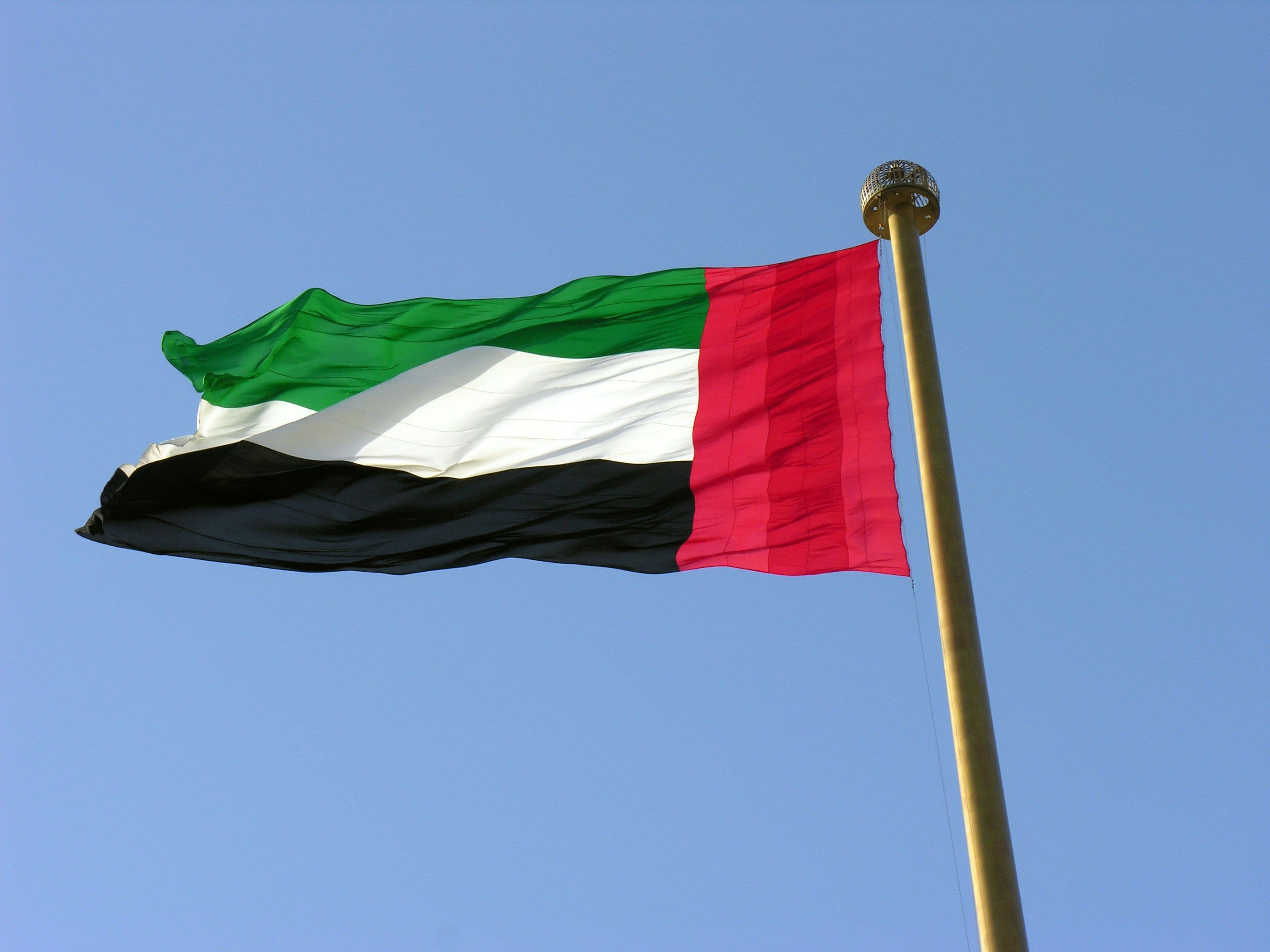
 Across the UAE, steady economic fundamentals continue to support investor confidence and long-term growth. (Unsplash)
Moody’s latest assessment, completed in late March 2026, left the UAE’s sovereign rating unchanged, reinforcing its position among high-grade issuers globally. The outcome reflects a mix of strong financial buffers, disciplined policymaking, and continued progress in diversifying the economy.
The Aa2 rating places the UAE firmly within the upper tier of investment-grade economies, a category defined by low credit risk and strong capacity to meet financial obligations. Within Moody’s framework, Aa2 is the third-highest rating, indicating a high-quality credit profile supported by durable institutional strength and fiscal discipline.
What stands out in this latest assessment is not a shift in direction, but consistency. At a time when global markets are navigating inflationary pressures, geopolitical tensions, and uneven growth, the UAE’s ability to maintain its rating signals stability rather than volatility. The review effectively reinforces an ongoing narrative: the country’s economic fundamentals remain intact even under external pressure.
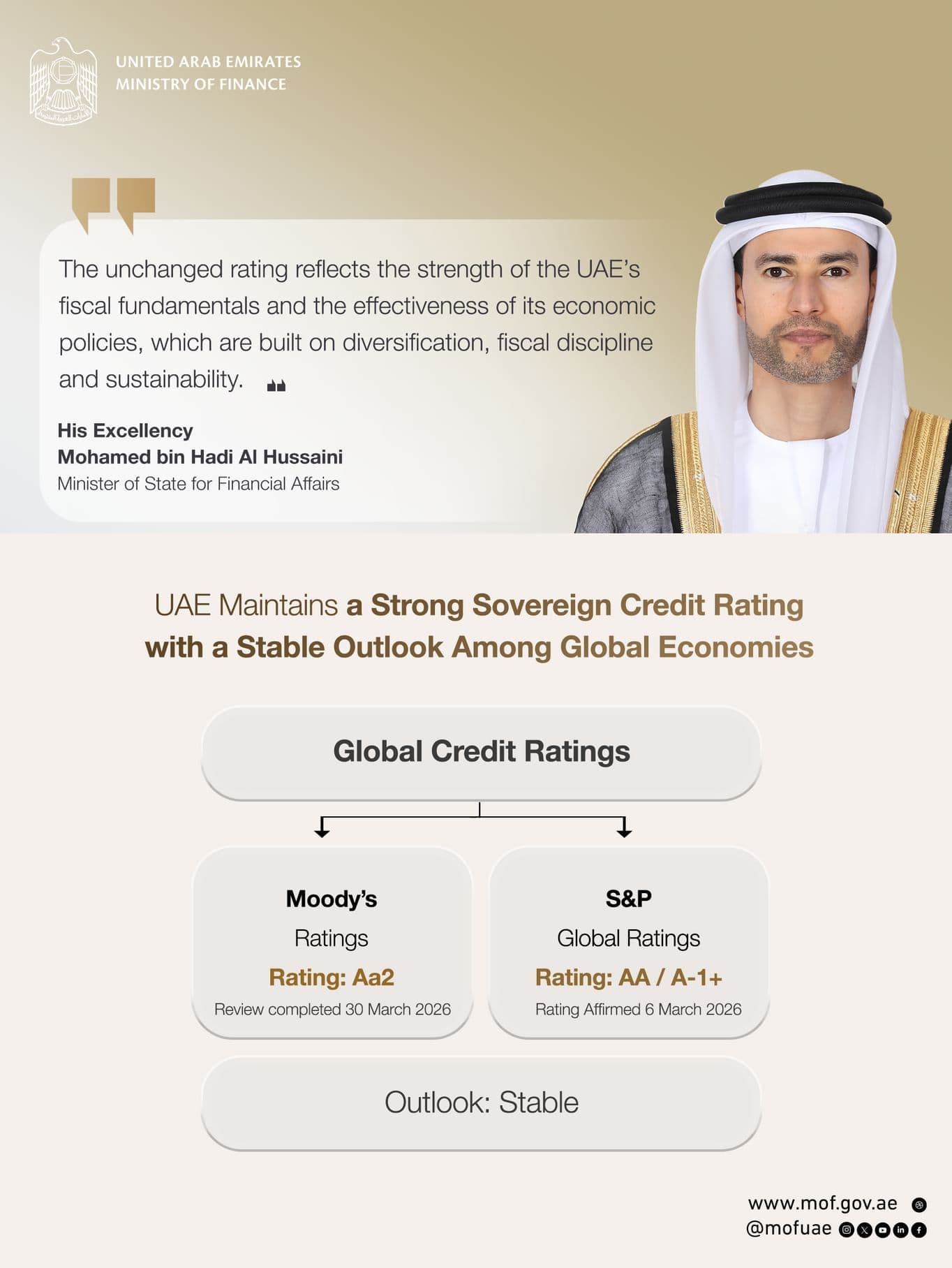 (Image source: WAM)
A key factor highlighted in the assessment is the UAE’s relatively low government debt, especially when compared to global peers. Combined with substantial sovereign wealth and financial reserves, this positions the country with a strong buffer against economic shocks. These reserves, largely driven by hydrocarbon revenues and investment returns, continue to play a stabilizing role in fiscal planning and long-term sustainability.
Equally important is the UAE’s continued progress in economic diversification. While oil remains a foundational component of the economy, non-oil sectors, including trade, logistics, tourism, and financial services, have expanded significantly over the past decade. This structural shift has reduced reliance on hydrocarbons and contributed to a more balanced and resilient growth model.
The reaffirmation also underscores confidence in the UAE’s institutional framework and governance model. Moody’s assessment points to effective policymaking and a track record of implementing reforms that support economic stability. These include fiscal consolidation measures, regulatory enhancements, and initiatives aimed at attracting foreign investment.
This institutional strength is increasingly important as the region navigates geopolitical uncertainty. Despite ongoing tensions across parts of the Middle East, the UAE has maintained investor confidence, supported by its strategic positioning as a financial and logistics hub. The stable outlook suggests that Moody’s does not anticipate significant downside risks to the country’s credit profile in the near term.
 The UAE’s economic footing remains firm, supported by long-term planning and a diversified growth strategy. (Unsplash)
Beyond Moody’s, the UAE continues to receive strong endorsements from other major rating agencies. Recent assessments from S&P Global Ratings and Fitch Ratings have also maintained high sovereign ratings with stable outlooks, placing the country among a select group of economies that consistently rank highly across all three major agencies.
This alignment across agencies reinforces a broader message to global investors: the UAE remains a reliable and predictable investment environment. Among institutional investors, sovereign ratings serve as a key benchmark in assessing risk, influencing everything from bond yields to capital allocation decisions. A stable, high-grade rating helps reduce borrowing costs and enhances access to global capital markets.
The timing of the reaffirmation is also notable. As governments worldwide balance fiscal pressures with growth ambitions, maintaining a strong credit rating requires both discipline and adaptability. In the UAE’s case, this balance has been achieved through a combination of conservative fiscal management and forward-looking economic strategies.
The focus is likely to remain on sustaining this trajectory. Continued investment in infrastructure, technology, and human capital will be critical to maintaining competitiveness, particularly as global economic conditions evolve. At the same time, managing exposure to external risks, including fluctuations in energy markets and regional dynamics, remains an ongoing priority.
The UAE’s economic foundations are holding firm. The reaffirmation of its Aa2 rating with a stable outlook is less about change and more about continuity, an indication that the country’s long-term strategy is delivering results in an increasingly uncertain global environment.
Gulf firms target digital finance infrastructure
Dubai approval brings Revolut closer

Partior powers faster cross-border settlements
Abu Dhabi backs round-the-clock clean power

Stay ahead with the latest updates, insights, and trends shaping the world of finance, investment, blockchain, digital business, fintech, technology, and global markets.
