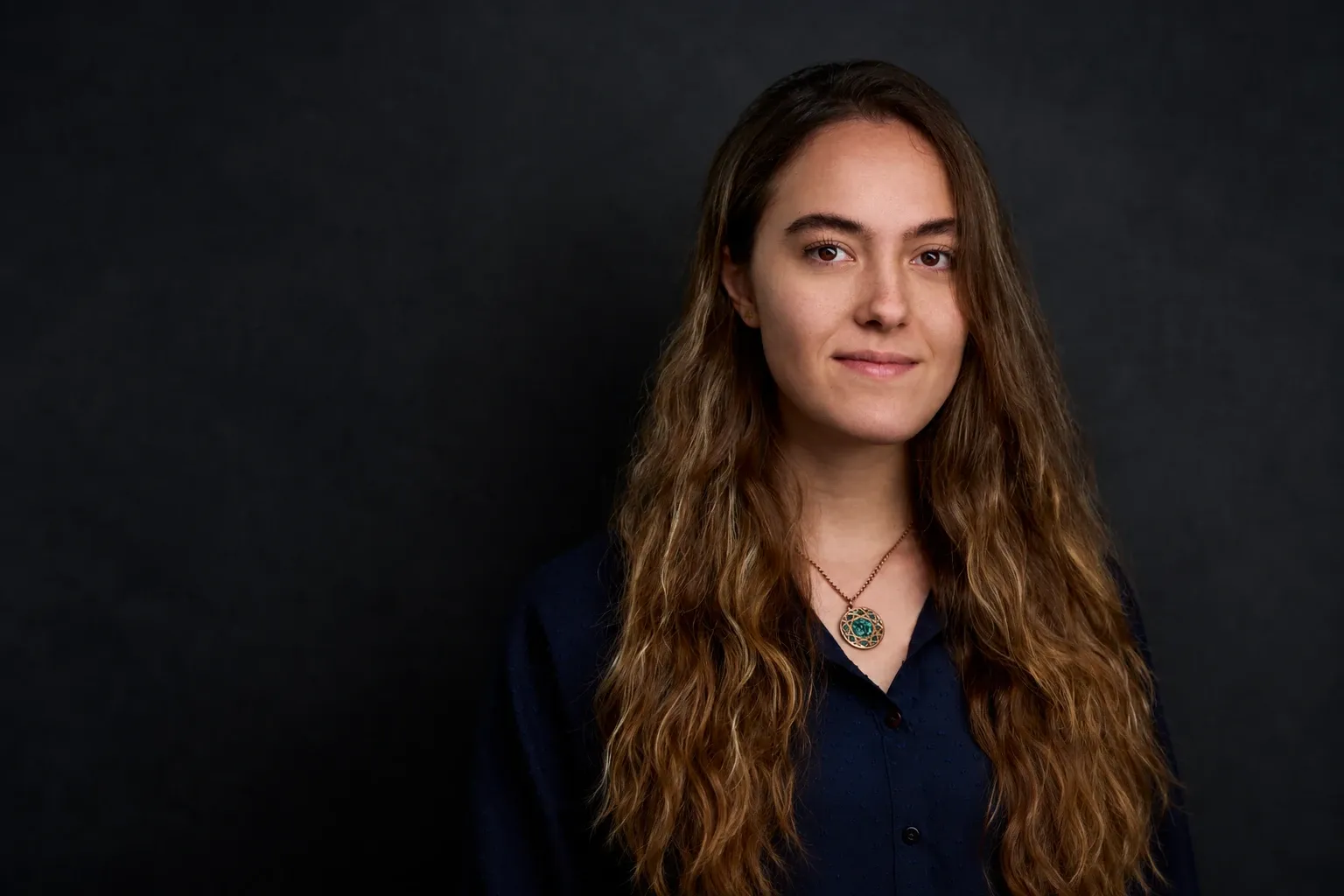
Iranian entrepreneur Tara Rezaei has co-founded Mirendil, an artificial intelligence startup that has secured $200 million in seed funding to develop increasingly autonomous systems for advanced AI research and development.
Andreessen Horowitz and Kleiner Perkins led the round, while chipmaker NVIDIA joined as an investor. The $200 million financing gives Mirendil substantial backing as it develops autonomous AI systems for advanced model research and experimentation.
Rezaei, 23, founded the company alongside former Anthropic researchers Behnam Neyshabur and Harsh Mehta and former xAI engineer Shayan Salehian. Mirendil said its wider founding team consists of 20 researchers and engineers from institutions including Anthropic, OpenAI, Google DeepMind and xAI.
An Iranian Olympiad Medalist Enters Silicon Valley
Rezaei’s path to the center of the AI investment boom began in competitive science rather than venture capital. She represented Iran at the 2021 International Olympiad on Astronomy and Astrophysics, where she won a silver medal as part of the Iranian delegation.
Her academic career later took her to the Massachusetts Institute of Technology. Kleiner Perkins described Rezaei as an MIT graduate, an Olympiad medalist and an early student researcher at OpenAI.
Rezaei’s rise gives Mirendil’s launch a distinctly international dimension. Silicon Valley’s AI sector has long drawn scientists and engineers from around the world, while her age adds an unusually young entrepreneurial profile to the company’s founding team. Her background also adds a younger entrepreneurial profile to a founding group whose other members have spent years working inside some of the industry’s most advanced research organizations.
Building AI That Can Improve AI Research
Mirendil describes itself as a frontier laboratory developing systems that excel at AI research and development. Its central idea is to train AI models specifically for the work involved in creating and improving other AI systems, rather than using general-purpose models merely as assistants to human researchers.
The company wants its technology to handle more of the research loop independently, including proposing experiments, writing and executing code, examining results, identifying failures and deciding which approach to test next. Mirendil says it is redesigning the structure of an AI laboratory around these models so that research can become faster, more capable and increasingly autonomous.
Andreessen Horowitz said in its investment announcement that Mirendil is developing a research platform intended to help engineers and scientists perform frontier AI work outside the handful of major laboratories that currently dominate advanced model development. Mirendil’s platform would likely be used first by AI researchers and engineers, with a longer-term goal of enabling scientists and other domain specialists to run sophisticated experiments themselves.
A Team Drawn from Major AI Laboratories
Mirendil’s senior founders bring experience from several of the organizations shaping the current AI market. Neyshabur previously worked at Google and Anthropic, including on AI-for-science research. Mehta worked on automated AI research and development at Anthropic, while Salehian contributed to machine-learning engineering, post-training, reasoning systems and agent infrastructure at xAI.
Kleiner Perkins said Neyshabur and Mehta had previously worked together on model research at Google before joining Anthropic. At Anthropic, their work included AI reasoning, computer-use systems and efforts to automate parts of the research process. Salehian, meanwhile, was described as an early xAI engineer who worked on infrastructure and the company’s Grok models.
Rezaei’s earlier research experience at OpenAI rounds out a founding group connected to many of the laboratories competing at the frontier of generative AI. Mirendil says its full founding team draws personnel from Anthropic, xAI, Google DeepMind and OpenAI, giving the startup experience across model training, reasoning, research automation and the computing infrastructure needed to run large-scale experiments.
Investors Back a More Distributed AI Research Model
The $200 million round is unusually large for seed financing and gives Mirendil substantial resources at an early stage of its development. Training advanced models requires expensive computing infrastructure, specialized talent and sustained access to high-performance chips.
NVIDIA’s participation adds a major AI-computing company to Mirendil’s investor group. Mirendil has not publicly disclosed the size of NVIDIA’s investment or provided a detailed breakdown of how the new capital will be allocated.
Both Andreessen Horowitz and Kleiner Perkins have presented Mirendil as an attempt to broaden access to advanced AI research. Instead of forcing a biology, chemistry, robotics or drug-discovery organization to assemble an entire frontier-model team, Mirendil wants to provide systems that allow experts to concentrate on their own scientific problems.
Ambition Meets a Difficult Technical Challenge
The company’s vision remains highly ambitious and technically unproven. Automating isolated coding or research tasks is different from building a system capable of managing a reliable, end-to-end scientific research cycle with limited human intervention.
Mirendil will also be competing for specialized talent and computing resources in a field populated by much larger organizations. OpenAI, Anthropic, Google DeepMind and xAI are all investing heavily in AI agents, reasoning systems and tools that can perform increasingly complex technical work.
Still, the size of Mirendil’s seed round gives the startup substantial resources at an unusually early point in its development.
Mirendil will now have to translate its research ambitions into a system that delivers practical value for scientists and engineers. The company says it is redesigning the AI research loop to make experimentation faster, more capable and increasingly autonomous. Its $200 million seed round gives the founding team significant resources to pursue that goal, although Mirendil has not yet disclosed performance results or announced the broad commercial availability of its platform.