Block News International

@2026 Block News International. All Rights Reserved.

Blends Media
A Blends Media Group Production

Global Crypto Giant Binance Launches Regulated AED Transfers in the UAE

Arry Hashemi
Arry Hashemi
Jun. 03, 2026
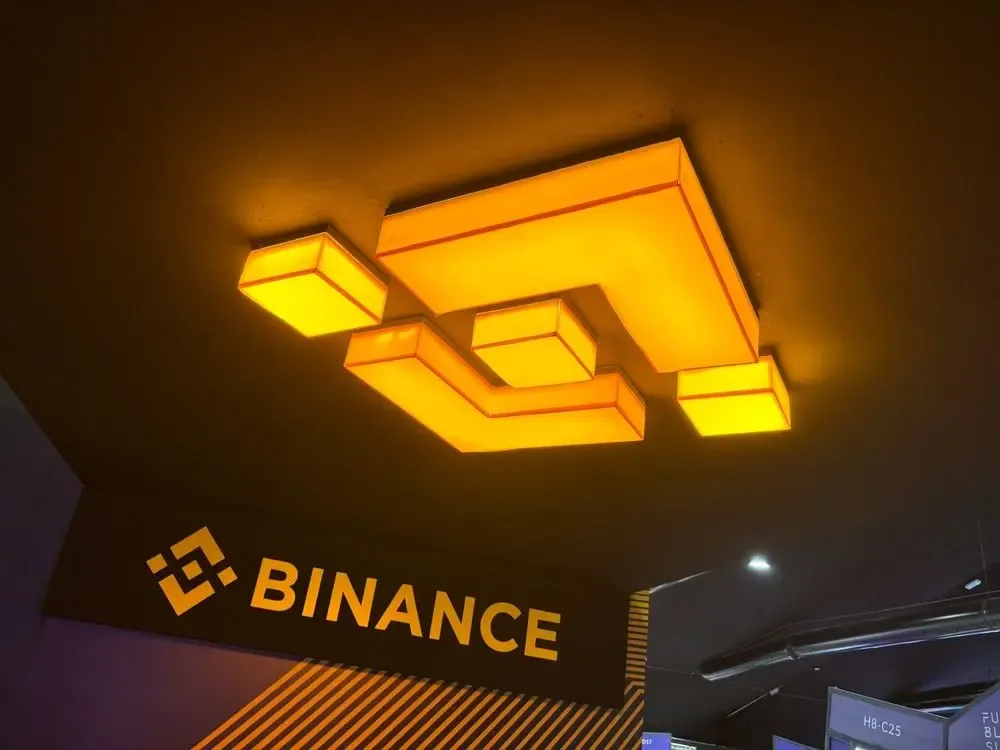
BinanceBinance’s new AED transfer service gives eligible UAE users a more direct way to move funds between local bank accounts and crypto accounts without relying on foreign currency conversions. (Shutterstock)

Binance has launched direct UAE dirham deposit and withdrawal capabilities for users in the United Arab Emirates, giving customers a more localized way to move money between bank accounts and digital assets without first converting funds into another currency.

The service allows eligible users to deposit and withdraw AED through local banking infrastructure. Binance said the new capability is intended to reduce friction in the on-ramp and off-ramp process, a long-running pain point for crypto users who often face added steps, foreign exchange conversions or third-party payment routes when moving between fiat currency and crypto.

The launch comes as the UAE continues to position itself as a regulated digital asset hub, with Dubai and Abu Dhabi building separate but increasingly visible regulatory frameworks for virtual assets, financial services and crypto infrastructure.

A UAE-Focused Route Into Digital Assets

Eligible Binance users in the UAE can now fund their accounts in AED and withdraw dirhams directly back to their bank accounts, removing the need for foreign-currency routes or less direct transfer methods.

Users can now make AED deposits to their Binance FZE accounts through ADCB bank transfer, with no deposit fees, a minimum deposit amount of AED 10 ($2.72) and a maximum of AED 7.2 million ($1.96 million) per day. AED withdrawals through ADCB bank transfer carry a fee of AED 10 ($2.72), with a minimum withdrawal amount of AED 11 ($3.00) and a maximum withdrawal amount of AED 7.2 million ($1.96 million) per day.

Transactions under AED 50,000 ($13,615) are processed instantly, while larger transfers are subject to cutoff times and local banking-day rules. Processing times may also vary during UAE public holidays.

Although the service adds convenience, it is not an open-ended bank transfer route for every Binance user globally. Binance states that users must be onboarded to Binance FZE, the local Dubai-regulated exchange, to deposit or withdraw AED. Transfers must also be made to and from accounts under the user’s own name.

Binance 2Binance’s new AED transfer route comes as the UAE continues to build a more structured framework for digital asset services and local banking connectivity. (Shutterstock)

The significance of the launch is not only that users can move dirhams in and out of Binance. It is that the movement of funds is being brought closer to the familiar banking experience of the UAE market.

Crypto adoption often depends on more than trading access. Users also need simple and predictable ways to fund accounts, withdraw cash, manage fees and understand where their money is moving. That is especially important in markets where regulators are trying to shift virtual asset activity away from informal channels and into supervised financial infrastructure.

Tarik Erk, Binance’s head of MENAT and senior executive officer Abu Dhabi, framed the launch as a matter of trust meeting usability. He said: “For a long time, access to crypto required compromise, whether on cost, speed, or confidence. What we are introducing today changes that equation entirely. Users in the UAE can now move their money from their bank to crypto and back in a way that feels natural and efficient.”

That phrase captures the commercial logic behind the rollout. Local fiat rails can make crypto services easier to use, while giving regulators and banking partners a more visible, structured and accountable framework for digital asset activity.

Anchored in Regulated UAE Infrastructure

The UAE has become one of the most active crypto regulatory markets in the Middle East, but it is not a single-regulator environment. Dubai’s Virtual Assets Regulatory Authority, known as VARA, oversees virtual asset activity in Dubai, while Abu Dhabi Global Market and its Financial Services Regulatory Authority regulate financial services and digital asset activities in ADGM.

Binance FZE is listed on VARA’s public register as active. VARA’s register says Binance FZE is permitted to serve institutional investors, qualified investors and retail investors, with permissions that include virtual asset exchange services and other approved activities.

The new AED transfer capability is separate from Binance’s broader regulatory transition in Abu Dhabi. In December 2025, Binance announced that it had received full regulatory authorization from the Financial Services Regulatory Authority of Abu Dhabi Global Market to operate its global platform, Binance.com, through a framework involving three ADGM-licensed entities.

Binance 3Binance’s AED transfer service adds regulated local banking rails for UAE users, supporting faster dirham deposits and withdrawals. (Unsplash)

Raising the Bar for UAE Crypto Platforms

The rollout also raises the competitive bar for crypto platforms operating in the UAE. As the market matures, exchanges are increasingly competing not only on the number of listed tokens or trading fees, but also on the quality of their fiat infrastructure, regulatory positioning and day-to-day user experience.

Moving money into and out of crypto remains one of the main sources of hesitation for many retail users. A cheaper and more direct AED route may reduce that friction, particularly among users who want to avoid unnecessary foreign exchange costs or delays.

Reliable local banking access can also matter to institutional and high-net-worth users. Larger transfers require predictable processing, clearer counterparty structures and stronger operational controls. Binance’s stated maximum transfer limit of AED 7.2 million ($1.96 million) per day suggests the service is designed to support a broad range of users, from smaller retail accounts to higher-value activity.

The UAE’s Growing Role in Regulated Digital Assets

The UAE’s approach to virtual assets has increasingly focused on drawing crypto activity into licensed frameworks rather than leaving it at the edges of the financial system. VARA’s public register is designed to make licensed entities more visible, while ADGM describes its digital asset framework as a structure intended to support innovation alongside investor protection, market transparency and financial crime controls.

Binance’s AED transfer launch fits into that broader shift. It gives users a more direct route between fiat and crypto, while anchoring the experience in local currency, regulated entities and bank transfer processes.

The launch strengthens Binance’s UAE proposition at a time when global exchanges are under pressure to demonstrate compliance, banking resilience and local-market relevance. It also gives the UAE another example of crypto infrastructure moving beyond speculative access toward regulated financial connectivity.