

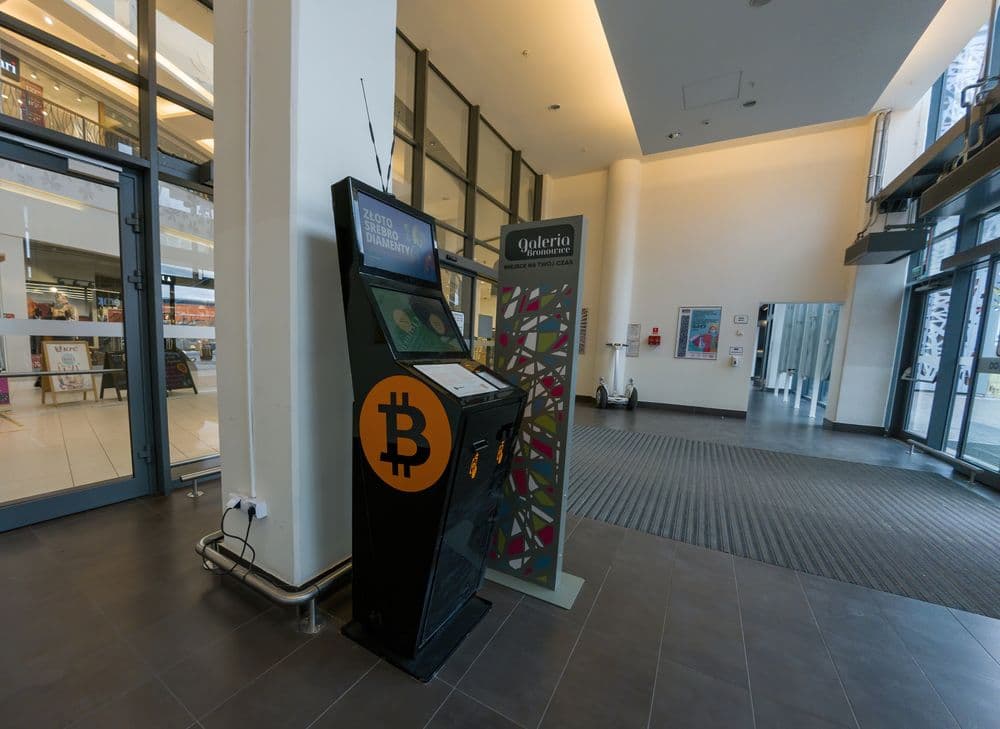
 Bitcoin POP shows how crypto dispensers is moving past Bitcoin ATMs. (Shutterstock)
Rather than relying on standalone machines, Bitcoin POP is built around supervised, in-store transactions that aim to offer a more controlled and consumer-focused way for people to buy Bitcoin with cash.
Bitcoin POP was developed in response to what Crypto Dispensers sees as structural limitations in traditional Bitcoin ATMs. By adding human oversight, clear transaction limits, and regulated payment infrastructure, the company says the new system offers a more measured way for consumers to convert cash into Bitcoin.
Unlike conventional Bitcoin ATMs, which typically operate with little or no supervision, Bitcoin POP transactions take place inside staffed retail locations. Customers purchase Bitcoin through trained cashiers, with payments processed using regulated financial rails rather than isolated hardware networks. Crypto Dispensers says this shift allows for greater visibility and accountability at the point of transaction.
The company frames the launch as a fundamental change in structure rather than a simple upgrade to existing machines. While Bitcoin ATMs played an important role in introducing digital assets to cash-based users, Crypto Dispensers argues that the model has struggled to scale responsibly. In its view, high transaction thresholds, limited safeguards, and the absence of real-time intervention have exposed weaknesses as crypto adoption has expanded.
Bitcoin POP has been built with tighter controls. Transactions are capped at $500 per purchase, with daily and monthly limits set at $1,500 and $5,000 respectively. Crypto Dispensers says these limits are intended to encourage smaller, more deliberate transactions and to reduce the risks associated with large, one-off cash conversions.
Human involvement remains central to the system’s design. Because each transaction is handled in person, cashiers are able to engage directly with customers during the process. The company says this creates opportunities to identify confusion, hesitation, or signs of external pressure before a transaction is completed, something that is not possible with unattended machines.
Crypto Dispensers also highlights the way Bitcoin POP integrates compliance-aligned payment flows. By routing transactions through regulated financial rails, the company says the platform better reflects the standards expected of modern financial services, while still supporting users who prefer or rely on cash.
Pricing is another area where the company says Bitcoin POP differs from traditional Bitcoin ATMs. According to Crypto Dispensers, the platform carries an average fee of around 11%, which it describes as meaningfully lower than many legacy ATM fee structures. The company argues that this allows customers to retain more value from each transaction while maintaining operational oversight and compliance requirements.
Founded in 2017, Crypto Dispensers began as a Bitcoin ATM operator before expanding into a broader range of cash-to-crypto services. Today, the company offers multiple ways to access Bitcoin, including in-store cash deposits, mobile barcode payments, direct wallet delivery, as well as card, ACH, and wire options.
The launch of Bitcoin POP reflects what Crypto Dispensers describes as a wider rethink of how retail crypto access should work. Rather than relying on isolated machines, the company advocates for systems that resemble familiar points of payment, where transactions take place in supervised retail environments with clear rules and accountability.
While Crypto Dispensers introduced Bitcoin POP as a regulated alternative to traditional Bitcoin ATMs, the company’s announcement does not frame it as an immediate replacement for all existing machines. Instead, the launch is positioned as a new model for cash-to-Bitcoin access that could coexist with other methods as the industry evolves.
For users who depend on cash but want exposure to Bitcoin without navigating online exchanges or traditional banking systems, Bitcoin POP is positioned as a bridge between physical retail payments and digital assets. By embedding Bitcoin purchases into supervised, regulated retail workflows, the company says the model aims to balance accessibility with responsibility as the market continues to evolve.

From science Olympiad to Silicon Valley

UAE visitors gain easier banking access

Partior powers faster cross-border settlements

Everyday finance gets a Tabby upgrade

Stay ahead with the latest updates, insights, and trends shaping the world of finance, investment, blockchain, digital business, fintech, technology, and global markets.
