
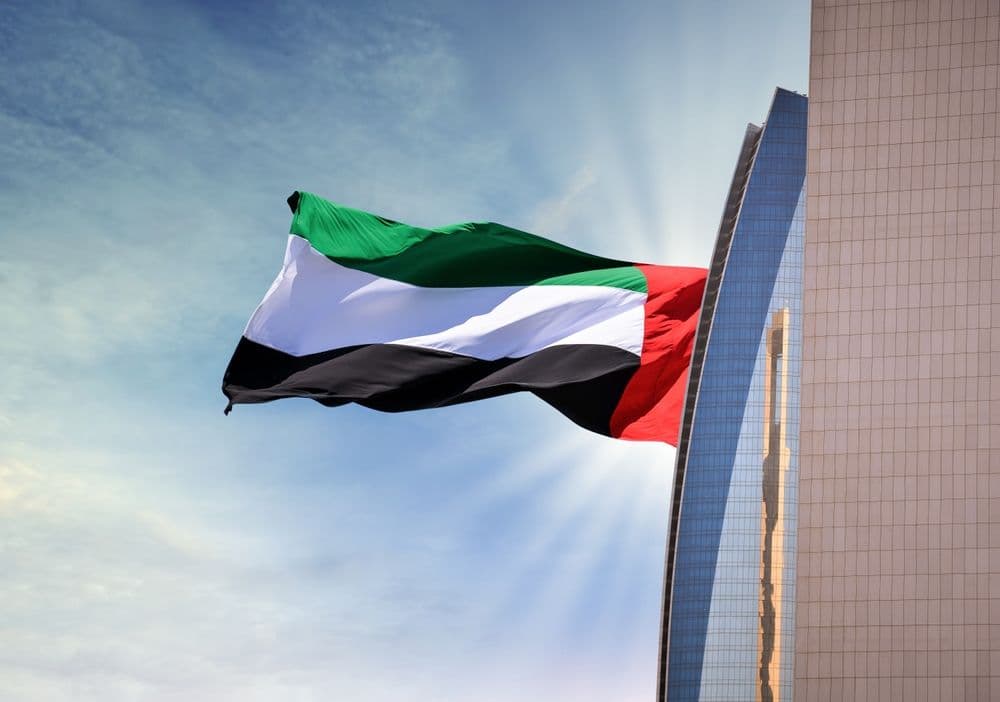
 Blockchain adoption comes into focus at Web2 to Web3 conference in Abu Dhabi. (Shutterstock)
Held on January 5, the invite-only event brought together financial institutions, Web3 infrastructure providers, compliance specialists, and ecosystem builders to focus on one core question: how can blockchain move from experimentation into regulated, institutional use across the Middle East and North Africa? According to organizers, the emphasis was deliberately practical, with discussions centered on custody, security, compliance, and measurable business outcomes rather than speculative use cases.
The conference was supported by ecosystem partners connected to Hub71 and Abu Dhabi Global Market, reinforcing the emirate’s broader push to attract regulated digital-asset activity while maintaining strong governance standards.
Rather than framing Web3 as a disruptive replacement for existing systems, speakers consistently described it as an extension layer, one that must align with institutional risk frameworks, regulatory obligations, and long-term business strategy.
A major focus of the day was institutional digital-asset custody, an area widely seen as a barrier to broader adoption. Executives from companies including Fireblocks, ZenGo, and n.exchange discussed how custody models are evolving to meet enterprise expectations around security, operational resilience, and compliance. The conversation highlighted how banks and asset managers are no longer satisfied with proof-of-concept solutions, instead demanding infrastructure that can integrate with existing workflows and regulatory oversight.
Oleg Belousov, founder and chief executive of n.exchange, described the Web2 to Web3 transition as a process driven by partnerships rather than isolated experimentation. His remarks reflected a broader sentiment shared across panels: that institutional blockchain adoption depends less on technical novelty and more on trust, reliability, and interoperability.
The panel made clear that institutions entering Web3 are not looking for shortcuts. Instead, they are demanding systems that provide transparency, auditability, and accountability, features traditionally associated with regulated financial markets.
Beyond infrastructure and compliance, the conference also explored how businesses evaluate the commercial value of blockchain. In a one-on-one session, Tomer Sharoni, CEO and co-founder of Addressable, spoke with MarketAcross co-founder Elad Mor about the importance of measurable outcomes.
The discussion centered on how Web2 organizations assess return on investment when exploring Web3 tools. Rather than focusing on abstract concepts, the conversation highlighted data attribution, performance tracking, and business impact as critical decision-making factors. This framing aligns with how enterprise procurement teams typically approach new technology adoption.
The final panel widened the lens to examine how global hubs and cross-border collaboration are shaping the Web2 to Web3 transition.
Panelists discussed how jurisdictions with regulatory clarity and supportive infrastructure are better positioned to attract institutional blockchain activity. They noted that cooperation between international hubs can reduce friction for companies operating across multiple markets, particularly when legal frameworks and compliance standards are aligned.
Throughout the event, Abu Dhabi was repeatedly referenced as an example of a jurisdiction seeking to balance innovation with regulatory discipline. The city’s approach, speakers suggested, offers institutions a clearer path to engage with blockchain without stepping outside established governance structures.
Organizers said similar Web2 to Web3 events are planned around major industry gatherings in 2026, including Token2049 Dubai, GITEX, and Money20/20 Riyadh. The aim is to maintain momentum and continue bridging conversations between traditional enterprises and Web3 builders.
Blockchain adoption across the UAE and the wider MENA region is becoming increasingly institutional, and discussions in Abu Dhabi point to a shift in focus. Rather than debating whether Web3 belongs in regulated markets, attention is now on how it can be implemented securely, responsibly, and at scale.

Partior powers faster cross-border settlements
Nasdaq Dubai welcomes Ajman Bank’s $300 million Sukuk

Abu Dhabi backs round-the-clock clean power
e& closes a major investment chapter

Stay ahead with the latest updates, insights, and trends shaping the world of finance, investment, blockchain, digital business, fintech, technology, and global markets.

