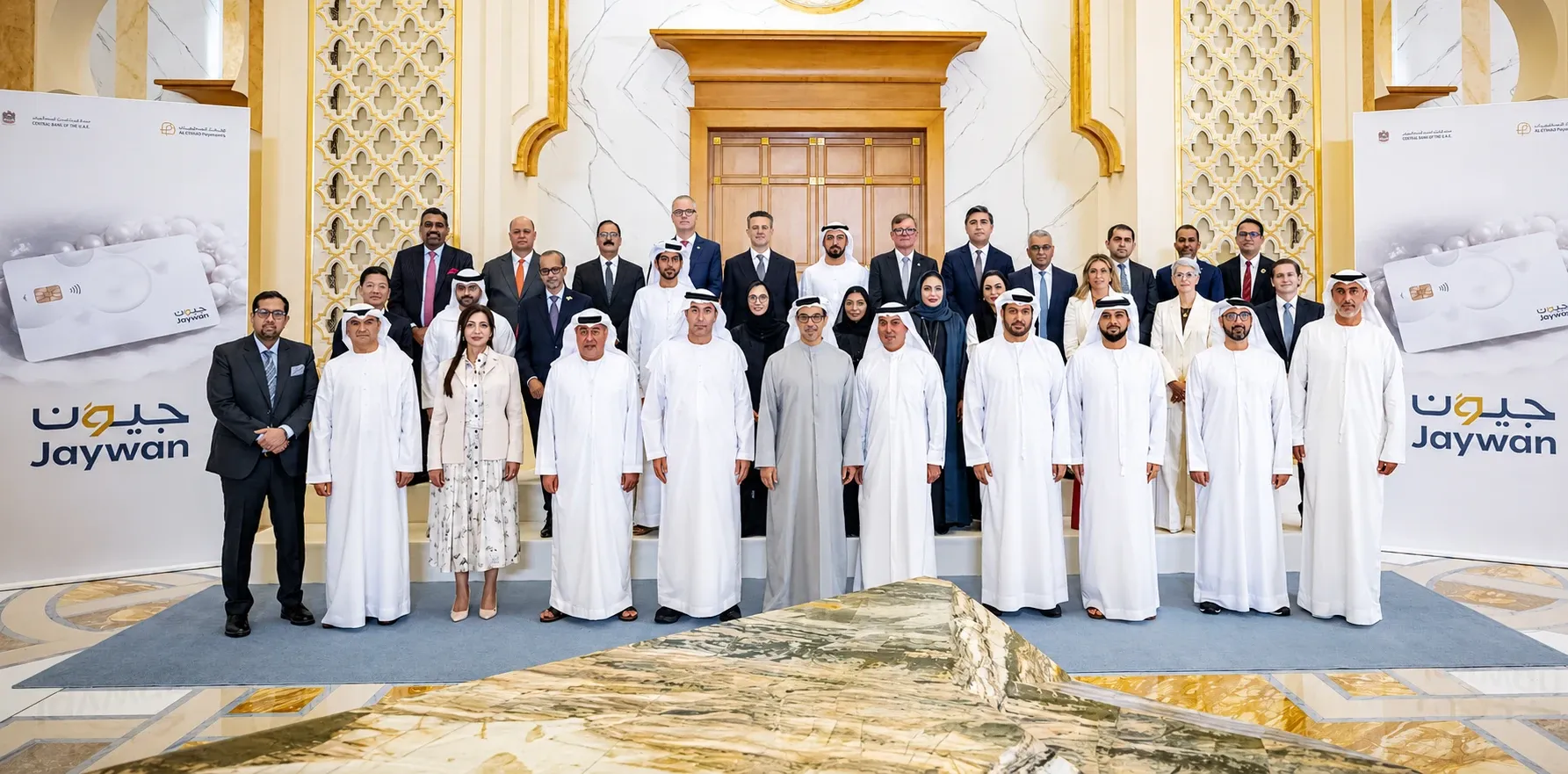
The United Arab Emirates has formally begun the nationwide issuance of Jaywan, its first national payment card scheme, marking a new phase in the country’s effort to bring more of its payment infrastructure under domestic control. Sheikh Mansour bin Zayed Al Nahyan, UAE Vice President, Deputy Prime Minister, Chairman of the Presidential Court and Chairman of the Central Bank of the UAE, inaugurated the scheme and announced the start of card issuance across banks, licensed financial institutions and exchange houses.
The rollout moves Jaywan beyond a payment infrastructure project and into the hands of consumers. Financial institutions will issue the cards in phases over the coming months, expanding access gradually rather than switching the market to the national scheme all at once. The phased approach gives banks, merchants and payment processors time to integrate the cards into their existing systems while maintaining access to established payment channels.
Jaywan is managed by Al Etihad Payments, a subsidiary of the UAE central bank established to develop and operate national payment infrastructure. The scheme is designed around the requirements of consumers and merchants in the UAE while connecting with the broader payment ecosystem. Its introduction gives the country a domestically governed alternative for processing everyday card transactions rather than relying exclusively on international card networks.
National Control Over Payment Infrastructure
Sheikh Mansour described the start of nationwide issuance as a strategic milestone for the UAE’s financial infrastructure. The scheme, he said, supports the development of a more efficient and resilient financial sector while creating additional space for innovation and financial inclusion. It also forms part of the country’s wider digital transformation agenda, which has increasingly treated payment systems as essential national infrastructure rather than merely a banking service.
“This achievement reflects the UAE’s commitment to developing a more efficient, resilient and competitive financial sector that unlocks broader opportunities for innovation, promotes financial inclusion, and further strengthens the UAE’s position as a leading global financial hub. This milestone represents a pivotal step in enhancing the national payments ecosystem, improving the efficiency of the financial infrastructure and supporting the country’s digital transformation journey.” Sheikh Mansour said.
Domestic payment schemes can give regulators and financial institutions greater influence over how local transactions are routed, settled and governed. The Central Bank previously said Jaywan enables domestic point-of-sale transactions to be routed locally through UAESWITCH. Jaywan transactions are denominated in UAE dirhams, according to the bank’s financial stability reporting, reducing the need for foreign-exchange conversion in domestic transactions and keeping more payment activity within the national system.
The scheme also strengthens the UAE’s ability to set local operating standards and develop services suited to its own market. Al Etihad Payments has identified financial inclusion, data sovereignty and support for local businesses among Jaywan’s central objectives. Those goals place the card within a broader effort to establish national capabilities across payment processing, digital identity, instant transfers and other parts of the country’s financial technology architecture.
Cards Move into Everyday Use
Jaywan cards can be used at point-of-sale terminals, e-commerce platforms and automated teller machines, as well as through compatible digital wallets. Cardholders can make contactless payments, purchase goods online and withdraw cash, giving the national scheme many of the functions consumers already expect from conventional debit and prepaid cards.
Online acceptance is also expanding. Network International announced that it had enabled Jaywan payments across its e-commerce merchant network, allowing participating online businesses to accept cards issued under the scheme. The company had previously supported merchant acceptance of Jaywan at physical payment terminals, making e-commerce integration another step toward treating the national card as an everyday payment option rather than a limited domestic pilot.
First Abu Dhabi Bank is among the institutions participating in the national rollout. FAB said its Jaywan debit card is currently available for domestic use, combining the national payment framework with common digital banking functions. Other financial institutions, including Dubai Islamic Bank, Abu Dhabi Commercial Bank and Mbank, have also presented Jaywan products or services to customers as issuance expands across the banking system.
International use requires additional explanation. The Central Bank said Jaywan cards can support domestic and international transactions in accordance with applicable rules and regulations, but a standalone Jaywan card may initially be intended primarily for use inside the UAE. International acceptance can be provided through co-badged cards that carry Jaywan alongside a global payment network, allowing domestic transactions to run through Jaywan while overseas purchases are handled through the international partner.
A Longer-Term Payments Strategy
The nationwide issuance follows several years of technical development and limited deployment. The Central Bank completed an initial phase of the domestic card program before moving toward the design and issuance of fully branded Jaywan cards. The UAE president conducted an early Jaywan transaction in 2023, while merchant integration, bank partnerships and co-badging arrangements continued to develop over the following years.
Khaled Mohamed Balama, Governor of the Central Bank of the UAE, said: "Guided by the vision of the wise leadership, and with the direct support and guidance of H.H. Sheikh Mansour bin Zayed Al Nahyan, the inauguration of Jaywan and the commencement of its nationwide issuance mark a transformative milestone in the development of payment services in the UAE. It demonstrates the financial sector’s ability to translate strategic visions into advanced national solutions, in line with the objectives of the ‘We the UAE 2031’ vision, while advancing innovative digital payments.”
Cardholders are also expected to receive access to rewards and promotional offers developed with partners in travel, retail, hospitality and lifestyle services.
Jaywan’s nationwide rollout gives the UAE a more direct role in a part of the financial system that most consumers rarely see: the networks operating behind each card payment.