Agentic AI is emerging as a significant development in enterprise artificial intelligence, enabling increasingly autonomous systems to execute multi-step workflows, analyze data and support business operations with varying levels of human oversight. Across the corporate finance sector, organizations are exploring how these capabilities could improve forecasting, financial reporting, cash-flow management, compliance and strategic planning while increasing the speed and quality of decision-making.
CompassPoint Consulting combines financial expertise with technology-led advisory services, working with growing businesses and finance teams to improve reporting, forecasting and financial decision-making.
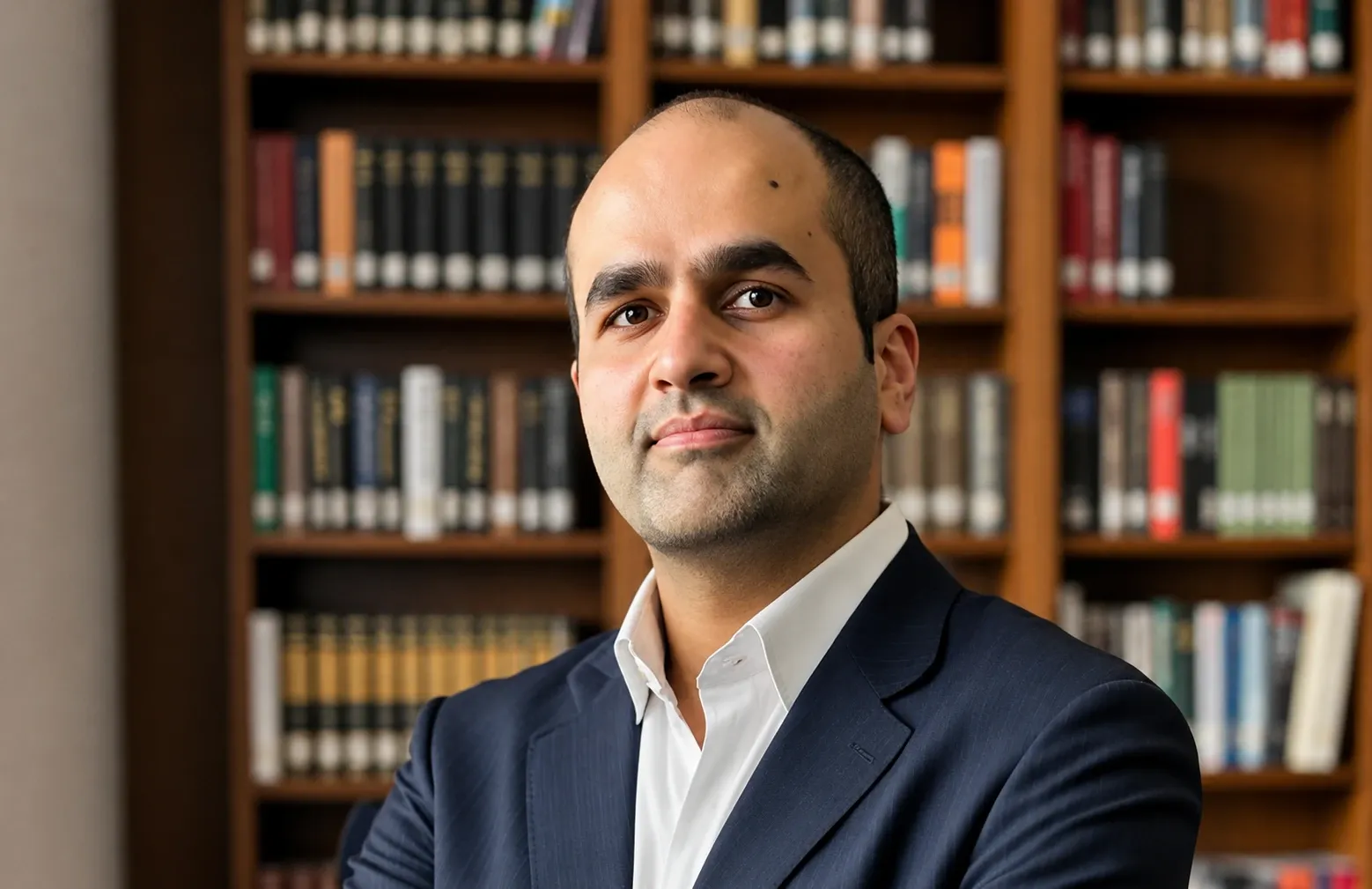
In this interview with Block News International, Zaid Aboobaker, Founder and CEO of CompassPoint Consulting, discusses where agentic AI can deliver the greatest value for finance teams, how the role of the CFO could evolve, and why organizational transformation, rather than technology alone, will determine which businesses successfully realize AI’s potential.
Exclusive Interview with Zaid Aboobaker, Founder and CEO of CompassPoint Consulting
Q. CompassPoint combines financial expertise with technology-led advisory services. Where do you believe agentic AI can create the greatest value for finance teams and business leaders?
Everyone points to cost, automating the processing and shrinking the finance headcount.
The larger value is time and attention. Agentic AI collapses the gap between something happening in the business, and leadership being able to see it and act on it. When your close runs in hours rather than days, the numbers reach you while the decisions they inform are still live. We took our own close and board reporting from three days to about four hours, and the point was never the saved days.
When agents absorb the assembly work, your most experienced people stop building reports and start interpreting them. For a business leader, that is the real return. You are not paying for faster spreadsheets. You are buying earlier, better-informed decisions.
Q. Which corporate finance functions are most likely to be transformed first by agentic AI, including forecasting, budgeting, financial reporting, cash-flow management, compliance, and strategic planning?
The sequence follows how structured and repeatable the work is, not how important it is.
Transaction processing, reconciliation and the assembly of financial reporting go first. They are high-frequency and rule-heavy, which is exactly what these systems handle well. Cash flow monitoring follows closely, and this matters most for growing businesses, because a live forward view of cash is critical.
Forecasting and budgeting are next. Agents can now produce a credible first draft forecast in minutes, but a human still owns the assumptions underneath it. Compliance is interesting. Once a rule is correctly interpreted, AI applies it consistently at a scale no team can match, which suits the UAE's tightening tax and e-invoicing regime well. But the interpretation of a new rule stays human.
Strategic planning is last, and rightly so. AI can inform it with far better inputs. It cannot own it. The further you move from processing toward judgement, the more the human stays in charge.
Q. Many companies are interested in AI but remain uncertain about where to begin. What practical agentic AI use cases should businesses prioritise today?
The assembly of your management reporting pack, which consumes enormous time and needs little judgement to compile. A rolling cash flow forecast, which is the single most useful thing a growing business can automate, because it turns cash from a backward looking record into a forward-looking tool. And reconciliation, which is repetitive, structured and well-suited to an agent with a human reviewing the exceptions.
What I would not do is start with something client-facing or a decision that is hard to reverse. Prove the model on internal, checkable work first. When we rebuilt our own function, we started there, on our own board pack and forecast, before anything touched a client. Earn the trust internally, then extend it.
Q. How could agentic AI change the role of the CFO over the next five years?
In five years, the CFO will spend far less time on the production of finance and far more on the direction of it.
Today, a large share of a finance leader's week is still consumed, directly or through their team, by producing the numbers. Agentic AI takes most of that. What is left is the part that was always the real job such as deciding what the numbers mean, where capital should go, and what to do next. The CFO becomes less the head of a production line, and more the person who designs the system and owns the judgement that comes out of it.
The CFO becomes the human accountable for what the AI produces, which is a governance role that did not exist before. And they become the designer of the finance operating model, deciding what runs autonomously and what does not. The title stays the same. The centre of gravity of the role moves decisively from reporting the past to shaping the future.
Q. Do you expect AI agents to primarily support finance professionals, or could they eventually execute significant financial decisions and workflows independently?
Both, but the distinction between a workflow and a decision is everything here.
Workflows, the sequences of tasks that get financial work done, will increasingly run independently. Closing the books, reconciling accounts, producing the pack, chasing receivables, updating a forecast as new data arrives. Much of that will happen with a human reviewing exceptions rather than driving each step.
Significant financial decisions are different, and I do not expect that to change soon. Whether to make an acquisition, how to price, when to raise, which business line to close. These require accountability, context and a tolerance for consequence that an agent cannot carry. Someone has to answer for the decision to a board, an investor or a regulator, and that someone has to be a person. Autonomy over the doing. Human ownership of the deciding.
Q. As AI systems become more autonomous, what level of human oversight should remain in place, and how can companies manage risks related to accuracy, cybersecurity, data privacy, explainability, and regulatory compliance?
Oversight should be proportionate to consequence. Low-consequence, reversible, auditable work can run with light human review. Anything that becomes an official record, moves money, or is hard to undo needs a person signing off before it happens.
On the specific risks, each needs a different control. Accuracy is managed by keeping a human accountable for outputs and by watching for the plausible but wrong result, which is more dangerous than an obvious error because nothing flags it.
Cybersecurity widens as agents gain access to payment and banking systems, so permissions and access control matter more. Data privacy requires knowing exactly what your tools can see and where that data goes. Explainability is becoming a board and regulator expectation. If an agent declines a payment or flags a transaction, you must be able to say why. And compliance, in a market like the UAE where the rules are still evolving, means a human interprets each new regulation before the agent is trusted to apply it.
Q. CompassPoint works with growing businesses and finance teams. Do smaller and medium-sized companies stand to benefit more from agentic AI than large enterprises, or will limited resources make adoption more difficult?
Smaller and mid-sized companies stand to benefit more, and I say that against the common assumption that AI is a big company game.
Large enterprises have scale and budget, but they also carry legacy systems, long procurement cycles and layers of process that slow any change. A mid-sized business can adopt quickly and rebuild a workflow in weeks.
More importantly, agentic AI closes a gap that used to define the SME. CFO-level capability, rolling forecasts, client level profitability and board ready reporting was priced for large organisations. A founder running a business of 15 to 100 people could not justify a $200,000 full-time CFO, so they had nothing between a bookkeeper and a corporate finance function. That gap is where most growth-stage firms in this region sit. Our tech-enabled approach delivers that capability at a fraction of the cost.
Q. What will distinguish companies that successfully adopt agentic AI in finance from those that fail to generate meaningful value from it?
It will not be the quality of the tools. Everyone will have access to much the same technology. The difference will be organisational, not technical.
The companies that fail will treat agentic AI as software to buy. They will bolt it onto an unchanged way of working, automate a few tasks, and wonder why the transformation never arrives. Adding tools to a broken process just makes the process fail faster.
The companies that succeed will re-design how the work flows rather than simply automating the old steps. They will invest in clean, consistent data first, because even the best agent produces confident nonsense on poor data. And they will be clear about where human judgement and accountability stay, so they get the speed of automation without losing control.
In short, the winners will treat this as a change to how the business operates, led from the top, not a procurement decision left to IT. The technology is now the easy part. The leadership to use it well is what will separate them.