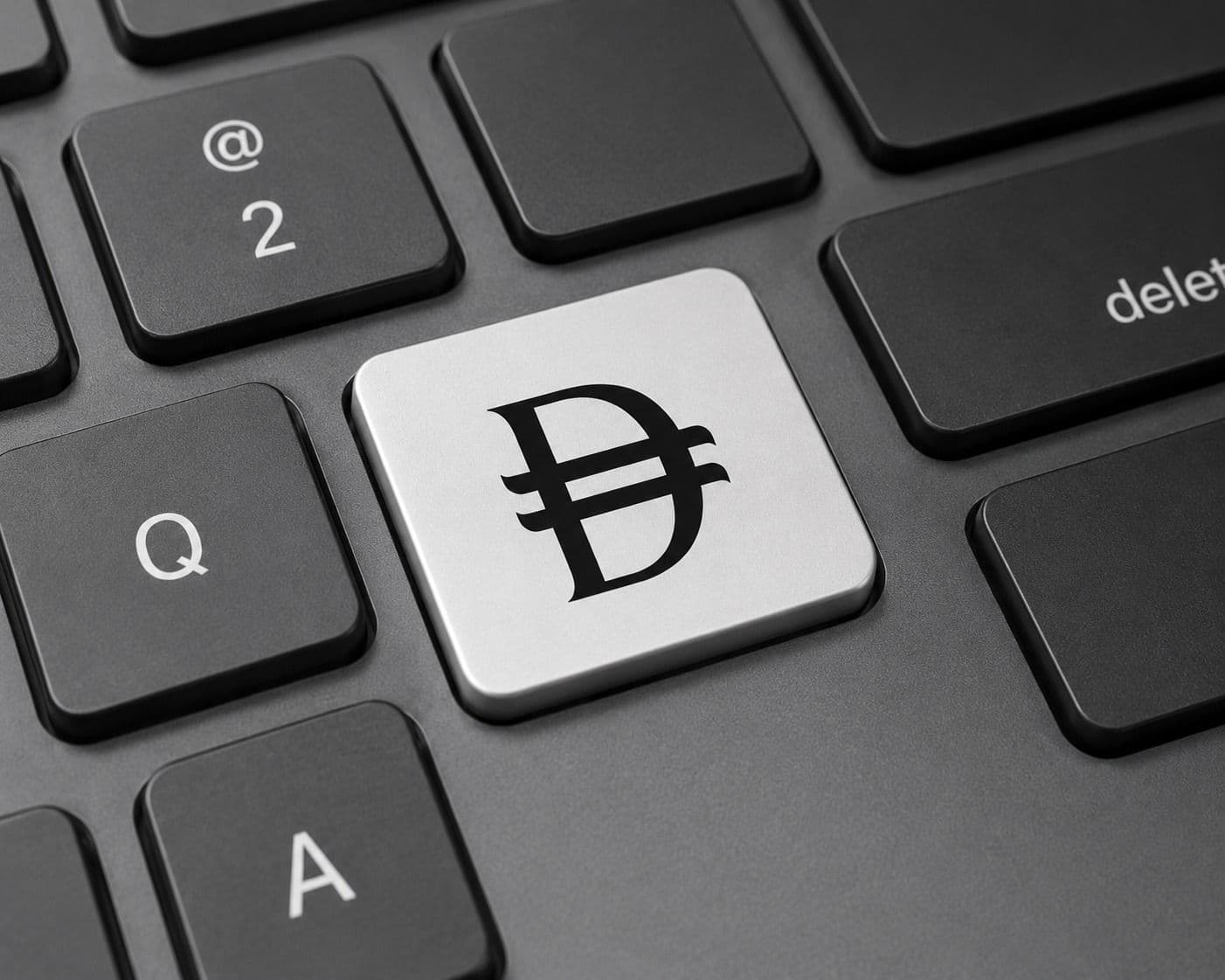
The UAE dirham’s new symbol is moving closer to becoming part of the global digital language used across smartphones, laptops, payment platforms and financial software.
The Unicode Consortium has opened the beta review period for Unicode 18.0, the next version of the international character encoding standard that allows text and symbols to appear consistently across devices, apps and the web. Unicode said the release includes new currency symbols for the Maldivian rufiyaa, Omani rial and UAE dirham.
The development marks a technical but important step in the UAE’s push to give its national currency a clearer digital identity. Once a currency symbol is encoded in Unicode, technology companies, software developers, banks and payment platforms can begin supporting it across operating systems, keyboards, fonts, apps and digital interfaces.
A Technical Milestone for the Dirham
Unicode 18.0 remains in beta review, meaning the standard has not yet been formally released. The Unicode Consortium said the review period runs until July 7, 2026, with the final release of Unicode 18.0 planned for September 15, 2026.
The process is more than a formality. Unicode’s beta documentation says implementers are encouraged to review the new data before the end of the beta period. It also warns that beta files should be treated as a work in progress and that products should use the final approved version once released.
Still, the inclusion of the UAE dirham sign in the Unicode pipeline is a significant step forward. Unicode’s Pipeline page, which tracks characters approved for future publication, lists the UAE dirham sign as U+20C3 UAE DIRHAM SIGN. The same page lists U+20C4 OMANI RIAL SIGN and U+20C2 RUFIYAA SIGN among characters approved for Unicode 18.0.
That distinction matters because Unicode support is a prerequisite for broad digital adoption. Without it, a new symbol may appear correctly in one app or font but fail to display elsewhere, showing up as a blank box, missing character or incompatible glyph.
The Role of Unicode in Digital Finance
Unicode is the technical standard behind text representation across much of the digital world. It allows characters, letters, emoji and symbols to be displayed consistently across different devices and software systems.
That consistency is especially important in currency use. A national currency symbol can appear across e-commerce pages, banking apps, invoices, point-of-sale systems, payment gateways, trading platforms, accounting software and government services. Without Unicode encoding and broad technical support, institutions often continue relying on abbreviations such as AED, SAR or OMR instead of a dedicated symbol.
The UAE’s move therefore sits at the intersection of monetary identity and digital infrastructure. A currency symbol is not required for financial transactions, but it can help standardize how a currency is represented in public-facing and commercial environment.
UAE Launched the Symbol in 2025
The Unicode development follows the Central Bank of the UAE’s announcement of the new dirham symbol in March 2025. The CBUAE said it had unveiled the new symbol for the UAE’s national currency in conjunction with the country’s joining of the FX Global Code.
The symbol was introduced as part of efforts to strengthen the UAE’s position as a global financial hub and reinforce the dirham’s international identity. It was announced for both the physical dirham and the Digital Dirham, the central bank digital currency initiative being developed as part of the CBUAE’s broader financial infrastructure modernization agenda.
The UAE government’s official portal also identifies March 27, 2025, as the date the CBUAE unveiled the new dirham symbol and describes it as a mark for both the physical and digital forms of the national currency.
A Digital Shift for Gulf Currency Symbols
The UAE is not alone in trying to give its currency a more visible digital identity. The Central Bank of Oman launched an official symbol for the Omani rial in November 2025, and Unicode’s pipeline now lists the Omani rial sign for Unicode 18.0. Unicode’s February roadmap also identifies the Omani rial symbol as one of three new currency symbols approved for encoding in Unicode 18.0.
The broader pattern reflects how Gulf economies are modernizing the presentation of their currencies alongside financial technology, digital payments and cross-border commerce. A currency symbol can serve both a practical and symbolic purpose for central banks, making a national currency easier to display in digital environments while reinforcing its identity in financial markets.
Users will not see the change immediately. Even after Unicode 18.0 is finalized, major technology platforms will still need to update fonts, keyboard layouts, operating systems, developer tools and financial software. Unicode has cautioned that some devices may not support new currency symbols natively for years, especially older phones and computers that no longer receive software updates.