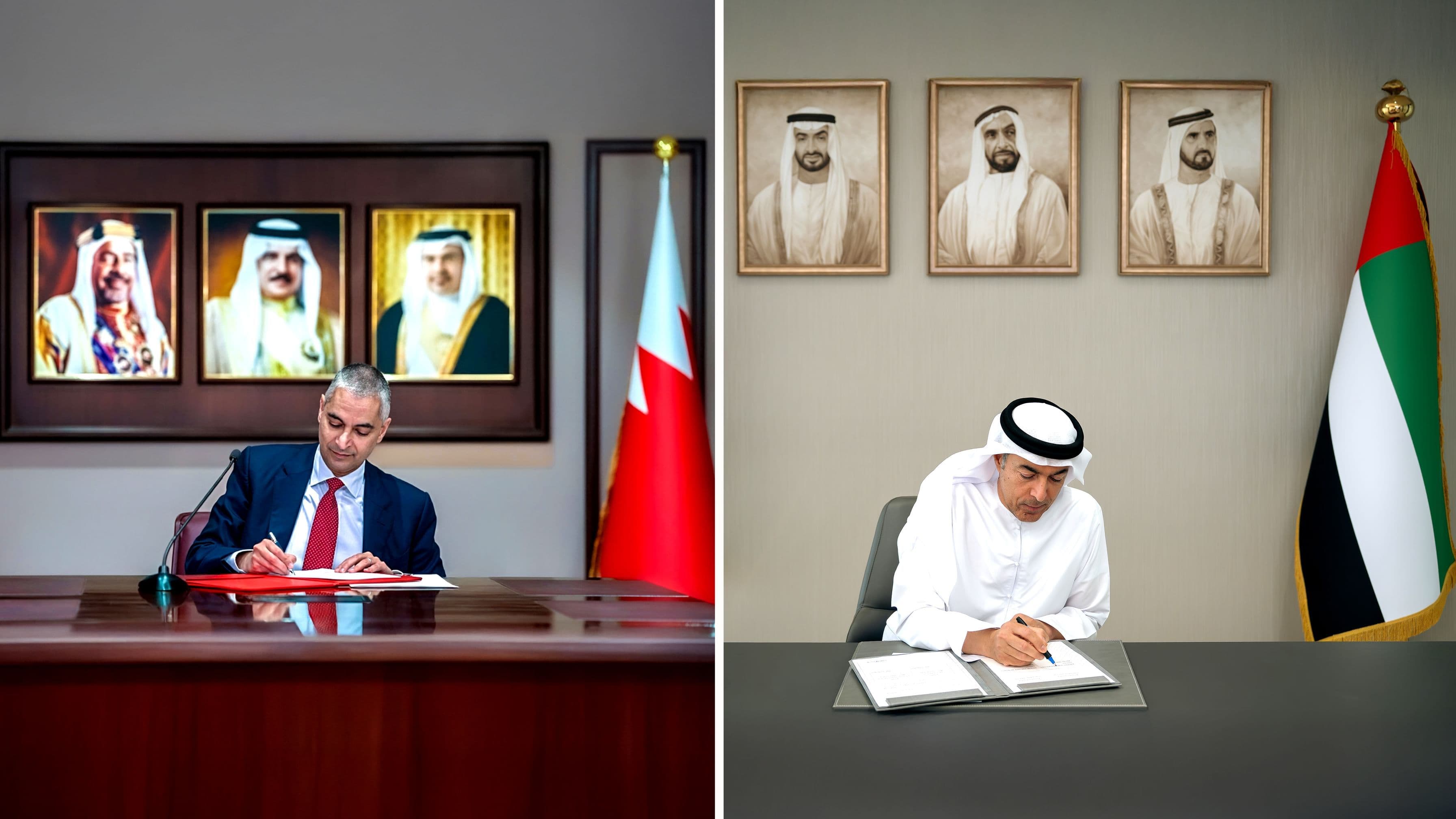
The United Arab Emirates and Bahrain have taken another step toward strengthening regional financial cooperation, signing a currency swap agreement valued at approximately $5.4 billion (AED 20 billion).
The agreement establishes a bilateral framework for exchanging the UAE dirham and the Bahraini dinar over a five-year period. It was signed by Khaled Mohamed Balama, Governor of the Central Bank of the UAE, and Khalid Humaidan, Governor of the Central Bank of Bahrain.
While currency swap agreements are often viewed as technical financial instruments, they carry broader implications for how countries manage liquidity, facilitate trade, and reduce reliance on global reserve currencies such as the US dollar.
A Practical Tool with Strategic Intent
At its core, the agreement allows both central banks to access each other’s currencies when needed, helping ensure liquidity in times of market stress or increased demand. This can be particularly useful in supporting cross-border trade and investment flows between the two economies.
Both central banks emphasized that the agreement is designed to strengthen monetary cooperation and deepen economic ties. According to the Central Bank of the UAE, the arrangement reflects a shared commitment to expanding financial and monetary cooperation, while promoting the use of local currencies in cross-border transactions.
That last point is significant. Across multiple regions globally, policymakers have been exploring ways to settle trade in domestic currencies rather than relying exclusively on the US dollar. While this agreement is regional in scope, it aligns with a broader trend toward diversifying currency usage in international finance.
More than Just Numbers
Beyond the headline figure of $5.4 billion (AED 20 billion), the agreement highlights the longstanding relationship between the UAE and Bahrain. Both countries are key financial hubs in the Gulf Cooperation Council (GCC), with well-developed banking systems and active roles in regional capital markets.
Businesses operating between the two countries could eventually benefit from smoother transactions, reduced currency conversion costs, and improved access to financing in local currencies.
Officials from both central banks framed the deal not just as a financial mechanism, but as part of a wider effort to support economic growth and stability.
Khaled Mohamed Balama noted that the agreement reinforces cooperation frameworks between central banks, contributes to financial stability, and supports trade and investment ties. Similarly, Khalid Humaidan described the agreement as a milestone in bilateral relations, emphasizing its role in advancing regional financial integration and stimulating economic growth.
Regional Context and Growing Momentum
Currency swap agreements are not new, but their importance has grown in recent years. In times of global uncertainty, such arrangements can act as a financial safety net, allowing countries to maintain liquidity without immediately turning to external borrowing or foreign reserves.
Within the Gulf region, where economies are closely interconnected, such agreements also serve a strategic purpose. They help reinforce financial linkages, support intra-regional trade, and provide additional tools for central banks to manage monetary conditions.
The UAE, in particular, has been expanding its role as a regional financial center, while Bahrain continues to position itself as a hub for banking and financial services. The agreement between the two reflects a shared interest in maintaining stability while adapting to evolving global financial dynamics.
A Signal of Confidence
While the mechanics of currency swaps may not capture public attention, they often signal confidence between participating countries. Entering into a multi-year agreement of this scale suggests a high level of trust in each other’s financial systems and economic outlook.
It also indicates a willingness to coordinate more closely on monetary matters, something that can have long-term benefits for regional integration.
Policymakers gain another layer in their financial toolkit, while businesses and investors are reassured that both countries are actively strengthening the foundations of their economic relationship.