

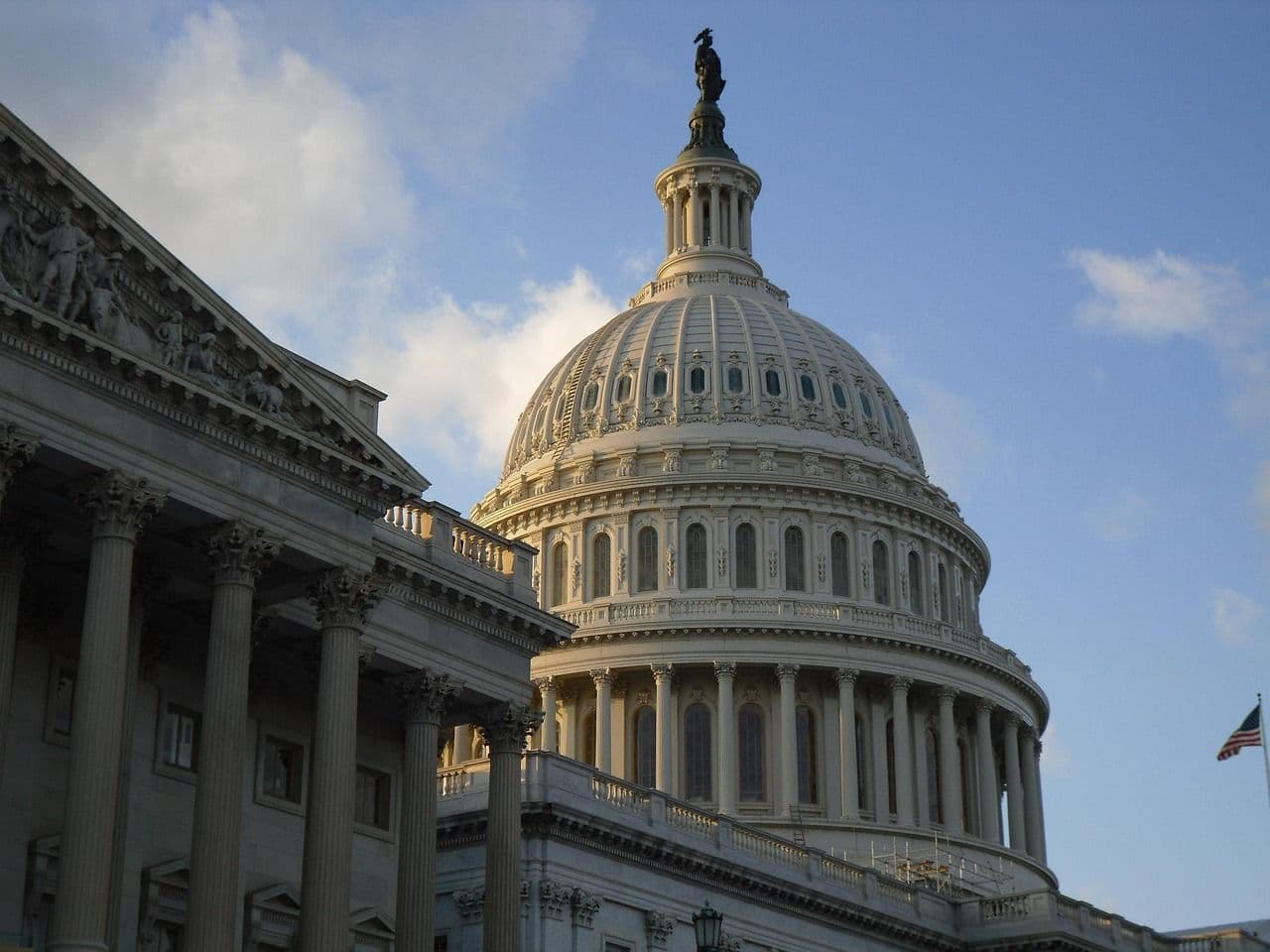
 Bipartisan PARITY Act aims to close long-standing gaps in U.S. digital asset tax policy. (Pixabay)
The PARITY Act draft has not yet been formally introduced as a bill, but it has already attracted attention on Capitol Hill and among tax professionals and industry participants. The proposal reflects a growing acknowledgment in Congress that existing tax laws, many of which predate the rise of digital assets, are increasingly misaligned with how crypto is used and traded today.
At its core, the PARITY Act aims to bring greater consistency between how digital assets are taxed and how traditional financial instruments such as stocks and commodities are treated. Lawmakers behind the draft argue that aligning these frameworks could ease compliance burdens while also closing loopholes that have emerged from inconsistent interpretations of the tax code.
Under current U.S. tax law, most cryptocurrencies are classified as property rather than currency. As a result, capital gains taxes can be triggered with each taxable transfer, including small, everyday transactions that would not normally create a tax event if conducted with cash or traditional payment methods. For many taxpayers, this has meant tracking minor gains or losses that have little economic impact but require detailed reporting. The PARITY Act seeks to reduce these friction points, particularly for low-value transactions and certain stablecoin use cases.
One of the draft’s most notable provisions introduces a de minimis exemption for regulated payment stablecoins. Under this approach, gains or losses would not be recognized for tax purposes if a stablecoin remains within a narrow range around its one-dollar peg. The measure is intended to treat qualifying stablecoins more like currency, a shift that could significantly simplify tax compliance for routine digital payments.
 PARITY Act aims to bring crypto tax rules closer to traditional financial markets. (Shutterstock)
Beyond stablecoins, the proposal also brings digital asset trading closer to established financial market standards. The draft includes wash-sale and constructive sale rules, which are already familiar in equity markets. These provisions are designed to prevent taxpayers from generating artificial losses by selling and quickly repurchasing the same asset, an area that has remained largely unaddressed in crypto markets.
The legislation also tackles the tax treatment of rewards earned through activities such as staking and mining. Under existing rules, these rewards are often taxed at the moment they are received, even if the recipient has not sold them or converted them into cash. This approach has created what many market participants describe as “phantom income,” where taxes are owed without corresponding liquidity.
To address this issue, the PARITY Act proposes an elective option allowing taxpayers to defer income recognition on staking and mining rewards until the assets are sold or exchanged. Supporters of this approach argue that it better reflects the economic reality of these activities and reduces financial strain on network participants.
In addition, the draft seeks to clarify source-of-income rules for digital asset transactions, outlining how income should be allocated between U.S. and non-U.S. taxpayers. This clarification could help resolve ongoing uncertainty for global market participants while improving the IRS’s ability to administer and enforce tax obligations.
While still in draft form, the PARITY Act has drawn interest from industry groups and tax experts who view clearer digital-asset tax rules as an important step toward modernizing financial regulation. As digital assets continue to expand across retail, institutional, and decentralized finance markets, lawmakers are increasingly viewing tax clarity as a foundational element of a broader regulatory framework.
The proposal follows other recent legislative efforts focused on digital assets, including the GENIUS Act, which established a federal framework for stablecoin regulation earlier in 2025. Taken together, these initiatives signal a broader push in Congress to create more coherent and predictable rules for digital finance.
Once formally introduced, the PARITY Act is expected to face close scrutiny. Lawmakers will debate its potential impact on federal revenues, while regulators such as the IRS will assess how new provisions could be implemented in practice. Hearings are likely to include testimony from tax experts, industry representatives, and government agencies as the proposal moves through the legislative process.
Horsford and Miller have emphasized the bipartisan nature of the effort, framing the draft as an attempt to bring fairness, simplicity, and consistency to digital-asset taxation. In a joint statement, Miller said the legislation “brings clarity, parity, fairness, and common sense to the taxation of digital assets” while protecting consumers and providing clearer rules for innovation.
Support from both parties suggests that digital-asset tax reform could be one of the few areas where consensus is achievable in an otherwise divided Congress. Proponents argue that clearer rules could strengthen U.S. competitiveness in financial technology while reducing incentives for tax avoidance as digital-asset markets continue to mature.
The release of the PARITY Act discussion draft marks a meaningful step in efforts to update the U.S. tax code for a digital economy that has evolved far faster than the laws designed to govern it.

Firebird scales up Armenia’s AI infrastructure

AI-generated viruses raise new biosafety questions

Saudi real estate gets a tokenization focus

AI and satellites drive Space42 expansion

Stay ahead with the latest updates, insights, and trends shaping the world of finance, investment, blockchain, digital business, fintech, technology, and global markets.
