
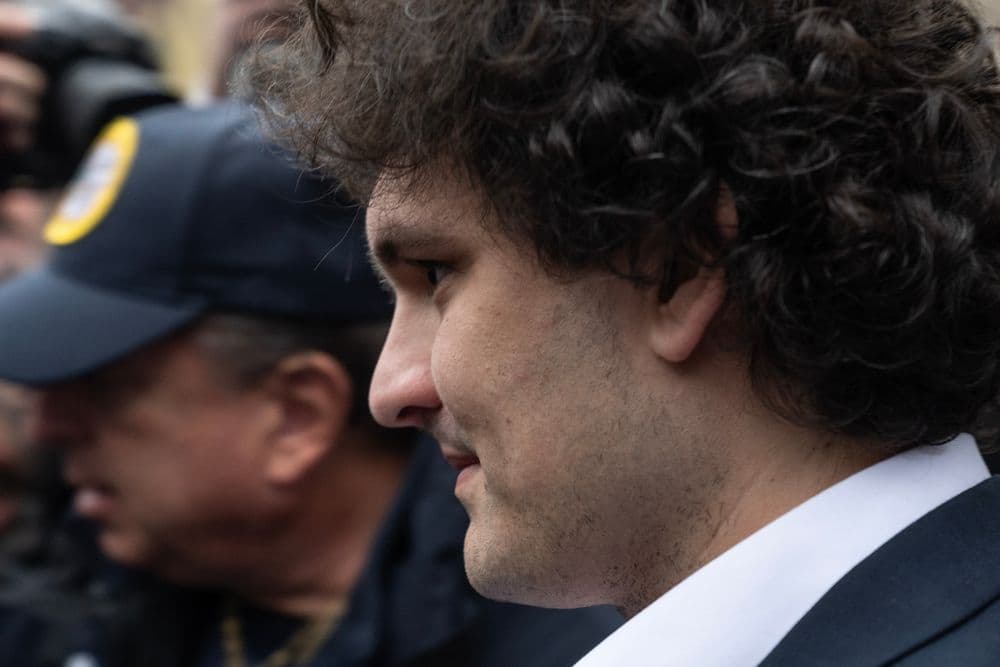
 Trump makes clear there’s no pardon coming for the jailed FTX founder. (Shutterstock)
The comments, delivered in an interview with The New York Times, close the door on one of the most hotly debated political tail risks tied to one of the largest financial scandals in recent American corporate history.
The decision reverberates across political and financial circles already attuned to how the executive branch might exercise clemency authority in high-profile economic cases. Trump’s remarks also included denials of pardon consideration for other controversial figures, underscoring what some analysts interpret as an attempt to distinguish industry support from leniency toward convicted fraudsters.
Bankman-Fried’s conviction followed a lengthy court case linked to the misuse of customer funds at FTX. A jury found him guilty on multiple fraud-related charges in November 2023. In March 2024, a federal judge sentenced him to 25 years in prison, reflecting the scale of losses tied to the exchange’s collapse.
Since his incarceration, speculation had mounted among industry observers and investors about the possibility of political intervention on his behalf. There were efforts by Bankman-Fried’s legal team and family to generate clemency support, including cultivating relationships with Republican influencers and public figures. Those efforts, however, appear to have failed to move the administration.
Trump framed his broader approach to clemency as selective, distinguishing between his often-publicly declared affinity for cryptocurrencies and what he characterized as a firm commitment to upholding legal accountability where clear wrongdoing occurred. During the interview, he made clear that he would not move to pardon Bankman-Fried, a position that reporters and commentators interpreted as bringing months of speculation to an end.
The president’s broader pardon record includes actions that have drawn debate across parts of the crypto and political landscape. In 2025, Trump granted pardon to Binance co-founder Changpeng Zhao following a brief federal sentence, a move that prompted mixed reactions from digital-asset advocates, policymakers, and regulators.
By drawing a contrast between those pardons and Bankman-Fried’s case, the administration appears to be signaling that industry relevance or public stature alone will not suffice for clemency where large-scale customer harm and statutory violations have been adjudicated. That distinction matters to markets still sensitive to political risk, particularly as crypto firms and investors monitor how Washington’s posture toward digital assets continues to evolve.
Trump’s refusal to intervene could recalibrate the broader discussion around political influence and executive clemency in financial scandals. The decision also feeds into ongoing debates in Congress and regulatory bodies about how digital asset markets should be governed. Lawmakers on both sides of the aisle have used FTX’s collapse as a case study for strengthening oversight, custody protections, and solvency standards for exchanges and trading platforms. Trump’s stated position, that clemency is inappropriate for Bankman-Fried, removes an uncertain variable from that legislative calculus.
With the presidential pardon off the table, Bankman-Fried’s remaining legal avenues are embedded squarely in the judicial system. His defense team has pursued appeals challenging both conviction and sentencing, advancing arguments around procedural issues and trial conduct in the U.S. Court of Appeals for the Second Circuit. As of this writing, no decision has been publicly released. A further appeal to the Supreme Court remains possible but historically difficult; the nation’s highest court accepts a small fraction of petitions annually.
Observers note that the appellate path, at times measured in months or years, may offer the only realistic contingency for reducing Bankman-Fried’s sentence or overturning aspects of his conviction. However, legal experts caution that appellate relief is uncertain and narrow in scope, particularly where factual findings and jury determinations are upheld by lower courts.
The Trump administration’s stance reflects a broader theme: support for blockchain innovation can exist alongside firm expectations around compliance and accountability, particularly in cases involving the misuse of customer assets and losses to investors. In the aftermath of FTX’s collapse, that message may resonate as regulators and lawmakers continue to shape the future of U.S. crypto policy.

AI reshapes institutional learning across MENA

Firebird scales up Armenia’s AI infrastructure

AI-generated viruses raise new biosafety questions

Moove shifts further into autonomous fleet infrastructure

Stay ahead with the latest updates, insights, and trends shaping the world of finance, investment, blockchain, digital business, fintech, technology, and global markets.

