

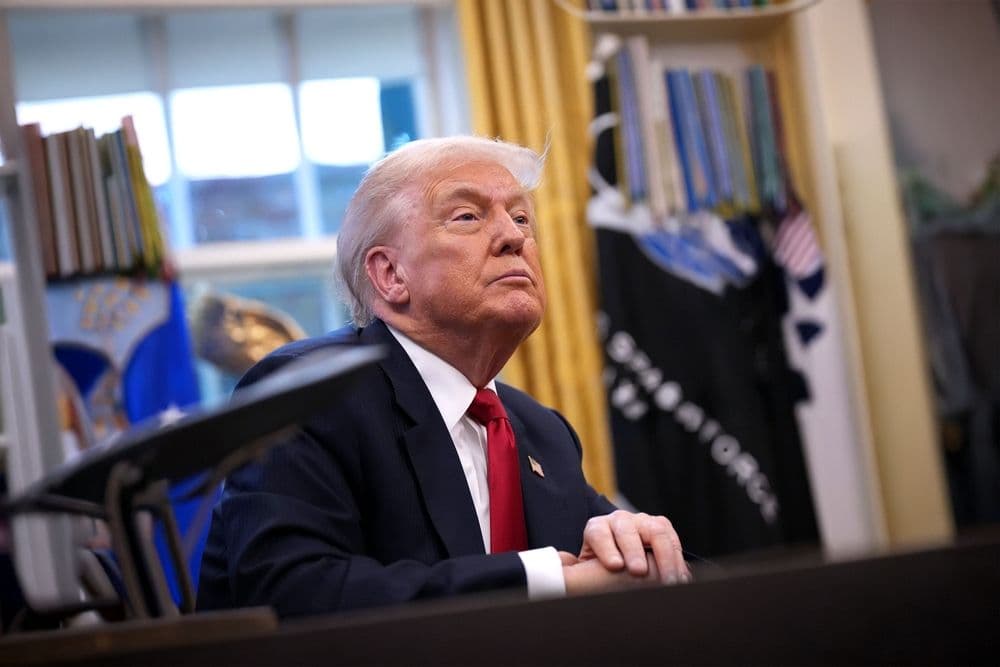
 USD1 passes $3 billion as stablecoin market shows fresh momentum. (Shutterstock)
USD1’s circulating supply has now exceeded $3.07 billion, marking a rapid rise for the stablecoin less than a year after its launch. The pace of growth highlights how quickly demand has scaled as dollar-pegged digital assets gain wider traction across crypto trading, decentralized finance, and blockchain-based payment use cases.
USD1 is fully redeemable on a one-to-one basis with the U.S. dollar and is backed by reserves consisting of U.S. Treasury bills, cash, and cash equivalents. This structure places USD1 firmly in the category of fiat-collateralized stablecoins, a model that has historically attracted both institutional and retail users seeking price stability rather than yield or algorithmic experimentation.
Zach Witkoff, co-founder and chief executive officer of World Liberty Financial, said the company launched USD1 to meet demand from traditional institutions seeking a crypto-native yet trusted instrument capable of unlocking the benefits of decentralized finance. “We launched USD1 because traditional institutions needed a crypto-native but trusted instrument to reap the power of DeFi, but we’ve seen extraordinary demand across the board,” Witkoff said. He added that adoption has accelerated rapidly, noting that “in less than a year, USD1 has been adopted as the stablecoin of choice for pioneering enterprises everywhere.”
Live market data from Binance shows USD1 trading close to its intended $1 peg, with circulating supply levels consistent with the figures outlined in the announcement. The token is currently available across multiple trading pairs, helping to deepen liquidity and support price stability as volumes increase.
While USD1 remains smaller than dominant stablecoins such as Tether’s USDT and Circle’s USDC, its rapid rise to $3 billion places it among the faster-growing entrants in the sector. Unlike early stablecoin cycles that relied heavily on organic DeFi adoption, USD1’s growth has been supported by early exchange listings and integration into broader trading ecosystems, giving it immediate exposure to both retail and institutional flows.
Market participants note that reserve-backed stablecoins continue to play a central role in crypto markets, functioning as a bridge between traditional finance and blockchain-based activity. Stablecoins are widely used for spot and derivatives trading, cross-border transfers, decentralized lending, and as settlement assets within on-chain protocols. Industry-wide data shows that stablecoin usage tends to expand during periods of market volatility, when traders and institutions seek capital preservation without fully exiting digital asset markets.
USD1’s expansion also comes at a time of heightened regulatory focus on stablecoin issuers. Policymakers in the United States and other major jurisdictions have increasingly emphasized the importance of reserve transparency, redemption rights, and operational safeguards as stablecoins grow in scale and systemic relevance.
Against that backdrop, the structure of USD1’s reserves, centered on short-duration, highly liquid assets, aligns with emerging regulatory expectations, even as formal rules remain under development. Analysts have repeatedly pointed to reserve composition and audit practices as key factors that will shape which stablecoins gain long-term institutional trust.
The broader stablecoin market has expanded significantly over the past several years, evolving from a niche liquidity tool into core financial infrastructure for the digital asset economy. Financial regulators and traditional payment providers have all acknowledged the role stablecoins now play in global value transfer, particularly in regions where access to U.S. dollars is limited or costly.
The $3 billion threshold represents more than a headline figure. It signals that USD1 has moved beyond early-stage experimentation into a phase where scale, liquidity, and operational reliability matter as much as innovation. Maintaining the token’s peg, ensuring smooth redemptions, and providing clear disclosures around reserves will likely determine whether USD1 can sustain its momentum in a market where trust is hard-earned and easily lost.

A bigger Gulf push for IMAN

UAE looks beyond borders on AI

DEWA steps onto the global stage
Dubai sharpens its gold market edge

Stay ahead with the latest updates, insights, and trends shaping the world of finance, investment, blockchain, digital business, fintech, technology, and global markets.
