

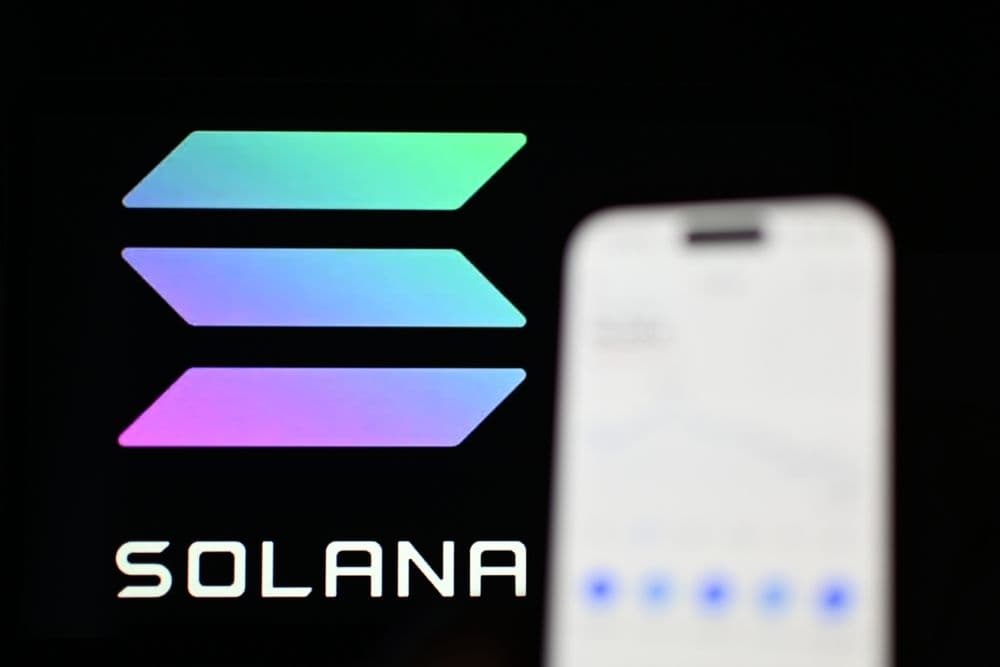
 Solana Mobile’s SKR token to go live in 2026 amid its decentralized app store push. (Shutterstock)
Solana Mobile has confirmed that its native token, SKR, will launch in January 2026, marking a major milestone in the company's attempt to redefine how mobile ecosystems function.
The announcement went live directly through the company’s official blog, positioning SKR as the foundation of the new “open mobile” economy where users, developers, and hardware partners share control in the governance, incentives, and security architecture of the platform. This launch represents a significant evolution of Solana Mobile's long-term vision: shifting smartphones away from closed corporate-controlled app environments and toward ecosystem maintenance through decentralized participation.
A new era for open mobile kicks off this January with SKR.
— Seeker | Solana Mobile (@solanamobile) December 3, 2025
At launch, SKR serves as a growth and coordination mechanism: stake to Guardians, support builders, secure devices, curate the dApp Store.
As the ecosystem scales, SKR ensures its value flows back to the community that… pic.twitter.com/cNNxGkkaem
SKR is the native asset that will distribute control, power curation and align incentives across all stakeholders in the mobile network. What this means in practice is the token will underpin decisions normally made by centralized app stores: which get visibility, how rewards flow to developers and what standards the platform enforces. In Solana Mobile's view, the current mobile landscape concentrates too much power in the hands of a few dominant platforms, while SKR aims to introduce a more participatory model built on user stakes and transparent governance.
Security also plays a central role in this vision. SKR is tied to a system called TEEPIN, short for Trusted Execution Environment Platform Infrastructure Network, which uses Guardians to validate device identity, verify software integrity, review dApp submissions and uphold community standards. These are responsibilities usually handled internally by large corporations but reimagined as functions distributed across independent operators in a decentralized network.
The tokenomics framework provides further detail on how Solana Mobile proposes to distribute economic power. SKR will have a fixed supply of 10 billion tokens.
Thirty percent of that supply is reserved for airdrops targeting early adopters, Seeker device owners and active users of the ecosystem's dApps. A further 25 percent is allocated for growth initiatives and partnerships aimed at expanding the platform's global footprint.
Ten percent will go into a community treasury that can underpin further development or community-led programs. Solana Mobile itself will retain 15 percent of the supply, with Solana Labs receiving 10 percent.
The remaining 10 percent falls to liquidity provisioning and launch-phase reserves. Aggregated, the allocation focuses on community participation, with 65 percent of tokens slotted for users, developers and growth of the ecosystem.
Though various observers who follow the market have suggested that the token will follow an inflation model that tapers over time, an explicit statement on its inflationary parameters hasn't appeared in the public announcement by Solana Mobile.
SKR staking will be a major factor in the governance of the platform. Once SKR goes live, holders will be able to stake their tokens to Guardians, which are operators responsible for maintaining and securing the ecosystem. Guardians will verify device identity, integrity checks of the operating system, review new apps and enforce community guidelines. It has been announced that some early Guardian operators would include Anza, DoubleZero, Triton, Helius, Jito and Solana Mobile itself. Users who stake SKR will add to the network's security while earning rewards, with the unstaking following two-day epochs. The structure tries to replace platform gatekeepers with a distributed network of operators directly incentivized by the health and security of the platform.
The SKR launch also builds on the growing user base surrounding Solana Mobile's second-generation device, the Seeker. Worldwide shipping for the Seeker began in August 2025, and over 150,000 devices are reportedly already active. These have participated in what Solana Mobile labels "Seeker Season," a time in which over 175 decentralized applications have been deployed on the platform. The company claims more than USD 100 million in economic activity has flowed through the ecosystem during this period, underscoring growing engagement from developers and users. Its introduction of SKR shortly after this expansion suggests a strategic progression: first establish a hardware foundation and developer pipeline, then layer on governance and incentive mechanisms that could accelerate long-term growth.
Proponents of the effort think that SKR could serve as a model for decentralized mobile architecture. By tying governance, device verification, application curation, and economic incentives to a token, Solana Mobile aims to decrease dependency on traditional gatekeepers and to empower developers who often face restrictive app-store rules. The company also claims that community-aligned incentives can create a stronger feedback loop that drives innovation and deeper engagement-especially for Web3-native applications. If SKR finds traction, Solana Mobile's ecosystem could eventually evolve from a niche, blockchain-focused experiment into a broader alternative for mainstream smartphone platforms.
However, some questions do remain. The Guardian model will only work if operators can be trusted to implement the security standards without centralization or collusion. The long-term value of the SKR will be premised on actual usage of decentralized apps and not speculative trading of the token. Further, the mainstream adoption of users outside the crypto-native audiences remains a challenge as mainstream consumers would choose simplicity and convenience over decentralization. Token distribution, staking rewards, and governance dynamics will face scrutiny once the system is live and operational under real-world conditions.
Despite these open questions, the SKR launch marks an important milestone for Solana Mobile and, if deployed as intended, perhaps a seminal moment for the integration of blockchain and mobile. January 2026 will reportedly bring a token-based model that weaves governance, security, device identity and app-store curation into a singular vision no major mobile ecosystem has yet attempted. Whether SKR will redefine the mobile paradigm or is simply a steppingstone in the road to Web3 devices remains to be seen, based on its ability to draw in everyday end-users, grassroots developers and long-term ecosystem participants.
Business payments get a digital overhaul
Everyday finance gets a Tabby upgrade
Abu Dhabi backs round-the-clock clean power
Apple-Broadcom deal boosts U.S. chip production

Stay ahead with the latest updates, insights, and trends shaping the world of finance, investment, blockchain, digital business, fintech, technology, and global markets.
