

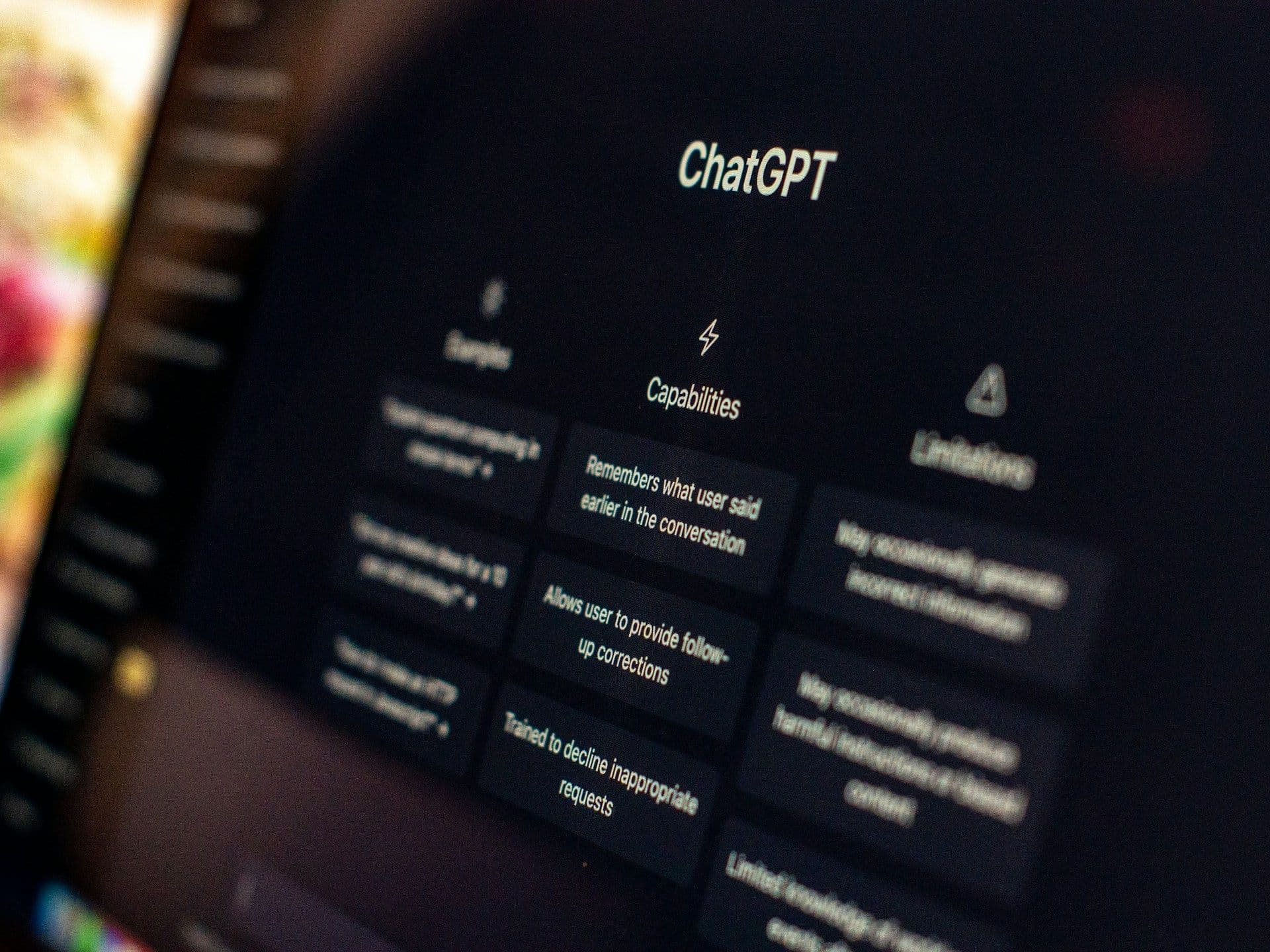
 GPT-5.5 powers a more capable version of ChatGPT, built to handle real workflows rather than just respond to prompts. (Unsplash)
Unlike earlier iterations that focused primarily on generating responses, GPT-5.5 is positioned as a system capable of executing multi-step workflows. The model is built to handle tasks such as writing code, conducting research, analyzing data, and producing documents, while also interacting with tools and software environments more effectively.
This evolution reflects a broader industry trend: artificial intelligence is no longer being framed as a chatbot, but as a functional layer within everyday digital work.
One of the most defining characteristics of GPT-5.5 is its emphasis on task completion rather than simple interaction. OpenAI describes the model as being able to “understand the task earlier,” require less user input, and continue working until an objective is reached.
In practical terms, that means fewer prompts, fewer corrections, and less back-and-forth. Instead of asking an AI to generate isolated responses, users can increasingly rely on it to carry out extended workflows, such as building software components, synthesizing research findings, or managing structured data tasks.
This shift is subtle but significant. It moves AI from a reactive tool to something closer to an autonomous collaborator, capable of navigating complex instructions without constant supervision.
GPT-5.5 is not being released universally. OpenAI has tied access to its paid subscription ecosystem, continuing a strategy of gradual rollout across user tiers.
The company confirmed that GPT-5.5 is available within ChatGPT and Codex for Plus, Pro, Business, and Enterprise users, while a more advanced configuration, GPT-5.5 Pro, is reserved for Pro, Business, and Enterprise tiers.
This tiered structure reflects the increasing computational demands of advanced AI models. More capable systems require greater infrastructure, which in turn shapes how they are distributed commercially. It also signals a widening gap between baseline AI access and high-performance enterprise-grade tools.
OpenAI’s positioning of GPT-5.5 is deliberate. The company repeatedly frames the model as being designed for “real-world work,” emphasizing practical use cases over experimental capabilities.
These use cases span a range of everyday professional tasks. GPT-5.5 is intended to support software development and debugging, assist with research and information synthesis, handle data analysis and structured problem-solving, and generate documents across multiple formats. The model is also described as being more effective at using external tools, checking its own outputs, and maintaining progress across longer, more complex workflows.
These improvements suggest that GPT-5.5 is less about chasing raw benchmark scores and more about delivering consistent performance in applied environments, where reliability and execution matter just as much as intelligence.
 Sam Altman has pointed to the growing role of artificial intelligence in handling practical tasks, a direction reflected in OpenAI’s release of GPT-5.5, which is designed for coding, research, and real-world workflows. (Shutterstock)
While OpenAI does not rely heavily on marketing buzzwords in its announcement, the underlying direction is clear: GPT-5.5 moves closer to what is often described as “agentic AI.”
This refers to systems that can independently plan, act, and adapt in pursuit of a goal, rather than simply responding to prompts. Early signs of this behavior are reflected in GPT-5.5’s ability to handle multi-step tasks, use tools autonomously, and refine its outputs without continuous user intervention.
The implications extend beyond productivity gains. If AI systems can reliably execute tasks end-to-end, they begin to reshape how software is used, how workflows are structured, and how human oversight is applied.
OpenAI has opted for a controlled rollout rather than a full-scale release, noting that API deployment will follow after additional safety and infrastructure considerations are addressed.
This phased approach aligns with the company’s broader strategy of iterative deployment, where new capabilities are introduced progressively while monitoring real-world usage.
It also reflects the increasing complexity of deploying advanced AI systems at scale. As models become more capable, the risks associated with misuse, errors, or unintended outcomes grow proportionally, requiring tighter safeguards and staged adoption.
The launch of GPT-5.5 comes amid intensifying competition in the AI sector, where major players are racing to develop models capable of handling complex, real-world applications.
Rather than focusing solely on conversational performance, companies are now prioritizing systems that integrate into workflows, automate processes, and deliver measurable productivity gains.
In this context, GPT-5.5 represents not just a technical upgrade, but a strategic move. It positions OpenAI within a broader shift toward AI as infrastructure, embedded directly into how work is performed rather than accessed as a standalone tool.
GPT-5.5 highlights a transition point in artificial intelligence development. The focus is no longer on whether AI can generate text or answer questions, but whether it can reliably complete tasks that traditionally required human input.
By emphasizing execution, autonomy, and integration, OpenAI is signaling a future where AI operates less like a conversational assistant and more like a system that actively participates in digital workflows.

Dubai Department of Economy and Tourism backs SME growth

AI joins Dubai’s park planning

UAE wealthtech courts boutique managers

UAE looks beyond borders on AI

Stay ahead with the latest updates, insights, and trends shaping the world of finance, investment, blockchain, digital business, fintech, technology, and global markets.
