Block News International

@2026 Block News International. All Rights Reserved.

Blends Media
A Blends Media Group Production

DIFC Eyes $3.5 Billion Growth with World’s First AI-Native Financial Centre

Arry Hashemi
Arry Hashemi
Apr. 23, 2026
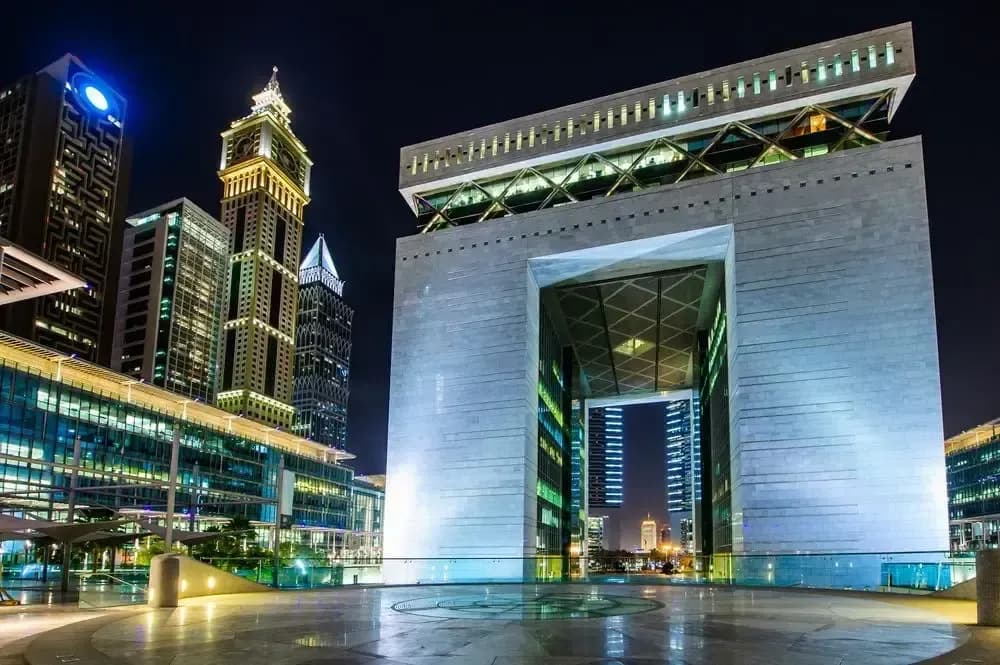
DIFCAt the Dubai International Financial Centre, the push toward becoming the world’s first AI-native financial hub reflects a broader shift in how cities are rethinking finance, blending technology, regulation, and everyday business activity into a single evolving ecosystem. (Shutterstock)

Dubai is pushing deeper into the intersection of finance and artificial intelligence, with the Dubai International Financial Centre (DIFC) announcing plans to transform itself into what it describes as the world’s first “AI-Native” financial center.

The initiative signals a shift away from treating artificial intelligence as a supporting tool toward embedding it into the structural foundations of a financial jurisdiction.

Unlike typical digital transformation programs that layer AI onto existing systems, DIFC’s approach is designed to integrate AI across its legal and regulatory frameworks, business environment, talent development pipelines, ecosystem infrastructure, and even its physical urban design.

The announcement positions the initiative as a foundational redesign rather than a limited deployment. According to DIFC, the goal is to embed artificial intelligence directly into how financial services are governed, operated, and scaled within the centre.

His Excellency Essa Kazim, Governor of DIFC said: “DIFC’s evolution into the world’s first AI-Native financial center marks a defining step in Dubai’s ascent as a global capital for the future of finance. As artificial intelligence reshapes the international financial landscape, this initiative reinforces Dubai’s role in setting new standards for innovation, trust and competitiveness. In line with the Dubai Economic Agenda D33, it underscores our commitment to building a resilient, forward-looking economy and positioning the emirate at the forefront of responsible AI adoption in financial services worldwide.”
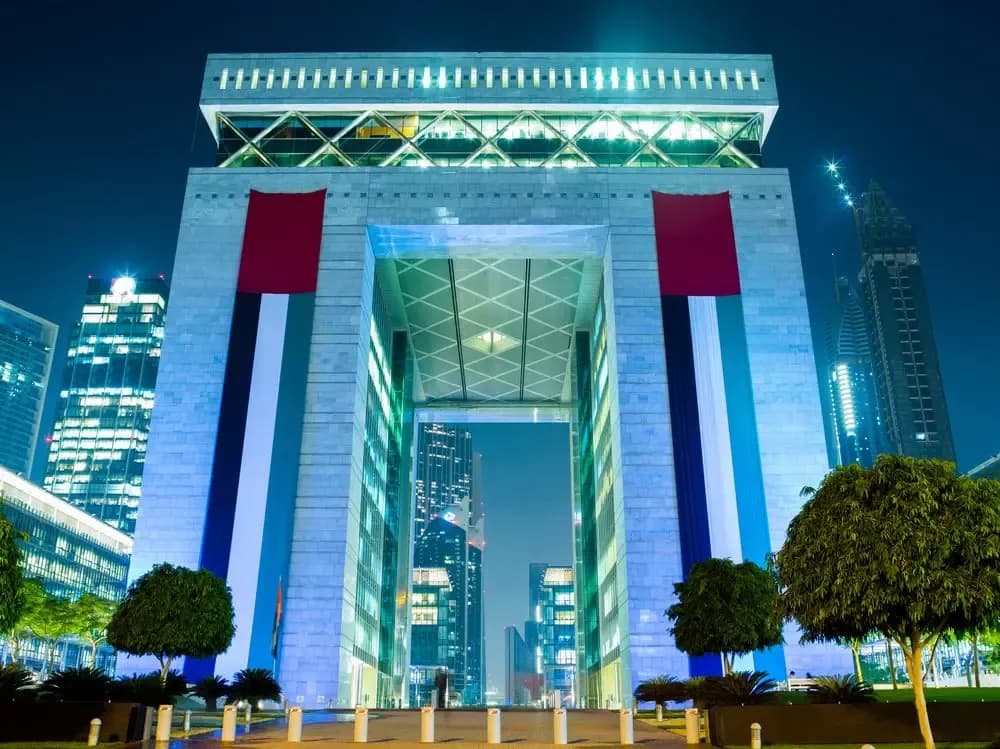

DIFCDIFC’s evolving landscape signals more than expansion, pointing to a future where artificial intelligence quietly powers the systems behind finance, from compliance to decision-making. (Shutterstock)

The emphasis on systemic integration reflects a broader trend among global financial hubs competing to attract fintech firms, capital, and talent. However, DIFC’s positioning suggests it is aiming to differentiate itself by embedding AI directly into governance and regulatory processes, not just private-sector innovation.

Beyond positioning, the initiative is being tied to measurable economic outcomes. DIFC estimates that the transformation could contribute $3.5 billion (AED 12.9 billion) to Dubai’s economy while generating approximately 25,000 new jobs.

These projections align with Dubai’s wider strategy to expand its digital economy and reduce reliance on traditional revenue streams, particularly as global competition among financial centers intensifies.

The scale of projected job creation also signals that the initiative is not limited to high-level financial services. It is expected to drive demand across multiple segments, including AI engineering, regulatory technology, compliance systems, and data governance.

DIFC already plays a central role in Dubai’s financial landscape, hosting thousands of firms and serving as a gateway between markets in the Middle East, Africa, and South Asia.

The center has also been building out its technology ecosystem through initiatives such as its Innovation Hub, which supports fintech, insurtech, and emerging digital finance companies.

By introducing an AI-native framework, DIFC is effectively extending this ecosystem into the regulatory and institutional layers that underpin financial activity. This could allow companies operating within the center to interact with more automated compliance systems, faster regulatory processes, and data-driven oversight mechanisms.

The development comes amid growing competition among financial hubs such as London, Singapore, and New York, all of which are investing heavily in AI-driven finance.

DIFC has indicated that it aims to position itself as a leading destination for AI-focused financial companies, with ambitions to compete among the top global financial centers in areas such as startup density, venture capital activity, and innovation output.

At the same time, the initiative aligns with Dubai’s broader push to establish itself as a global hub for artificial intelligence, supported by events like Dubai AI Week and ecosystem-building programs designed to attract international talent and investment.

One of the more notable aspects of DIFC’s announcement is its focus on governance and regulatory integration. While many jurisdictions emphasize AI adoption, fewer have outlined plans to embed AI into legal and regulatory frameworks at scale.

This approach suggests that DIFC is attempting to address one of the biggest challenges facing AI in finance: trust. By integrating AI into regulatory systems rather than leaving it solely in the hands of private firms, the center may be aiming to create a more standardized and transparent environment for AI-driven financial activity.