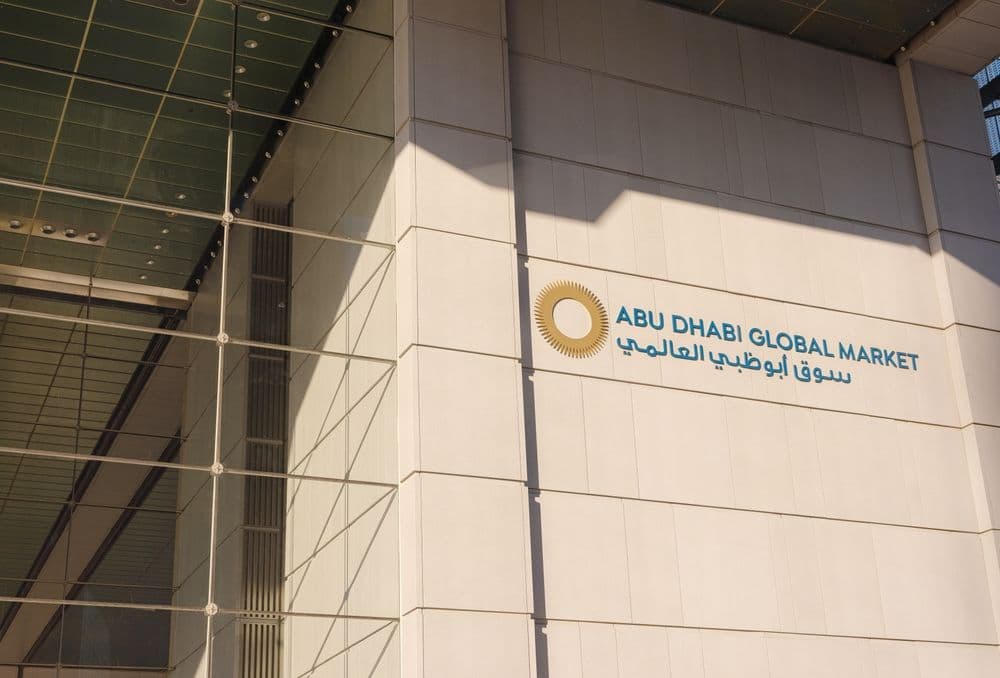
Abu Dhabi’s international financial center, Abu Dhabi Global Market (ADGM), has signed a strategic Memorandum of Understanding (MoU) with the Futian District People’s Government of Shenzhen, marking a fresh step in deepening financial and economic collaboration between the UAE and China.
The agreement sets out a framework aimed at strengthening cross-border cooperation across financial services, innovation, and talent development, areas increasingly seen as the backbone of modern economic partnerships.
Unlike many symbolic agreements that quietly fade into obscurity, this one appears designed with operational intent. Both sides have committed to facilitating “mutual development opportunities” and enhancing engagement between their business and financial ecosystems, signaling a move beyond diplomatic signaling toward practical coordination.
At its core, the partnership connects two strategically important financial centers: Abu Dhabi, which has positioned itself as a global gateway for capital across the Middle East, Africa, and South Asia, and Shenzhen, widely recognized as one of China’s most dynamic innovation and finance hubs.
Futian District, located in the heart of Shenzhen, plays a central role in China’s Greater Bay Area initiative, a region often compared to Silicon Valley for its concentration of technology firms, financial institutions, and advanced manufacturing.
By linking ADGM’s regulatory ecosystem with Futian’s innovation-driven economy, the agreement reflects a broader trend: financial centers are no longer competing in isolation but forming networks to capture cross-border capital flows.
Focus Areas: Finance, AI, and Investment Structures
The MoU outlines several key areas of collaboration, with a strong emphasis on financial innovation and emerging technologies.
Both parties will prioritize knowledge exchange across several key areas, including financial innovation, the use of artificial intelligence in financial services and the development of international investment structures such as Qualified Foreign Limited Partner (QFLP) frameworks.
These focus areas are not random. AI in finance, for example, is rapidly reshaping everything from compliance to portfolio management, while QFLP structures are increasingly used to facilitate cross-border investment into China’s domestic markets.
By aligning on these domains, ADGM and Futian are effectively building shared infrastructure for future financial flows, rather than simply promoting trade in its traditional sense.
From Agreements to Action
One of the more tangible aspects of the partnership lies in its implementation mechanisms.
The agreement includes plans to organize a range of joint initiatives, including industry roundtables, conferences, and business forums, aimed at bringing together stakeholders from both sides to foster dialogue and practical collaboration.
These events are intended to bring together regulators, investors, and industry participants, creating a platform for practical collaboration and deal-making.
There is also a commitment to establish ongoing communication channels between the two jurisdictions, aimed at ensuring that projects move beyond announcements and into execution.
That detail matters. Cross-border agreements often fail not because of lack of intent, but because of weak follow-through. The inclusion of structured communication suggests both sides are aware of that risk.
Leadership Perspective
The tone from leadership on both sides reinforces the strategic nature of the partnership.
Commenting on the collaboration with Futian District, H.E. Rashed Al Blooshi, CEO of ADGM’s Registration Authority, said:
This collaboration with Futian District marks an important step in further strengthening ADGM’s international partnerships and deepening connectivity between Abu Dhabi and key global financial hubs. By fostering knowledge exchange and collaboration across areas such as financial innovation, talent development, and investment structures, we are creating new pathways for capital, ideas, and opportunity to flow between our markets. This agreement reflects ADGM’s continued commitment to enabling sustainable growth, supporting cross-border investment, and advancing Abu Dhabi’s position as a leading global financial centre.
On the Chinese side, Deng Jun, Director of the General Office of Futian District’s government, noted:
In the context of jointly building a community with a shared future for mankind, there is immense potential for international economic and trade cooperation as well as people-to-people exchanges. The signing of the MoU between Futian District and ADGM marks a further step toward practical cooperation between the two sides. We have reached a consensus to take a regular communication mechanism as a key lever, to facilitate the swift implementation of short-term and medium-term cooperation projects, and to jointly achieve greater progress.
This agreement does not exist in isolation. It fits into a broader pattern of deepening economic ties between the UAE and China, particularly in finance, technology, and digital infrastructure.
Recent years have seen a steady increase in bilateral trade and investment, alongside a growing number of institutional partnerships aimed at aligning regulatory frameworks and enabling smoother capital movement.
Within that context, ADGM’s strategy has been clear: position itself as a neutral, well-regulated platform where global capital can meet regional opportunity.
The partnership with Futian strengthens that positioning by directly linking ADGM into one of China’s most influential financial districts.
While the agreement itself is a framework rather than a finalized set of projects, its implications are broader. Businesses gain easier pathways for cross-border investment and collaboration, while regulators benefit from new channels to align standards and share expertise. At the same time, investors are presented with potential access points between two high-growth regions.
More subtly, it reflects a shift in how global finance is evolving. Instead of isolated financial centers competing for dominance, we are seeing the emergence of interconnected ecosystems, networks of jurisdictions working together to facilitate capital, innovation, and talent mobility.