

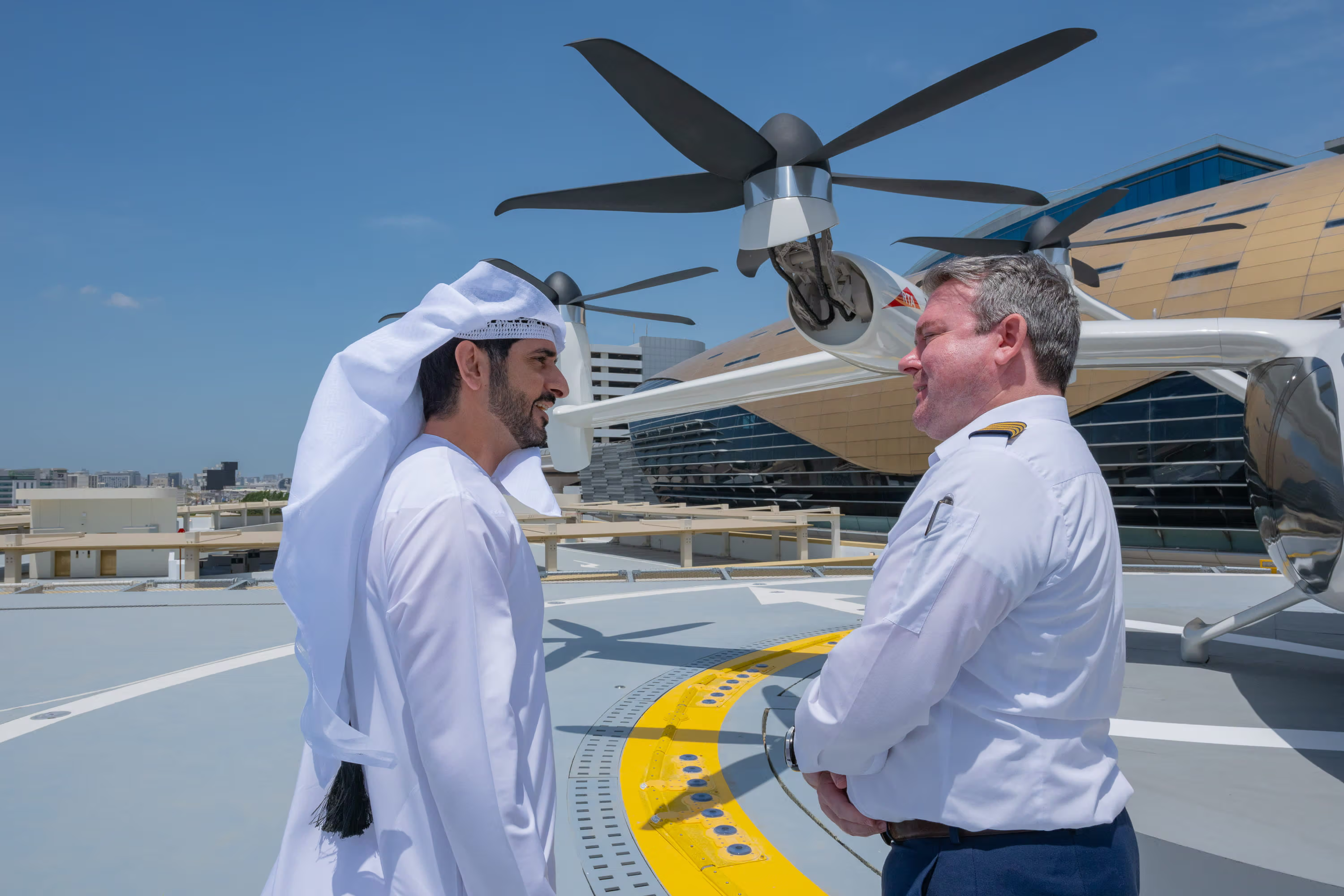
 Dubai’s first air taxi station near DXB anchors a wider network connecting major city hubs, underscoring efforts to bring aerial transport into everyday mobility. (Image source: Dubai Media Office)
The facility, reviewed this week by His Highness Sheikh Hamdan bin Mohammed bin Rashid Al Maktoum, Crown Prince of Dubai, is designed to serve as the central hub for a planned electric aerial taxi network expected to launch commercial operations later in 2026.
For a city that has spent years positioning itself as a testing ground for next-generation transport, the station represents something more tangible than concept designs or pilot projects. It is, quite literally, where the idea is supposed to land.
The newly completed station is a purpose-built vertiport for electric vertical take-off and landing (eVTOL) aircraft. Developed by Skyports Infrastructure in partnership with Joby Aviation and overseen by Dubai’s Roads and Transport Authority (RTA), the site has been designed to integrate with the city’s broader mobility ecosystem.
The facility includes a four-story terminal spanning approximately 3,100 square meters, along with a two-level parking structure, dedicated charging systems, and climate-controlled passenger areas. It is expected to handle up to 170,000 passengers annually once operational.
Two take-off and landing pads will support aircraft movements, while the layout is intended to allow seamless connections to ground transport options such as metro lines, buses, and micromobility services.
That integration piece is not accidental. Air taxis, for all their futuristic appeal, only work if they behave like part of a network rather than a novelty ride.
His Highness Sheikh Hamdan bin Mohammed bin Rashid Al Maktoum, said: “As we mark the first edition of World Public Transport Day on 17th April, Dubai continues to strengthen its position as a leading global model for integrated and sustainable mobility. This progress is driven by innovation and the seamless integration of transport modes, enhancing quality of life and improving urban efficiency. Today, we take another step forward with the completion of the first Air Taxi Station, reaffirming our commitment to shaping the future of mobility. Expanding transport options, from the metro and buses to smart and air mobility, remains central to building a global city that puts people first.”
The language is familiar for Dubai: innovation, global leadership and quality of life. But behind the messaging is a clear strategy. The emirate is attempting to position itself early in a sector that has yet to mature globally.
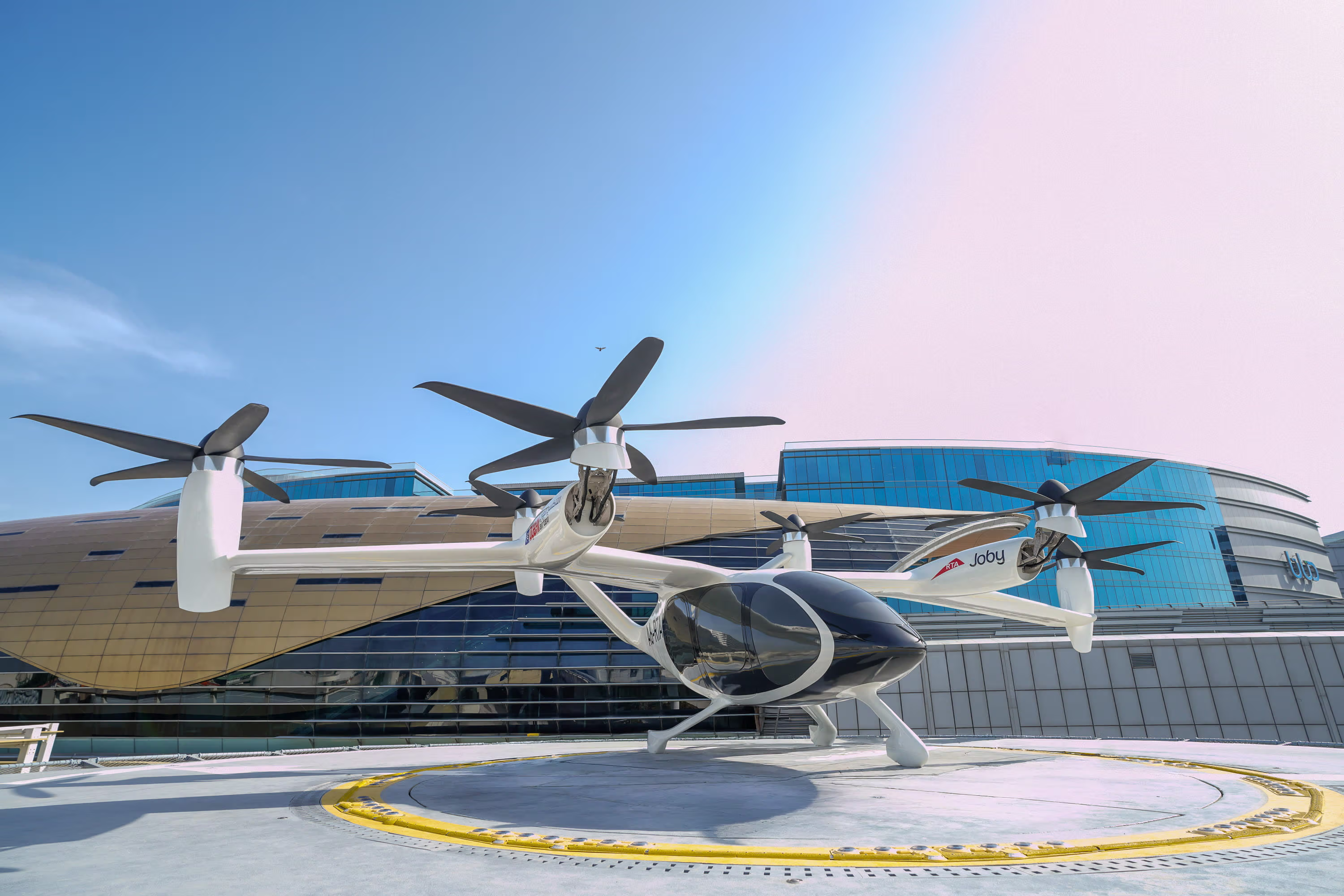 The air taxi station near Dubai International Airport marks a practical step toward turning pilot programs into real-world transport options across the city. (Image: Dubai Media Office)
The completion of the station follows a series of milestones over the past year, including piloted test flights conducted by Joby Aviation under desert conditions. These tests were aimed at validating aircraft performance in extreme heat, a critical requirement for operations in the Gulf region.
Dubai’s plan is not limited to a single location. Authorities have previously outlined a network of four initial vertiports, including sites at Downtown Dubai, Palm Jumeirah, and Dubai Marina, forming the backbone of the first operational phase.
The air taxi service is expected to significantly reduce travel times across the city. For example, a journey from Dubai International Airport to Palm Jumeirah could take around 10 minutes by air, compared to roughly 45 minutes by car under typical traffic conditions.
That promise, time saved rather than distance covered, is where the real value proposition lies.
Globally, urban air mobility remains in a transitional phase. While prototypes and pilot programs have expanded rapidly, fully commercial operations are still limited, largely due to regulatory, infrastructure, and cost challenges.
Under an agreement with the RTA, Joby Aviation holds exclusive rights to operate air taxi services in the city for an initial six-year period, giving the partnership a controlled environment to scale operations.
The aircraft themselves are fully electric, designed for low-noise, zero-emission operation, and capable of vertical take-off and landing, allowing them to operate in dense urban environments without traditional runways.
Still, early adoption is expected to skew toward premium users, reflecting the typical trajectory of new transport technologies before wider cost reductions take hold.
The completion of the DXB station is less about immediate disruption and more about signaling readiness.
Infrastructure is often the slowest part of transport innovation. By building it early, Dubai is effectively positioning itself on the assumption that the rest, regulation, demand, and pricing, will catch up.
Dubai approval brings Revolut closer

Business payments get a digital overhaul
Partior powers faster cross-border settlements
e& closes a major investment chapter

Stay ahead with the latest updates, insights, and trends shaping the world of finance, investment, blockchain, digital business, fintech, technology, and global markets.
