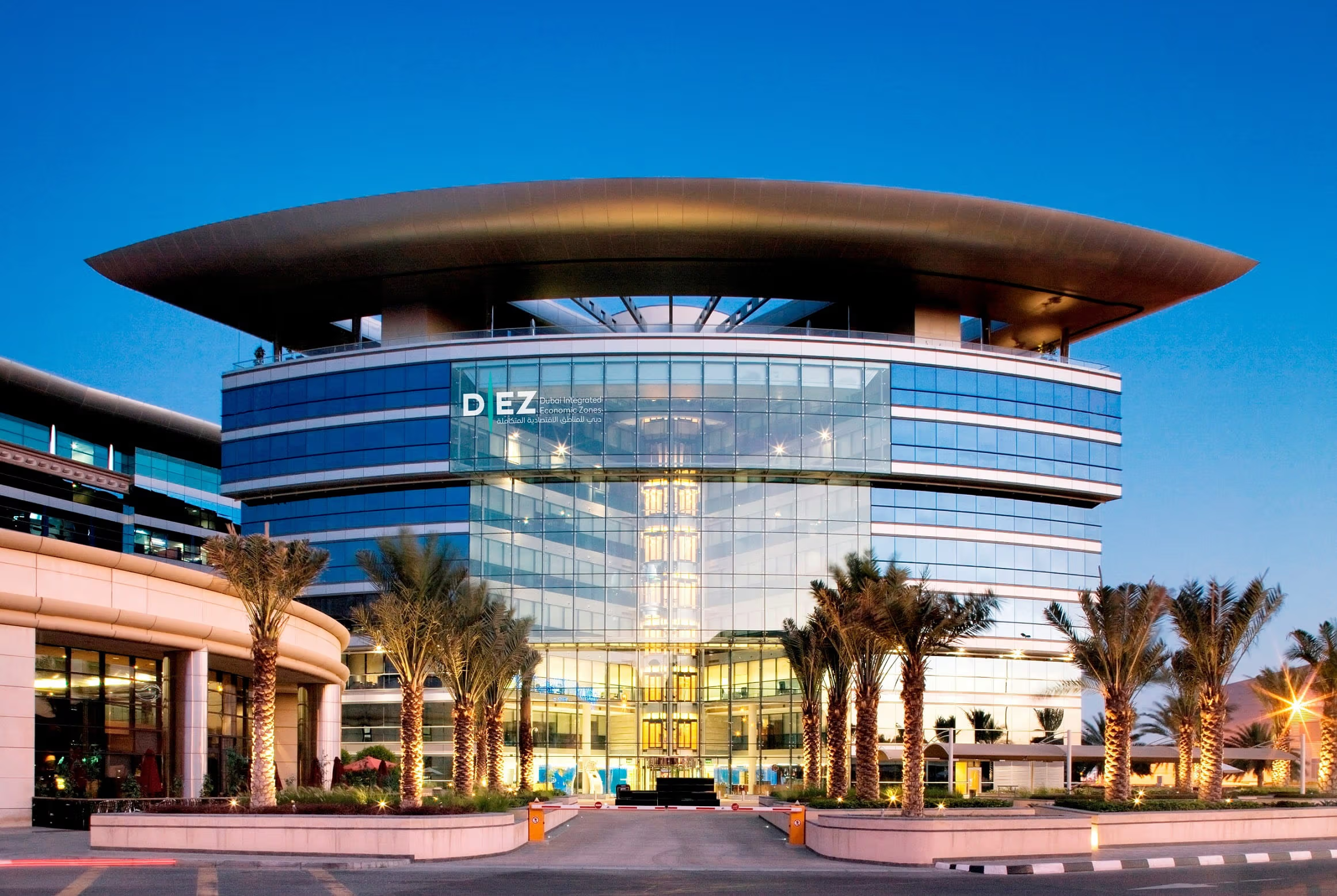
Dubai’s economic zones are quietly doing the kind of heavy lifting that doesn’t trend on social media but actually moves capital, companies, and jobs. The latest results from the Dubai Integrated Economic Zones Authority (DIEZ) suggest that model is still working.
The authority reported a 19.4% increase in revenue and a 17.8% rise in net profit for 2025, reflecting sustained demand for Dubai’s free zone ecosystem and a broader expansion in economic activity.
Those gains are not just accounting outcomes. They point to a system that continues to attract businesses, scale employment, and reinforce Dubai’s position as a global trade and investment hub.
Growth Driven by Integrated Free Zone Model
DIEZ operates three of Dubai’s most strategic economic zones: Dubai Airport Free Zone, Dubai Silicon Oasis, and Dubai CommerCity. The consolidation of these zones under a single authority has allowed for streamlined services and a more unified investor experience.
The authority’s performance was supported by operational efficiency improvements and the growing attractiveness of its ecosystem.
The numbers behind that growth are difficult to ignore. Total companies increased by 24.6%, while the workforce across the zones reached 106,359 employees, representing a 26.2% year-on-year increase.
That level of expansion signals more than just corporate registrations. It reflects a broader trend of businesses choosing Dubai as a base for regional and global operations.
Leadership Frames Results as Strategic Progress
His Highness Sheikh Ahmed bin Saeed Al Maktoum, Chairman of the Dubai Integrated Economic Zones Authority (DIEZ), said the 2025 results further reinforce DIEZ’s economic contribution and its role as a key driver of Dubai’s global competitiveness in trade and investment. He added that this progress aligns with the leadership’s vision to advance sustainable growth and economic diversification.
The framing matters. Dubai is not simply trying to grow; it is trying to compete at the highest level of global cities. The results, in that sense, are being presented as part of a long-term positioning strategy rather than a one-off financial win.
Officials also linked the performance to the Dubai Economic Agenda (D33), which aims to place the emirate among the world’s top three urban economies over the next decade