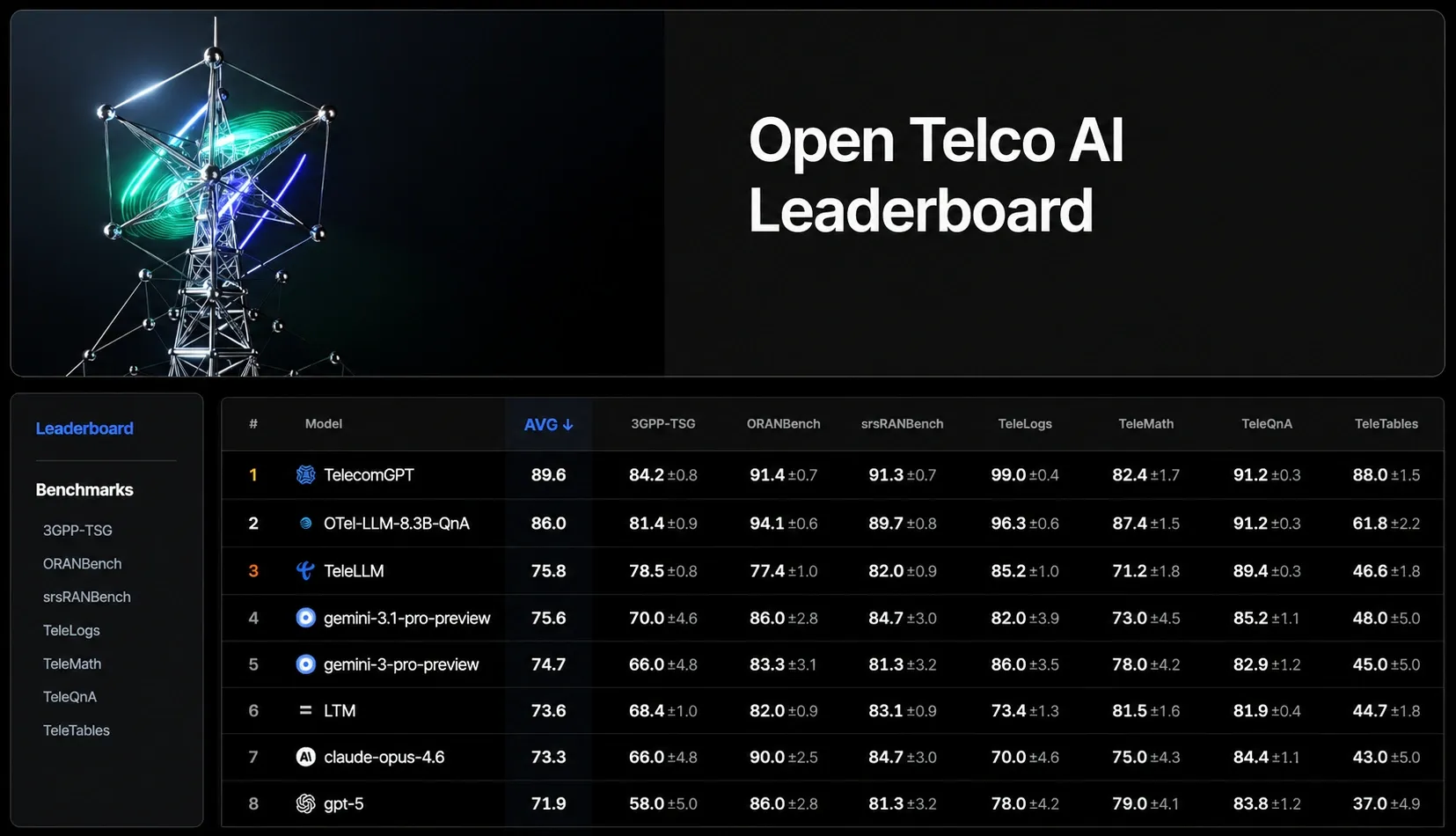
The GSMA Open Telco Leaderboard is designed to evaluate how AI models perform on telecom-specific tasks rather than broad consumer-style prompts. That makes the ranking more relevant to operators, vendors and researchers looking at how generative AI could be deployed inside real network environments.
The GSMA’s Open Telco AI initiative describes its benchmarks as measuring model performance on actual telecom tasks, including practical and efficiency-related criteria. Khalifa University’s result therefore gives TelecomGPT-R1 visibility in an area where accuracy, technical reliability and domain understanding carry more weight than general fluency.
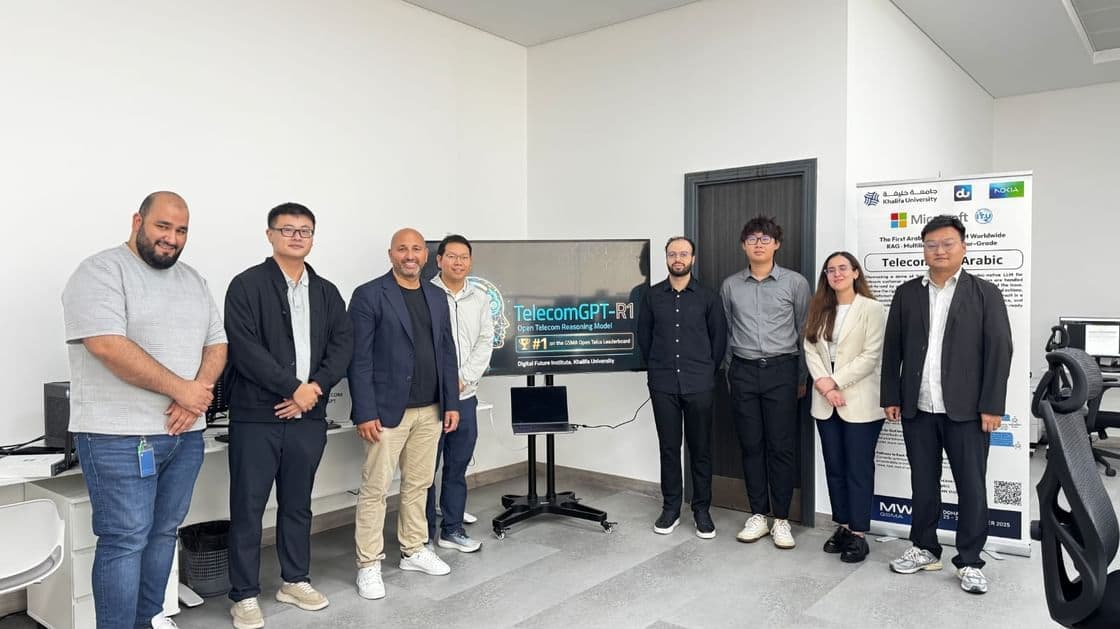
Khalifa University said the model outperformed systems developed by major global technology companies. The university’s model card on Hugging Face describes TelecomGPT-R1 as a 27-billion-parameter open model and says it reached state-of-the-art performance on the GSMA leaderboard with the same 89.6 percent average score.
A key part of the announcement is that TelecomGPT-R1 is being released as an open model. That allows telecom operators, equipment vendors and researchers to inspect, test and adapt the system for their own work, rather than relying only on closed commercial platforms.
The open approach could be important for telecoms because operators often need to understand how a model behaves before integrating it into technical workflows. Network operations involve high-stakes decisions, from managing faults to interpreting standards documents, and many companies are cautious about using black-box AI tools in infrastructure environments.
Khalifa University’s announcement frames TelecomGPT-R1 as part of a wider research effort covering telecom language models, radio frequency foundation models, network world models and AI systems for standards-grounded reasoning. The broader goal is not simply to build a chatbot for telecom terms, but to support AI systems that can reason through technical problems linked to next-generation networks.
Building on GSMA Collaboration
The ranking also builds on an earlier collaboration between Khalifa University and GSMA Foundry. In November 2025, the two organizations announced a strategic cooperation agreement to develop specialized AI data assets, models and benchmarking frameworks for telecom applications.
At the time, Khalifa University said the first phase would include Open Telco assets such as TelecomGPT and an Open Telco Knowledge Graph focused on 3GPP documentation. The collaboration was intended to help close the gap between general-purpose large language models and the specialized knowledge required in telecom operations.
Mobile operators are looking at AI for fault management, network optimization, operational decision support and automation. The shift toward 5G Advanced and future 6G systems is expected to increase both technical documentation and operational complexity.
A Global Stage at MWC Shanghai
TelecomGPT-R1 is also being showcased at MWC Shanghai 2026, which runs from June 24 to 26 at the Shanghai New International Expo Centre and Kerry Hotel Pudong, according to the event’s official website.
MWC Shanghai is one of the GSMA’s major connectivity events and brings together telecom operators, technology vendors, policymakers and researchers. Presenting the model there gives Khalifa University a platform in front of the industry audience most likely to test or adopt telecom-specific AI systems.
Professor Ebrahim Al Hajri, President of Khalifa University, commented: “TelecomGPT-R1 exemplifies how Khalifa University transforms advanced research into innovations that address national priorities and shape the technologies of the future. Through pioneering work in artificial intelligence and next-generation communications such as 6G, the University is not only advancing scientific discovery but contributing to the UAE’s long-term competitiveness and knowledge-based economy.”
Potential Uses for TelecomGPT-R1
The practical value of TelecomGPT-R1 will depend on how operators and researchers test it beyond benchmark conditions. Possible applications include helping engineers analyze network faults, interpret technical standards, assist with configuration decisions and support internal knowledge workflows.
Telecom-specific models may also reduce some of the friction that appears when general-purpose AI systems are asked to handle highly technical network material. Earlier TelecomGPT research argued that mainstream large language models often lack specialized telecom knowledge and proposed adapting general-purpose models through domain-specific data, instruction tuning and evaluation.
Its strong benchmark performance gives TelecomGPT-R1 a promising foundation for wider industry testing. Telecom networks require reliability, explainability, security controls and careful integration with existing systems, giving operators a clear pathway to assess how the model could support real-world network operations.
A Milestone for UAE AI
The ranking gives the UAE another marker in the global AI race, particularly in specialized industrial AI rather than consumer-facing applications. Khalifa University has positioned the model as part of the country’s knowledge-economy ambitions and its research push around 6G and future communications.
The more immediate takeaway for the telecom industry is narrower but significant: an open, university-developed model has reached the top of a GSMA benchmark built for telecom AI. That could encourage more operators and vendors to test open-domain-specific models, especially where transparency and adaptability are important.