Dubai’s Roads and Transport Authority recorded $1.44 billion (AED 5.3 billion) in revenue through digital channels in 2025, marking a 20.6% increase from the previous year as more residents, visitors and businesses shifted transport-related services online.
The authority said digital transactions exceeded 628 million during the year, up 13% from 2024. Digital channel adoption reached 96%, while RTA’s average customer happiness index stood at 98%.
The figures point to a broader change in how public transport, mobility and municipal services are being delivered in Dubai. Digital services are no longer limited to basic online payments or app-based renewals and now form a major part of RTA’s operating model across customer service, transport planning, permits, parking, nol card services, smart kiosks and artificial intelligence-enabled support channels.
RTA Expands Digital Services Across Six Channels
RTA said it now offers 105 digital services across six channels, reflecting a steady move away from branch-based service delivery. The authority’s website alone provides 103 services and recorded 11 million transactions in 2025, with a customer happiness index of 96%.
The website also added new services during the year, including advertising signboard fine payments, violation disputes and the temporary passenger transport permit service known as Naqel. RTA also introduced an AI-powered search feature designed to make services easier to locate and use.
The authority’s digital performance comes as Dubai continues to push a one-government service model, where public services are increasingly linked across platforms rather than managed through isolated departmental systems. The city’s Services 360 policy aims to make government services more proactive, automated and integrated, while reducing the need for physical customer visits.
Smart Apps Take on a Bigger Role
Mobile applications were one of the strongest areas of growth in RTA’s 2025 digital performance. Customer usage of services through smart apps rose by more than 25%, representing a 40% year-on-year increase.
The RTA Dubai app had more than 1.2 million active users in 2025. During the year, the authority launched 18 new services through the app, which it said were developed in response to customer needs and wider government service priorities.
Annual visits to RTA’s apps climbed to 68 million, a 144% increase compared with 2024. Requests for journey planning and enquiries reached 48 million, up 48% from the previous year.
The S’hail app, which supports journey planning and integrated mobility services, also expanded its functions. RTA said the app added services linked to the automated fare collection system, including nol card services, as part of its effort to make mobility services more connected across Dubai’s transport network.
AI and Automation Shape the Next Phase
RTA’s 2025 performance also shows how artificial intelligence is becoming more embedded in Dubai’s public services.
His Excellency Mattar Al Tayer, Director General, Chairman of the Board of Executive Directors of the Roads and Transport Authority (RTA), said that RTA’s digital-channel results demonstrate advanced corporate maturity in adopting digital transformation. RTA is moving from service digitisation to designing an integrated digital ecosystem driven by data and artificial intelligence, supporting Dubai’s aspirations for global leadership in smart cities.
The authority also enhanced its virtual assistant, Mahboub, by adding and improving 15 digital services under Phase 3 of the Services 360 Plan. That brought the number of interactive services offered through Mahboub to 32.
On WhatsApp, RTA continued to offer 16 services. Revenue from parking ticket reservations through the channel exceeded $5.91 million (AED 21.7 million). The authority also launched Madinati through the Mahboub chatbot on WhatsApp, using computer vision and generative AI to support more proactive public service delivery.
RTA said it achieved 94% on Dubai’s Digital Maturity Index in 2025, reaching Level 5, the highest level across the Government of Dubai. The authority also ranked among the top four government entities.
Its Digital Customer Experience pillar score reached 83%, up 12% from 2024. RTA also achieved 100% in the accessibility assessment for People of Determination, which it said reflects its focus on inclusive digital services.
These metrics matter because digital public services are increasingly judged not only by transaction volume, but also by accessibility, reliability and ease of use. As RTA serves millions of mobility interactions each day, even small improvements in digital access can reduce friction across parking, licensing, fare payments, customer inquiries and journey planning.
Kiosks and Shared Platforms Support Digital Growth
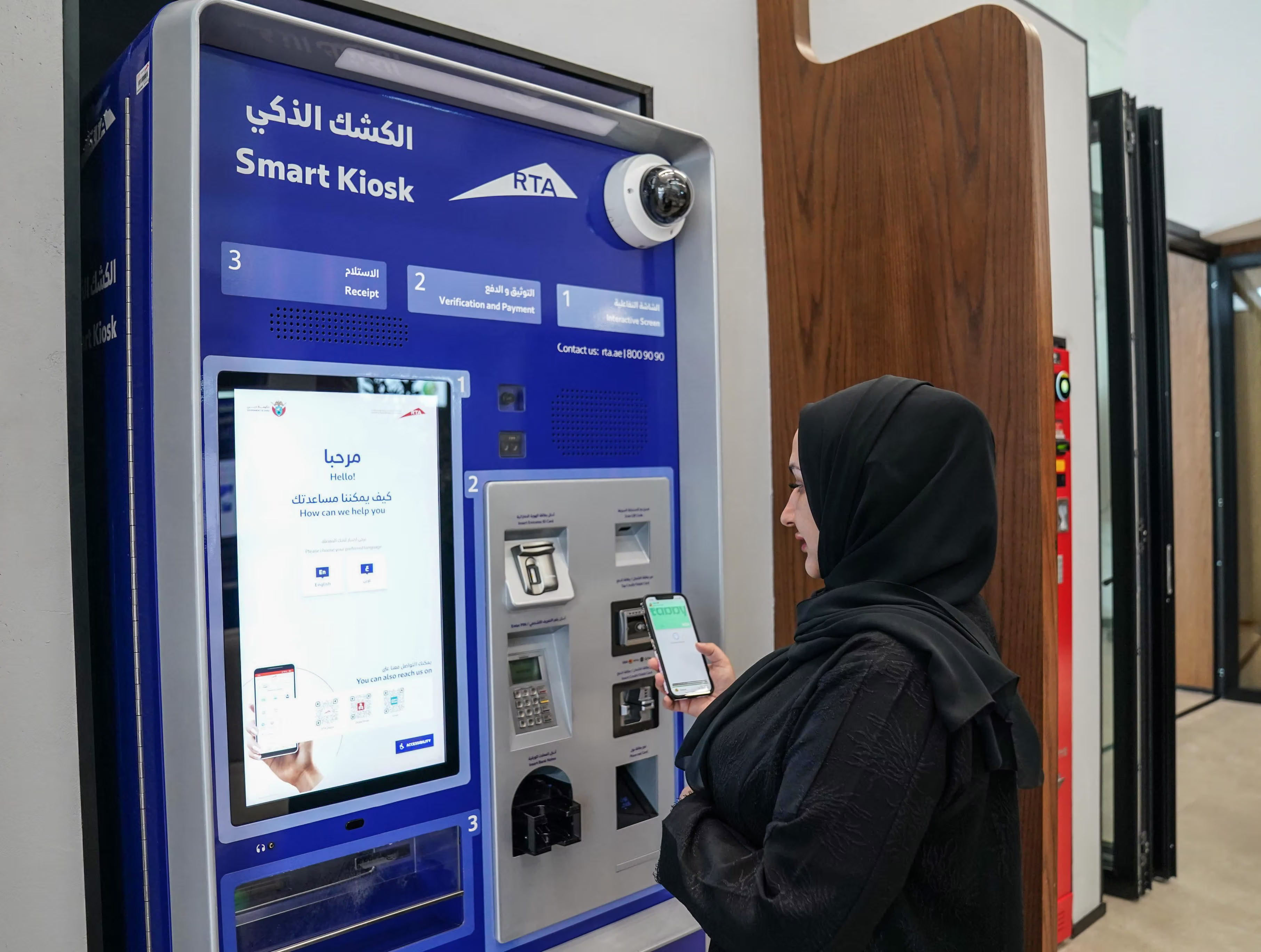
Alongside apps and web services, RTA said smart kiosks continued to grow as an alternative digital service channel. Kiosks offering 24 services across drivers, vehicles and nol-related services processed more than 1 million transactions in 2025. Revenue through kiosks exceeded $115.7 million (AED 425 million), up more than 11% year on year.
RTA also expanded its services across shared Dubai Government platforms. The authority added 14 services to S’hail under the “Mobility in Dubai” channel, enhanced 23 services on Dubai Now and upgraded 21 services on Invest in Dubai. It also made 10 services available through Visit Dubai and integrated RTA services into the Build in Dubai platform.
That integration aligns with Dubai’s broader digital government direction. In April 2026, Sheikh Hamdan bin Mohammed directed Dubai government entities to integrate individual and business services into a unified digital ecosystem within one year, with Digital Dubai coordinating implementation across government entities.
Digital Services Become a Revenue Driver
The $1.44 billion (AED 5.3 billion) revenue figure shows that digital channels are not only improving access to public services but also becoming a core revenue engine for Dubai’s transport authority.
RTA’s challenge now is scale. More transactions, more users and more integrated platforms increase expectations for speed, reliability, cybersecurity and accessibility. The 2025 results suggest the authority is addressing that pressure through app expansion, AI-enabled support, smart kiosks and cross-government platform integration.
Dubai’s transport system is often measured through infrastructure projects, ridership numbers and road network expansion. RTA’s latest digital results add another measure: how effectively the city can move high-volume public services into digital channels while maintaining customer satisfaction.
Dubai’s smart city ambitions are reshaping mobility into a software and service-design challenge, not only a transport infrastructure challenge, and RTA’s 2025 digital performance reflects that shift.