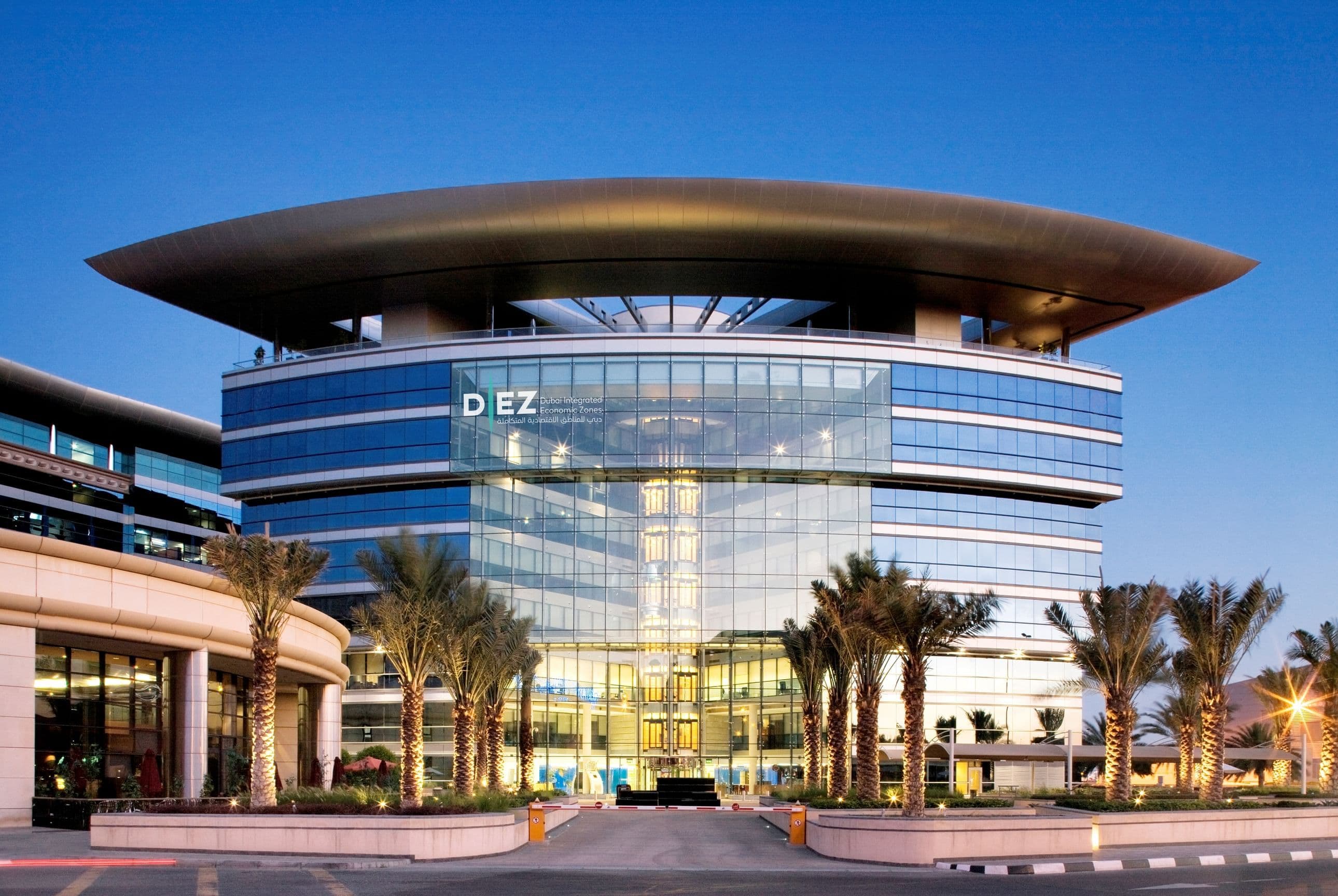
Dubai is once again stepping in to steady the ground beneath its business community, this time through a targeted set of measures introduced by the Dubai Integrated Economic Zones Authority (DIEZ). While policy announcements can often feel abstract, this one lands closer to the day-to-day reality of companies trying to manage costs, cash flow, and uncertainty all at once.
DIEZ has launched a package of economic measures aimed at supporting businesses operating across its three major free zones: Dubai Airport Freezone (DAFZ), Dubai Silicon Oasis (DSO), and Dubai CommerCity.
The initiative takes effect immediately and is designed to reduce operational pressure while reinforcing business continuity across sectors that rely heavily on Dubai’s free zone ecosystem.
A Practical Response to Real Business Pressures
At its core, the package is not about grand transformation. It is about easing friction.
Companies operating within DIEZ will benefit from rental stability at renewal, a move that provides predictability at a time when cost volatility can disrupt planning. In addition, businesses will be able to shift to monthly rent payments without incurring installment fees, a change that directly addresses liquidity concerns.
The initiative targets companies across DAFZ, DSO, and CommerCity, aiming to strengthen business resilience and maintain activity amid shifting economic conditions.
For many firms, especially small and mid-sized enterprises, that flexibility matters more than headline incentives. It allows them to manage cash flow without compromising operations or delaying expansion plans.
DIEZ has also introduced waivers on selected administrative penalties, including late license renewal fees, alongside the deferral of certain service charges.
These adjustments may seem incremental on paper, but collectively they reduce the kind of administrative and financial drag that tends to build quietly over time.
Not Just Relief, but Continuity
The tone of the announcement is less about emergency support and more about continuity. That distinction is important.
DIEZ framed the measures as part of a broader effort to help companies navigate current regional conditions while maintaining operational stability.
Dr. Mohammed Al Zarooni, Executive Chairman of the Dubai Integrated Economic Zones Authority (DIEZ), stated, “The measures reflect DIEZ’s firm commitment to Dubai’s longstanding approach to supporting the business community and enhancing its stability by providing flexible solutions that respond to the current regional situation and ensure business continuity. It also reflects its ongoing efforts to realise the leadership’s vision through practical initiatives that enable companies to navigate challenges with confidence and resilience.”
That language signals something deliberate. Rather than reacting abruptly, Dubai is continuing a pattern of proactive economic management, stepping in early to prevent strain from escalating.
The Ecosystem Behind the Move
To understand the significance of the announcement, it helps to look at what DIEZ actually represents.
Established in 2021, DIEZ integrates three of Dubai’s most strategically important economic zones, bringing together aviation-linked trade, technology, and digital commerce.
This integrated model means that any policy adjustment within DIEZ has a ripple effect across multiple industries, from logistics and manufacturing to e-commerce and tech startups.
The authority hosts thousands of companies operating across more than 20 sectors, making it a central pillar of Dubai’s non-oil economy and its broader diversification strategy.
So, when DIEZ introduces flexibility, it is not a niche adjustment. It is a signal to a large segment of the business landscape.
DIEZ’s integrated ecosystem spans a wide range of sectors, from logistics and trade to technology and e-commerce, meaning the measures apply across diverse industries.
Aligning with Dubai’s Broader Economic Direction
The measures are also closely aligned with Dubai’s long-term economic agenda, particularly the D33 strategy, which aims to position the city among the world’s top economic hubs.
By focusing on flexibility, liquidity, and operational ease, the initiative reinforces Dubai’s positioning as a place where businesses are not only attracted but also supported through changing conditions.
There is a subtle but important message embedded here: stability is not just about growth metrics; it is about how resilient a system is when conditions shift.
And in this case, resilience is being built through policy adjustments that are immediate, practical, and directly tied to business operations.
A Quieter Kind of Intervention
What stands out about this move is how understated it is.
Business owners dealing with rent cycles, licensing deadlines, and operational costs don’t see those details as minor. They can mean the difference between stretching resources and stabilizing them.
This kind of intervention often goes unnoticed outside business circles, but it plays a critical role in maintaining momentum across an economy that relies heavily on private sector activity.
Dubai’s approach here reflects a broader philosophy that has defined its economic model for years: act early, stay flexible, and prioritize continuity.
Rather than waiting for strain to surface in financial results or business closures, authorities are stepping in at the operational level, where pressure first appears.
In doing so, DIEZ is not just offering temporary relief. It is reinforcing a system designed to absorb shocks without losing direction.