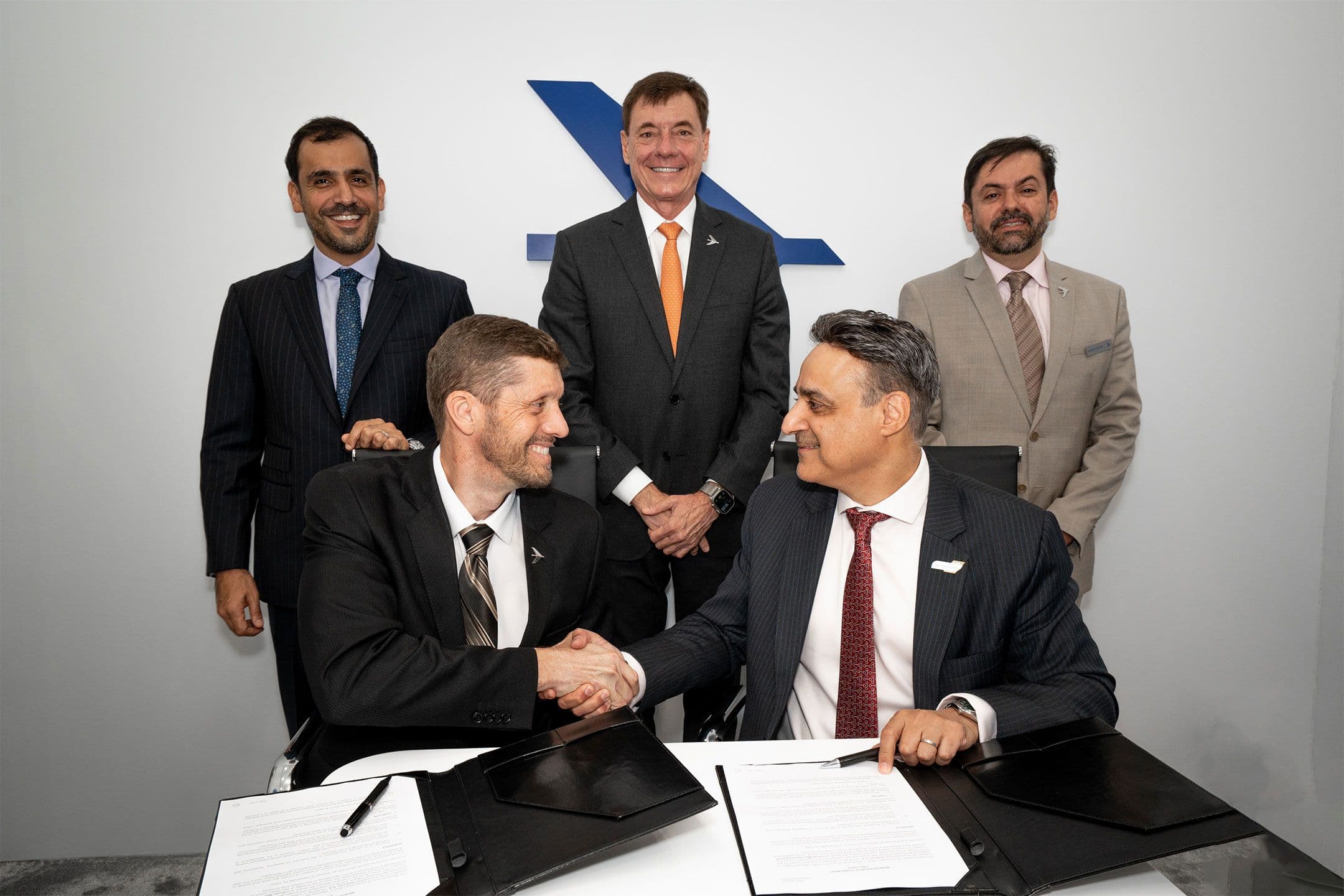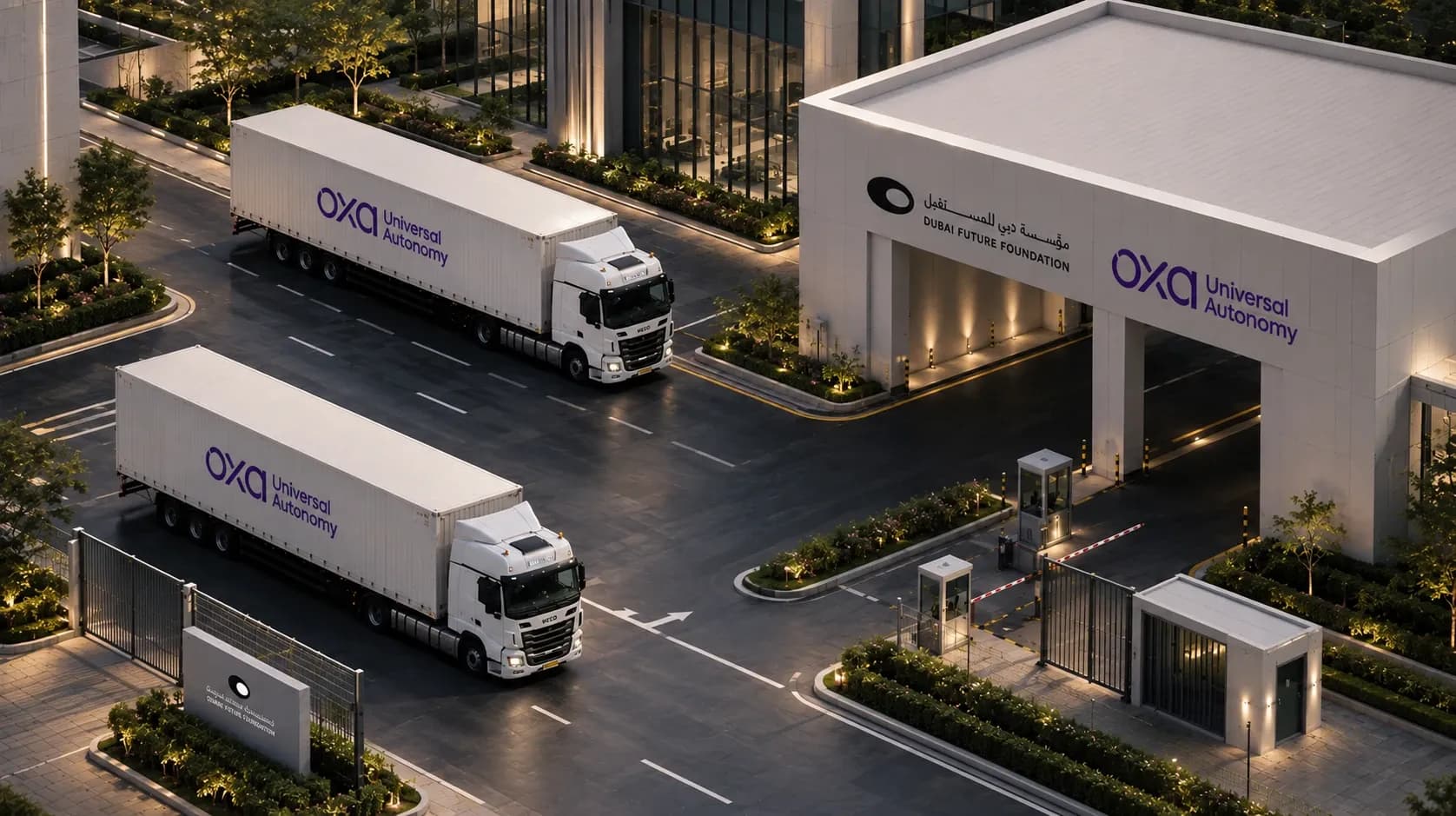
Dubai Future Foundation has partnered with British autonomous vehicle technology company Oxa to establish an Autonomous Logistics Future Lab in Dubai through a joint venture called SHIFFT. The venture will develop, test and validate autonomous systems designed for industrial logistics environments.
Rather than concentrating on passenger vehicles operating across public roads, SHIFFT will initially target the controlled but operationally demanding settings found at ports and airports. The partners said the first phase will involve developing and deploying autonomous vehicle solutions for those facilities, with an initial commercial deployment in Dubai planned before the end of 2027.
SHIFFT is being launched under the Dubai Research, Development and Innovation Ecosystem, an umbrella framework intended to connect government bodies, private companies and researchers working on advanced technologies. The venture is expected to function as an applied development platform, taking autonomous systems through testing and operational validation before they are introduced into commercial workflows.
Khalifa Al Qama, chief of Dubai’s RDI Ecosystem, said: "Through this Lab, we aim to develop new intelligent logistics solutions that create economic opportunities while accelerating the adoption of advanced technologies and their practical applications. The initiative reflects Dubai's commitment to strengthening its position as a global hub for the future of logistics services by transforming promising technologies into real-world solutions that deliver tangible economic and operational impact."
Dubai Future Foundation has previously tested autonomous logistics technologies on a smaller scale. In 2024, its Dubai Future Labs unit worked with The Sustainable City and Lyve Global on an autonomous delivery robot pilot. Dubai Future Labs has also identified electric connected and autonomous vehicles, unmanned aircraft and multi-robot systems among its research priorities for logistics and mobility.
Oxa Brings Industrial Autonomy Technology
Oxa develops software and related systems that allow vehicles to operate autonomously in industrial and commercial environments. The company’s current strategy emphasizes repetitive driving tasks in locations such as ports, airports, manufacturing facilities and industrial yards rather than relying solely on the more complex public-road passenger vehicle market.
Under the SHIFFT venture, Oxa’s configurable autonomous driving software will be combined with cloud-based fleet management tools and specialized autonomy hardware. The partners said the systems are intended to integrate with existing industrial vehicles and equipment, potentially allowing operators to automate parts of their current fleets instead of replacing every vehicle with a purpose-built autonomous model.
Operational data will also form part of the platform. SHIFFT plans to combine vehicle automation with worksite data collection, analysis and operational intelligence, creating a system that can manage vehicles while monitoring how equipment and goods move through an industrial facility.
Paul Newman, Oxa’s founder and chief executive, said: "This joint venture with Dubai Future Foundation will accelerate the development and commercial deployment of Industrial Mobile Autonomy technologies, enabling new levels of efficiency, reliability and safety for operators of industrial vehicle fleets."
Oxa’s involvement gives the venture access to technology developed specifically for industrial fleets. The company states that its systems can be used for goods movement at ports, airports and manufacturing sites, where routes may be more predictable than public streets but vehicles must still interact with workers, equipment and changing site conditions. Its technology portfolio includes autonomous driving software, fleet orchestration and tools for testing vehicle behavior before deployment.
Logistics Technology Tied to Dubai’s Trade Goals
Dubai is linking the project to the Dubai Economic Agenda D33, which includes plans to double the emirate’s foreign trade by 2033. Government statements place the trade target at approximately $6.97 trillion (AED 25.6 trillion) over the agenda period.
The connection between autonomous vehicles and foreign trade is largely operational. Ports and airports depend on fleets that repeatedly move containers, baggage, components and equipment across large sites. Automation could help operators maintain more consistent workflows, collect detailed movement data and reduce delays associated with specific repetitive tasks.
Dubai’s D33 agenda also seeks to expand the emirate’s international trading relationships and position it among the world’s leading urban economies. SHIFFT represents one part of that policy direction, using a joint venture structure to combine government-backed research infrastructure with technology supplied by a private autonomous systems company.
The venture also fits within Dubai’s longer-running autonomous transportation policy. The emirate’s strategy seeks to make 25% of transportation autonomous by 2030, although the SHIFFT announcement focuses on industrial logistics rather than defining how its deployments would be counted toward the citywide target. Dubai first announced the autonomous transportation strategy in 2016, alongside projected economic benefits from reduced costs, accidents and environmental impacts.