Block News International

@2026 Block News International. All Rights Reserved.

Blends Media
A Blends Media Group Production

Citadel Opens Dubai Chapter as DIFC Growth Accelerates

Arry Hashemi
Arry Hashemi
Apr. 30, 2026
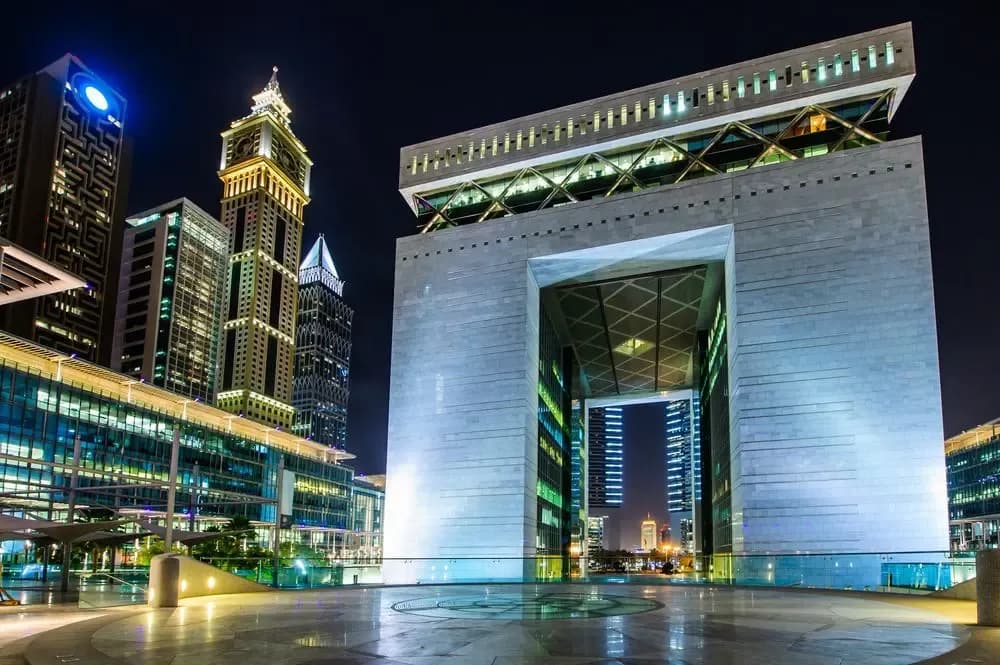
DIFCDubai’s financial district is rapidly filling with global hedge funds, as firms like Citadel look to strengthen their presence across time zones. (Shutterstock)

US hedge fund giant Citadel has received regulatory approval to begin operating in Dubai, marking a significant step in the firm’s long-anticipated expansion into the Middle East and underscoring the emirate’s growing role as a global financial hub.

According to a report by Bloomberg, the firm secured authorization to establish operations in the Dubai International Financial Centre (DIFC), with initial trading activity expected to follow, The report cited people familiar with the matter, reflecting the private nature of the approval process rather than a formal company announcement.

Citadel, founded by Ken Griffin, manages approximately $67 billion in assets and is widely regarded as one of the world’s most influential hedge funds. The Dubai expansion adds to its global footprint and aligns with its broader strategy of maintaining near-continuous market coverage across time zones.

The regulatory clearance allows Citadel to place traders on the ground in Dubai, positioning the firm to bridge trading hours between major financial centers in the US, Europe, and Asia. This 24-hour coverage model has become increasingly important for multi-strategy hedge funds operating in fast-moving global markets.


DubaiCitadel’s quiet entry into Dubai reflects how the emirate is becoming a key link between global trading desks and regional capital. (Lloyd Alozie/Pexels)

Dubai’s Growing Pull for Global Hedge Funds

Citadel’s arrival comes as Dubai continues to attract major hedge funds seeking proximity to capital, favorable tax conditions, and regulatory flexibility. The DIFC, established as a financial free zone with its own legal and regulatory framework, has emerged as a key node connecting markets across Europe, Asia and Africa.

The scale of that shift is becoming increasingly clear. The number of hedge funds operating within the DIFC has grown sharply in recent years, reflecting a broader migration of alternative asset managers toward the Gulf.

Major global players, including Millennium Management, Point72 and Brevan Howard, have already established a presence in the region, creating a competitive ecosystem that blends international expertise with access to regional wealth.

Citadel, notably, had not previously established a physical base in Dubai, even as several major hedge funds expanded into the region. Its entry underscores the city’s growing role as a global financial hub and reflects a broader shift in global asset management.

A Hub Built on Geography and Capital

Dubai’s appeal extends beyond tax advantages. Its geographic position allows firms to operate across multiple markets within a single trading day, while its proximity to sovereign wealth funds and family offices provides access to deep pools of capital.

Recent data highlights the momentum behind this transformation. The DIFC has seen a sharp increase in new firm registrations, driven in part by hedge funds and asset managers relocating or expanding operations in the region.

This concentration of financial institutions has also created a self-reinforcing ecosystem. As more firms establish a presence, talent pools deepen, infrastructure improves, and the city’s role in global finance becomes more entrenched.

Citadel’s expansion is less about entering a new market and more about adapting to a changing financial landscape. The firm’s decision to establish operations in Dubai reflects the growing importance of regional hubs that sit between traditional Western markets and emerging economies.

It also underscores a broader industry trend: hedge funds are no longer anchored solely in New York or London. Instead, they are distributing operations globally to optimize trading, access capital and manage geopolitical risk.