The United Arab Emirates has proposed the creation of a Euro-Mediterranean and Gulf Artificial Intelligence Center, positioning the initiative as a platform for research, investment, governance, and cross-border cooperation in one of the world’s fastest-moving technology sectors.
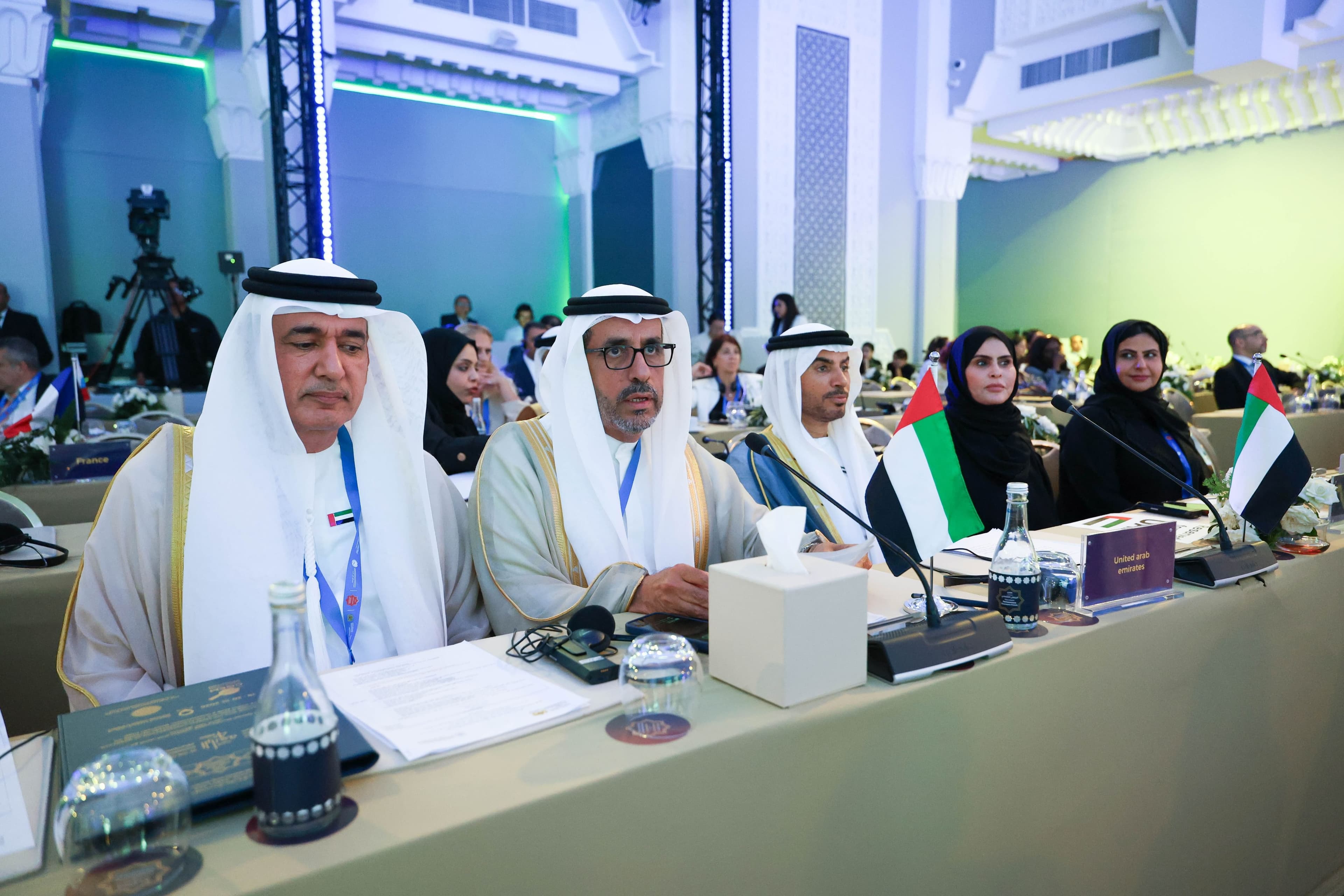
The proposal was presented during the Fourth Marrakech Economic Parliamentary Forum. The event was convened by the Parliamentary Assembly of the Mediterranean and Morocco’s House of Councillors, in partnership with the Parliamentary Network of the World Bank and the International Monetary Fund.
Dr. Ahmed Al Mansouri, a member of the UAE Federal National Council, introduced the idea during a session focused on AI investment and the development of a Euro-Mediterranean and Gulf AI hub. His remarks placed artificial intelligence at the center of economic competitiveness, public-sector modernization, industrial development, and long-term regional resilience.
UAE AI Strategy Moves Beyond Borders
The UAE’s proposal builds on a domestic AI agenda that has been taking shape for years. The country launched its UAE Strategy for Artificial Intelligence as part of a broader effort to improve government performance, strengthen digital services, and support future-facing sectors.
Al Mansouri said the UAE was among the early adopters of a national AI strategy and pointed to the country’s creation of a dedicated ministerial role for artificial intelligence. Omar Sultan Al Olama was appointed Minister of State for Artificial Intelligence in October 2017 and, in July 2020, became Minister of State for Artificial Intelligence, Digital Economy and Remote Work Applications.
The proposed center would move the conversation beyond national policy. Rather than treating AI as a purely domestic priority, the UAE is framing it as a shared economic and governance challenge across the Gulf, Mediterranean and Europe.
AI Research, Investment and Governance
The proposed Euro-Mediterranean and Gulf AI Center would serve several functions, including research coordination, investment support, legislative cooperation, capacity building, and knowledge exchange.
A central part of the proposal is governance. Governments are moving quickly to capture the productivity gains of AI, while policymakers face growing pressure to address data protection, security, bias, transparency and labor-market disruption. The UAE’s pitch places parliamentary cooperation alongside investment, suggesting that regulation and innovation should advance together rather than in separate tracks.
The center could also give smaller economies in the wider region a more direct path into AI development. Access to technical expertise, funding networks, shared standards, and public-private partnerships remains uneven across the Euro-Mediterranean and Gulf space. A regional platform, if developed, could help close part of that gap.
The UAE’s Wider AI Investment Push
The proposal comes as the UAE continues to scale its AI infrastructure ambitions. Al Mansouri said investments directed toward artificial intelligence exceeded approximately $147.9 billion (AED 543 billion) during 2024 and 2025.
The figure points to the scale of the UAE’s effort to build a larger AI economy. The push is not only about funding; it also reflects a wider effort to attract global technology companies, expand infrastructure and turn the country into a regional base for AI development.
One of the most visible examples of the UAE’s AI infrastructure push is the UAE-U.S. AI Campus in Abu Dhabi. G42 said the project is designed to reach 5 gigawatts of capacity and described it as the largest AI infrastructure project outside the United States. The campus is being developed with U.S. technology partners and is intended to support large-scale AI compute, sovereign infrastructure, and regional digital services.
The AI Center’s Regional Impact
The UAE is trying to connect several priorities through the AI center proposal: technology investment, economic diversification, legislative coordination, and diplomatic engagement.
Artificial intelligence is increasingly becoming a pillar of national competitiveness. Countries with access to compute infrastructure, skilled researchers, advanced data ecosystems, and supportive regulation are likely to attract more capital and high-value technology partnerships. Countries without those foundations risk becoming consumers of imported AI systems rather than participants in shaping them.
The proposed center also reflects a broader shift in how AI policy is being discussed. The conversation is no longer limited to startups, software tools, or automation. It now touches food security, health care, education, government services, industrial policy, and the future of work.
By linking the Gulf with Mediterranean and European partners, the initiative could help create a broader forum for responsible AI development, investment coordination, and regulatory dialogue.
The Marrakech forum’s wider discussion underlined the need for cooperation among governments, parliaments, international organizations, academia, and the private sector. The UAE’s proposed AI center now adds a concrete institutional idea to that debate.