

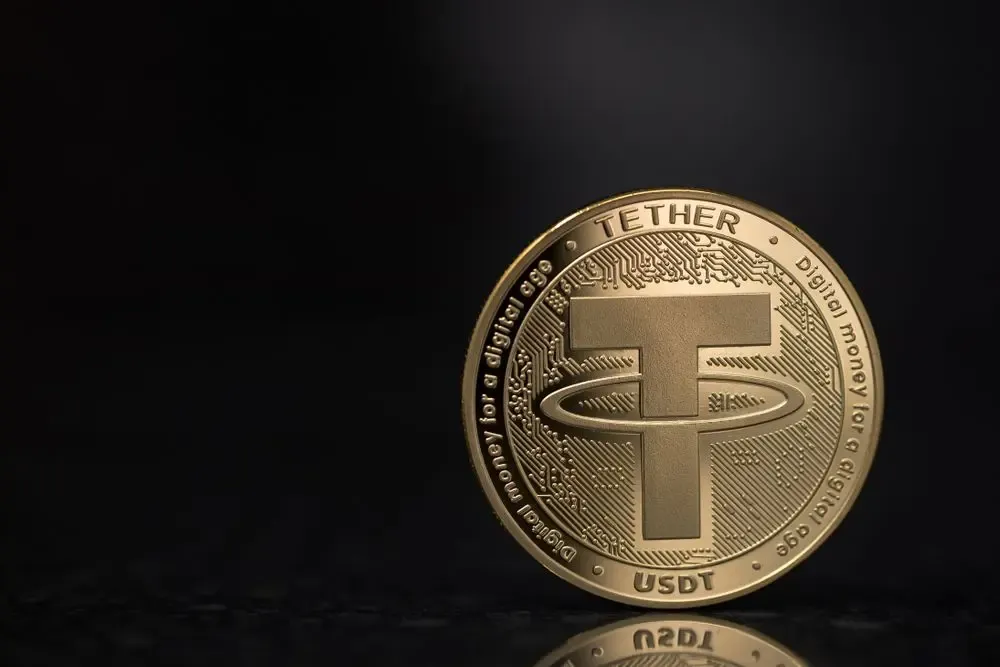
 Tether introduces U.S.-compliant USAT stablecoin under federal framework. (Shutterstock)
The development marks a notable shift for the company, which has historically focused on international markets, and reflects how rapidly the U.S. stablecoin landscape is beginning to formalize.
USAT is fully backed by U.S. dollar reserves and issued through a federally regulated U.S. financial institution. The company describes the token as a “Made in America” digital dollar, designed to meet the expectations of U.S. regulators, financial institutions, and payment providers that require higher compliance standards than those typically applied to global stablecoins.
Tether Announces the Launch of USA₮, the Federally Regulated, Dollar-Backed Stablecoin, Made in America 🇺🇲🚀
— Tether (@tether) January 27, 2026
Read more: https://t.co/rIMQTQ7ipX
The launch draws a clear line between USAT and Tether’s flagship USD₮ token, which remains widely used across global crypto markets. While USD₮ continues to operate internationally, USAT has been developed specifically for domestic use, with its structure shaped by U.S. regulatory requirements rather than international norms. In practice, this gives Tether two parallel products: one built for global liquidity and another tailored for regulated U.S. financial activity.
Tether said USAT’s reserves are held in secure, regulated environments, with dedicated custody arrangements intended to align with federal oversight expectations. By anchoring issuance within the U.S. banking system, the company aims to remove some of the barriers that have historically limited stablecoin adoption among American institutions.
The timing is significant. Stablecoins have moved well beyond their early role as trading tools and are increasingly viewed as financial infrastructure, underpinning payments, settlement, and cross-border transfers. As their use has expanded, so too has regulatory scrutiny, particularly in the United States, where policymakers have pushed for clearer rules around reserve backing, governance, and consumer protection. Tether’s announcement positions USAT as a direct response to that shift.
Paolo Ardoino, CEO of Tether, said: “USA₮ offers institutions an additional option: a dollar-backed token made in America, USD₮ has proven for more than a decade that digital dollars can deliver trust, transparency, and utility at a global scale. USA₮ extends that mission by providing a federally regulated product designed for the American market.”
Tether also said several major digital asset platforms and payment providers are supporting the initial rollout of USAT, allowing the stablecoin to enter the market with established distribution channels. The company indicated that early access for U.S. users and institutions is a priority, particularly for those that have been constrained by regulatory uncertainty around offshore stablecoins.
Beyond Tether itself, the launch highlights how competition in the U.S. stablecoin market is evolving. As regulation becomes more defined, issuers are increasingly moving away from one-size-fits-all models and toward jurisdiction-specific products. USAT reflects that trend, suggesting that future stablecoin growth may depend as much on regulatory alignment as on liquidity or scale.
Tether was careful to clarify that USAT is not legal tender and is not backed by the U.S. government. The company also noted that the token does not carry deposit insurance protections, reinforcing that it remains a privately issued digital asset rather than a state-issued currency. These disclosures mirror standard industry practice and are intended to set clear expectations for users and institutions.
Strategically, USAT represents one of Tether’s most direct engagements with the U.S. regulatory framework to date. While the company has long dominated global stablecoin markets, its presence inside the United States has been more limited. The launch signals a willingness to operate more visibly within the country’s regulatory perimeter as stablecoin rules mature.
The initiative could also influence how traditional financial institutions approach digital dollars. By embedding issuance and custody within federally regulated structures, USAT reduces some of the legal and compliance concerns that have slowed institutional adoption. That, in turn, may make stablecoins more viable for regulated payment flows, settlement systems, and financial infrastructure use cases.
Tether has not outlined a detailed roadmap for expanding USAT beyond its initial release, though the company says the stablecoin is designed to scale alongside institutional demand. With U.S. stablecoin regulation still evolving, USAT’s performance could provide an early indication of how compliant, dollar-backed tokens operate within the American financial system.
The launch underscores a broader shift in strategy. As stablecoins move closer to the financial mainstream, jurisdiction-specific products like USAT suggest the next phase of growth will be shaped not just by technology or adoption, but by how closely digital assets align with national regulatory frameworks.

UAE visitors gain easier banking access

Partior powers faster cross-border settlements

Business payments get a digital overhaul
e& closes a major investment chapter

Stay ahead with the latest updates, insights, and trends shaping the world of finance, investment, blockchain, digital business, fintech, technology, and global markets.
