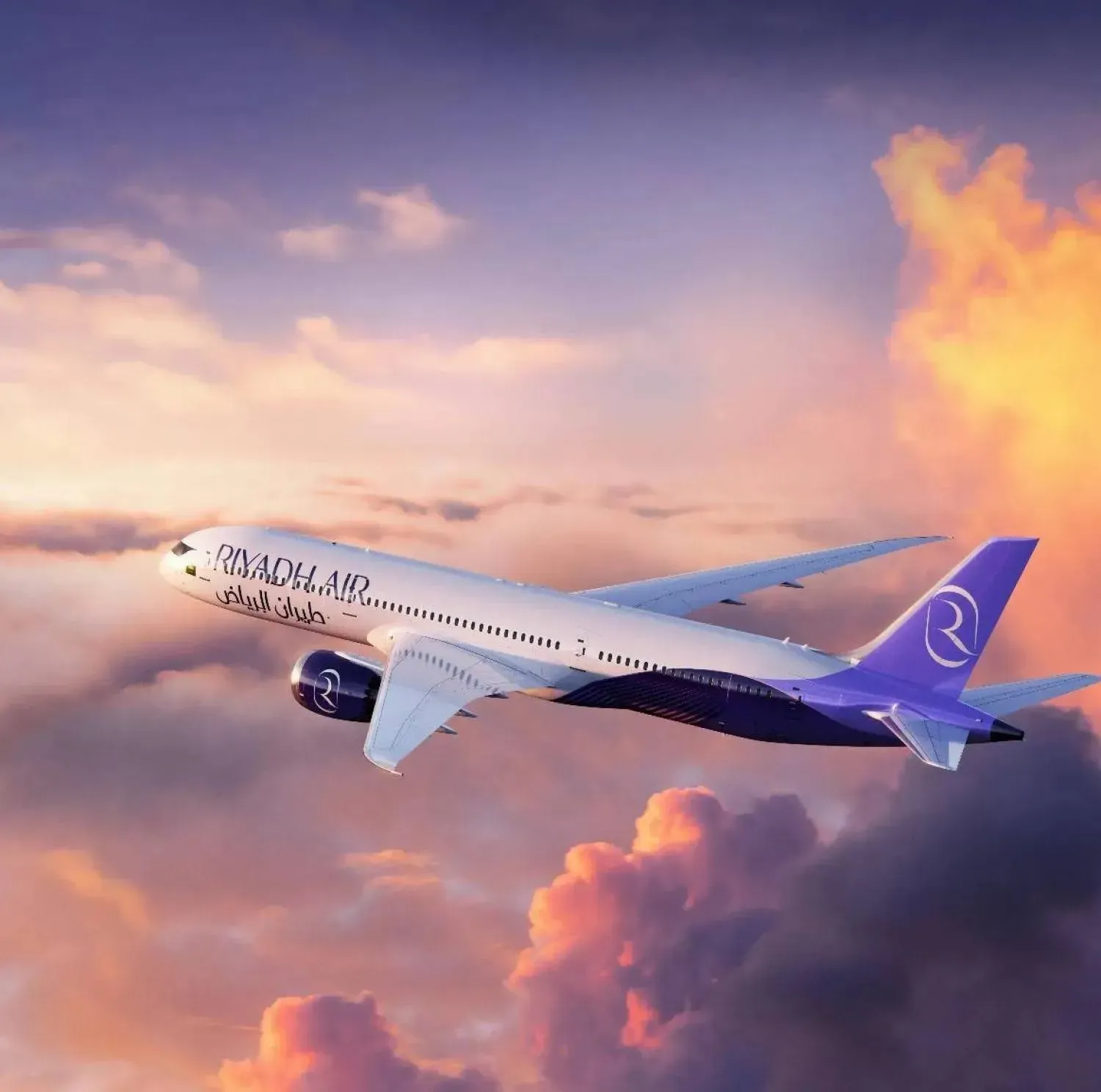
Saudi Arabia’s Riyadh Air has secured U.S. regulatory approval to operate flights to and from the United States.
The approval, issued by the U.S. Department of Transportation, marks a significant step for the young airline as it moves from high-profile launch plans into the harder work of international route development, regulatory compliance and commercial execution. According to a U.S. Department of Transportation filing, the department granted Riyadh Air exemption authority and advanced its foreign air carrier permit process.
Riyadh Air’s Global Plans Take Shape
Riyadh Air was announced in 2023 as a new national carrier aimed at strengthening the Kingdom’s aviation, tourism and transport links. The airline is wholly owned by Saudi Arabia’s Public Investment Fund, which said at launch that Riyadh Air would connect Riyadh to more than 100 destinations worldwide by 2030.
That target places Riyadh Air at the center of Saudi Arabia’s broader Vision 2030 agenda, which aims to diversify the economy beyond oil and build stronger transport, tourism and business links. PIF said the airline is expected to contribute $20 billion (SAR 75 billion) to non-oil GDP growth and create more than 200,000 direct and indirect jobs.
Riyadh Air has positioned itself as a digitally native airline aligned with Saudi Vision 2030, with a focus on improving connectivity to and from the Kingdom. The message is clear: the carrier is not being built as a niche operator, but as a major growth platform for Saudi Arabia’s aviation ambitions.
London Launch Adds Momentum
The U.S. approval comes as Riyadh Air begins moving from brand-building to operations. The airline announced its inaugural London Heathrow flights and the launch of its Sfeer loyalty program. Riyadh Air has also begun turning its launch plans into live operations, with London among its first major international markets. The route gives the new carrier early visibility on a key business and premium travel corridor as it prepares for broader global expansion.
London is a logical early step. The Riyadh-London corridor has deep business, government and premium travel demand, while Heathrow provides global visibility for any new full-service airline. A successful London operation would also help Riyadh Air test its service model, loyalty platform and premium positioning before deeper expansion into North America and Asia.
Delta Partnership Strengthens U.S. Connectivity
Riyadh Air’s U.S. strategy is also being shaped through partnerships. In 2024, the airline signed a strategic cooperation agreement with Delta Air Lines, with Delta set to serve as Riyadh Air’s exclusive partner in North America. The agreement covers areas including interline and codeshare connectivity, loyalty, customer experience, digital transformation, ground handling and maintenance-related services, subject to regulatory approvals.
Delta has also announced plans to launch nonstop flights between Atlanta and Riyadh from October 23, 2026. That route would create a direct U.S.-Saudi link from Delta’s largest hub and give Riyadh Air customers access to a wide domestic U.S. network through a major American partner.
The partnership gives Riyadh Air a practical way to extend its reach before it builds out a mature long-haul network of its own. Rather than relying only on aircraft deliveries and new route launches, the carrier can use commercial alliances to connect passengers across North America while it develops its own U.S. services.
Riyadh Air’s Fleet Plans Show Its Scale
Riyadh Air’s growth plans are backed by a rapidly expanding aircraft order book. Boeing said in 2023 that the airline would purchase 39 Boeing 787-9 Dreamliners, with options for 33 more, giving it access to up to 72 widebody aircraft. Airbus later confirmed a firm order for 60 A321neo Family aircraft, followed by a 2025 order for 25 A350-1000 aircraft, with the A350 agreement potentially rising to 50 aircraft.
Those aircraft choices point to a network built around both high-capacity long-haul routes and thinner regional or medium-haul services. The Boeing 787 and Airbus A350 are central to intercontinental flying, while the A321neo gives Riyadh Air flexibility on regional routes or destinations that do not initially need widebody capacity.
Riyadh Air’s aircraft commitments give the young carrier a strong base for long-term growth. As new jets enter service, the airline will have more room to expand across regional and long-haul markets while building the scale needed to compete beyond the Middle East.
Saudi Arabia’s Push to Build a Global Aviation Hub
Saudi Arabia is trying to turn geography into economic leverage. Riyadh sits between Europe, Asia and Africa, giving the Kingdom a natural claim to transit traffic if airlines, airports and passenger services can compete with established Gulf hubs such as Dubai, Doha and Abu Dhabi.
The country’s aviation push also supports tourism and business travel goals. Delta’s Riyadh route announcement cited Saudi Arabia’s large-scale tourism investment, including about $800 billion (SAR 3 trillion) in the sector. The figure underscores the scale of the Kingdom’s plans, but also the pressure on new transport projects to deliver measurable traffic and investment outcomes.
Riyadh Air’s U.S. approval is therefore more than a licensing milestone. It is an early test of whether Saudi Arabia can convert state-backed aviation investment into a globally competitive airline network.