

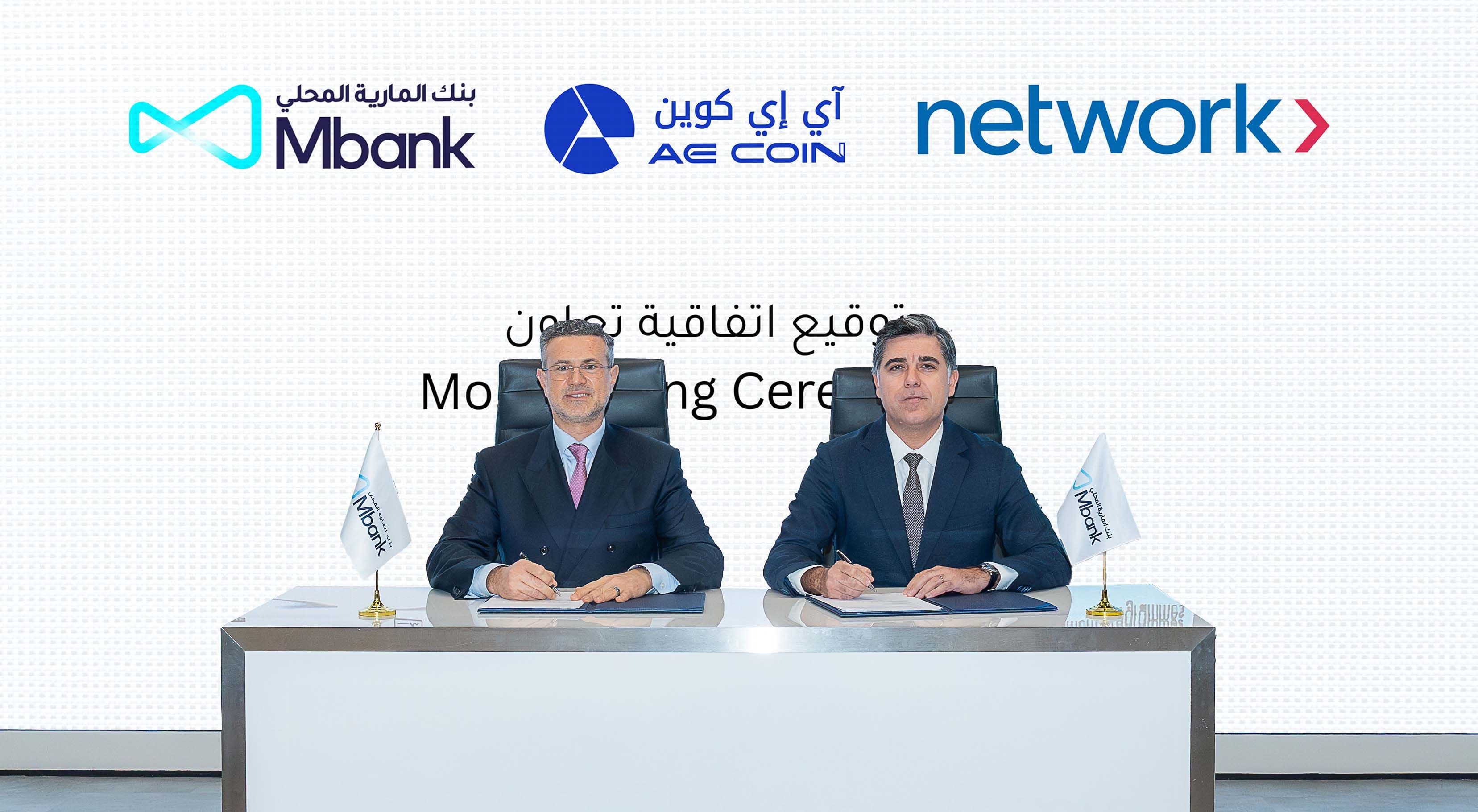
 Network International brings regulated stablecoin payments into everyday use in the UAE. (Image Source: Network International)
Network International has become the first payments platform in the United Arab Emirates to enable stablecoin payments across its point-of-sale and e-commerce network. The initiative follows a partnership with Al Maryah Community Bank (MBank) to support transactions using AE Coin, a dirham-backed digital currency licensed by the country’s central bank.
The announcement positions regulated digital currency payments alongside traditional card and online methods used by merchants nationwide.
For consumers, the change is designed to feel familiar rather than disruptive. Payments made in AE Coin will be processed through the same infrastructure that already supports card and online transactions, meaning customers can pay in a regulated stablecoin without merchants having to install new systems or rethink their checkout flows. For businesses, the integration expands payment choice while keeping settlement and compliance aligned with existing frameworks.
AE Coin is issued by AED Stablecoin LLC and is fully backed by the UAE dirham at a one-to-one ratio. The token operates under the supervision of the Central Bank of the United Arab Emirates, which distinguishes it from many global stablecoins that remain outside formal regulatory structures. MBank provides consumer access through its digital wallet, while Network International supplies the rails that connect merchants to the payment flow.
 AE Coin is pegged to the UAE dirham and operates under central bank oversight, addressing volatility concerns associated with crypto payments. (Shutterstock)
Murat Cagri Suzer, Group CEO of Network International, noted, “As the first payments platform to enable Stablecoin acceptance in the UAE, our partnership with MBank is an important milestone to bringing regulated AE Coin payments into everyday commerce. Network’s payments infrastructure will enable secure and compliant AE Coin acceptance across POS and E-commerce channels, giving businesses and consumers greater flexibility and enhanced choice, while advancing the adoption of next-generation payment capabilities at scale.”
Mr. Mohammed Wassim Khayata, CEO of Al Maryah Community Bank, said, “This partnership represents a significant step forward in bringing regulated digital payments into everyday commerce in the UAE. By working with Network International to enable AE Coin acceptance through the AEC Wallet, we are expanding secure, compliant payment options for merchants and consumers alike. At Mbank, our focus remains on supporting innovation that is fully aligned with regulatory frameworks while delivering real value to the market.”
Mr. Ramez Rafeek, General Manager of AED Stablecoin LLC, added: “Enabling AE Coin acceptance across Network International’s POS and e-commerce infrastructure marks an important milestone in the evolution of regulated stablecoin payments in the UAE. This collaboration demonstrates how a Central Bank -licensed, AED-denominated stablecoin can be seamlessly integrated into existing payment ecosystems, supporting real-world use cases at scale. It reflects the UAE’s leadership in building a trusted, future-ready digital payments environment.”
The rollout also reflects a broader shift in how stablecoins are being positioned in the UAE. Instead of being treated as niche digital assets, licensed stablecoins are increasingly framed as payment instruments that complement existing banking and card networks. By anchoring AE Coin to the dirham and placing it under central bank oversight, authorities have aimed to remove volatility concerns that often limit everyday crypto use.
This is not AE Coin’s first appearance in real-world transactions. Pilot programmes have already tested the stablecoin in public transport settings, including taxi fare payments in Abu Dhabi, as well as in retail and services partnerships announced over the past year. These earlier initiatives demonstrated technical feasibility, but Network International’s involvement significantly broadens reach by plugging stablecoin payments into a platform already used by thousands of merchants across the UAE.
From a market perspective, the partnership highlights how traditional payment processors are beginning to adapt to blockchain-based value transfer without abandoning established systems. Rather than bypassing banks or card networks, the model integrates stablecoins into familiar payment environments, reducing friction for both merchants and customers. Settlement speed and transparency are often cited as advantages of blockchain payments, but the regulated framework aims to ensure these benefits do not come at the expense of consumer protection.
For merchants, accepting AE Coin may eventually offer additional flexibility in treasury management and settlement timing, particularly for businesses that operate digitally or serve tech-savvy customers. For consumers, the appeal lies in being able to use a digital currency that mirrors the value of cash, without exposure to price swings commonly associated with cryptocurrencies.
The initiative also fits neatly into the UAE’s wider ambition to position itself as a hub for digital finance and payments innovation. Regulators have taken a measured approach, encouraging experimentation while insisting on licensing and oversight. By enabling stablecoin payments through a major processor like Network International, the country is effectively testing how blockchain-based money can function within a tightly regulated financial ecosystem.
While global debates around stablecoin regulation continue in markets such as the United States and Europe, the UAE’s model offers a glimpse of how these instruments might be normalised in daily commerce. The success of the rollout will likely depend on consumer awareness, merchant uptake, and the continued clarity of regulatory guidance.
Network International’s integration of AE Coin marks a notable milestone. It moves stablecoins beyond pilot projects and into routine payment scenarios, suggesting that in the UAE, paying with a regulated digital dirham may soon be as unremarkable as tapping a card or checking out online.

Abu Dhabi opens door to Coinbase tokenization

New FinTech Pilots Take Shape in Dubai

Traditional assets gain a bigger blockchain footprint

AI reshapes institutional learning across MENA

Stay ahead with the latest updates, insights, and trends shaping the world of finance, investment, blockchain, digital business, fintech, technology, and global markets.
